
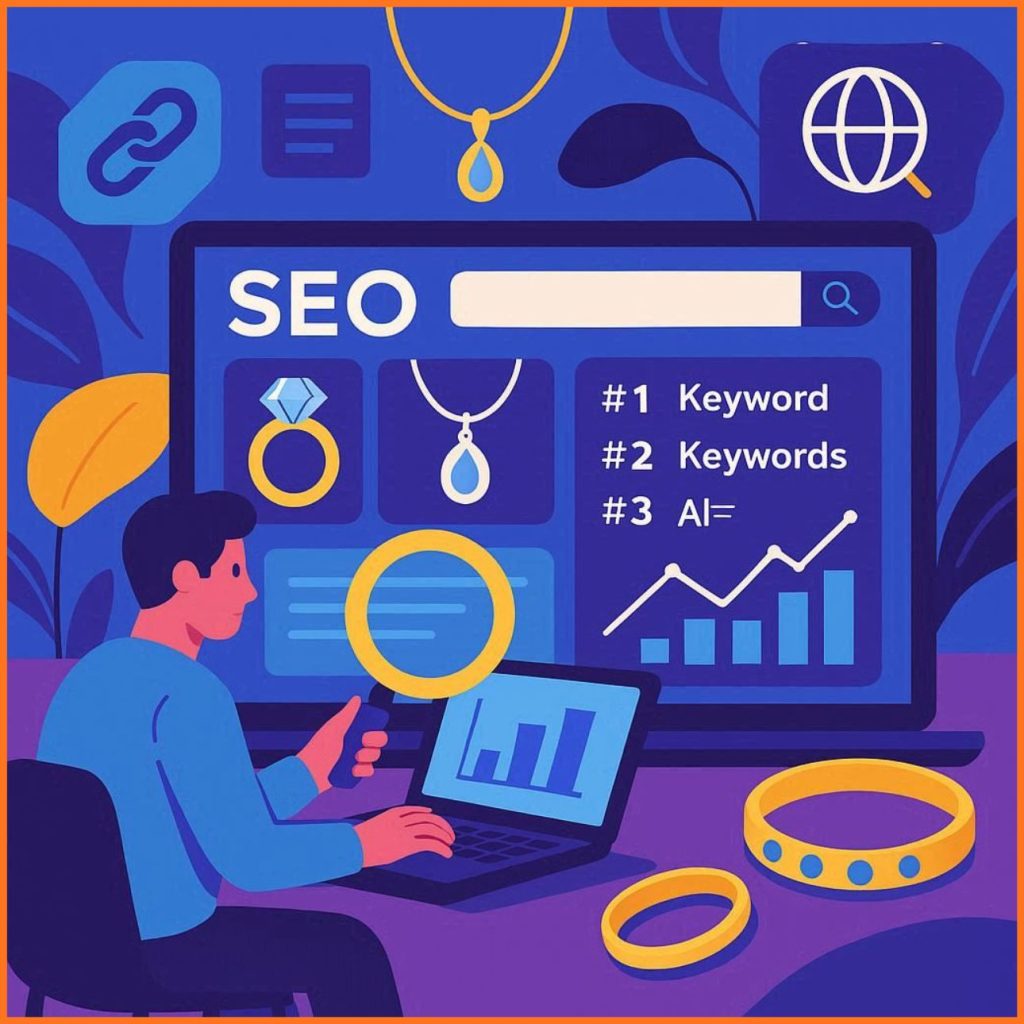
SEO for Jewelry Websites – Quick Wins
If your jewelry website is not getting traffic, here are the biggest SEO issues:
- ❌ Not ranking for “jewelry SEO keywords”
- ❌ Slow-loading product pages
- ❌ Poor product descriptions
- ❌ No backlinks or authority
👉 In this guide, you’ll learn how to fix these issues and rank your jewelry website on Google.
Introduction
In the competitive world of online jewelry sales, having a beautifully designed website isn’t enough. To attract customers and rank higher on search engines, you need strong on-site SEO. Optimizing your jewelry website can boost visibility, improve user experience, and ultimately increase sales. In this article, we’ll explore 10 essential on-site SEO tips that will help your jewelry website shine online.
Why On-Site SEO Matters for Jewelry Websites
Before we dive into the strategies, it’s essential to understand why on-site SEO is a game-changer for jewelry businesses. Unlike paid advertising, which provides short-term visibility, on-site SEO delivers long-term, sustainable growth. It helps your website rank higher on search engines, attract highly targeted visitors, and create a smooth shopping experience for users actively searching for jewelry products.
The jewelry industry is both highly visual and extremely competitive. Even the most beautifully designed collections can go unnoticed without a strong SEO foundation. Effective on-site SEO not only improves your visibility in search results but also enhances user experience—leading to better engagement, longer session durations, and higher conversion rates.
💎 Key Benefits of On-Site SEO for Jewelry eCommerce
- Improves visibility for high-intent keywords like “gold necklaces online” and “diamond engagement rings”
- Drives consistent organic traffic without relying entirely on paid ads
- Enhances user experience through faster loading speeds and mobile-friendly design
- Helps search engines crawl and index your website more efficiently
- Boosts rankings for product and category pages in both search and image results
- Increases conversions by aligning content with user intent
When implemented correctly, on-site SEO becomes the backbone of your digital marketing strategy. It supports your content marketing, social media, and email campaigns by bringing in qualified traffic that is more likely to convert.
In the next section, let’s explore 10 powerful on-site SEO techniques designed specifically to help jewelry websites rank higher and attract more customers in 2026.
SEO for Jewelry Websites (Complete Guide)
SEO for jewelry websites is the process of optimizing your ecommerce store to rank higher on search engines like Google and attract potential buyers.
Unlike other industries, jewelry SEO requires a strong focus on:
- Visual optimization (images & product galleries)
- High-intent keywords like “buy gold rings online”
- Trust signals such as reviews and certifications
- Detailed product descriptions
A well-optimized jewelry website can:
- Increase organic traffic
- Rank for competitive keywords
- Generate consistent online sales
This guide covers everything you need to build a strong SEO foundation for your jewelry business.
Jewelry Website SEO Strategy
A successful jewelry SEO strategy combines multiple elements working together to improve rankings and conversions.
Here’s what you should focus on:
1. Keyword Targeting
Target keywords like:
- SEO for jewelry websites
- jewelry website SEO
- SEO for jewelers
- jewelry SEO
2. Product Page Optimization
Each product page should include:
- Unique descriptions
- High-quality images
- SEO-friendly titles
3. Content Marketing
Publish blogs such as:
- Jewelry buying guides
- Engagement ring tips
- Jewelry trends
4. Technical SEO
Ensure:
- Fast loading speed
- Mobile-friendly design
- Proper site structure
5. Link Building
Build backlinks through:
- Guest posting
- Niche directories
- Industry blogs
👉 Combining these strategies will help your jewelry website rank faster and generate more sales.
1. Optimize Title Tags & Meta Descriptions for Maximum Visibility
Title tags and meta descriptions are critical elements of on-site SEO. They not only influence your jewelry website’s search rankings but also play a major role in improving click-through rates (CTR).
Based on search performance data, keywords like “SEO for jewelry” and “SEO for jewelry websites” generate strong impressions. By strategically including these terms in your title and meta description, you can improve both visibility and clicks.
How to Write Effective Title Tags for Jewelry SEO
A well-optimized title tag should:
- Be concise (50–60 characters) to avoid getting cut off in search results
- Include primary keywords like SEO for jewelry or jewelry website SEO
- Clearly highlight the benefit to attract user attention
👉 Example:
SEO for Jewelry Websites: 10 Proven Tips to Boost Rankings & Sales (2026)
Crafting a High-Converting Meta Description
While meta descriptions don’t directly impact rankings, they strongly influence whether users click on your page.
A strong meta description should:
✔️ Stay within 150–160 characters
✔️ Naturally include target keywords
✔️ Use action-oriented language to encourage clicks
💡 Example:
Boost your jewelry website’s SEO with 10 proven strategies. Learn how to optimize product pages, improve speed, and increase rankings & sales in 2026.

2. Use SEO-Friendly URLs
Creating SEO-friendly URLs is a simple yet powerful way to enhance your jewelry website’s on-site optimization. A well-structured URL improves both search engine crawling and user experience. It tells Google and users what the page is about, increases click-through rates, and helps your pages rank for relevant keywords.
Here’s how to ensure your URLs are optimized:
Keep URLs short and descriptive
Avoid long, confusing URLs with unnecessary parameters or irrelevant information. Short URLs are easier to share, read, and remember.Include target keywords
Incorporate relevant keywords that reflect the product, category, or topic. For example, use/rose-gold-pendant/instead of generic strings like/product?id=98324.Use hyphens to separate words
Google recommends hyphens over underscores. For example, use/diamond-stud-earrings/rather than/diamond_stud_earrings/.Avoid dynamic parameters and special characters
URLs with symbols like&,=, or%can confuse search engines and look less trustworthy to users. Stick to clean, static URLs.Create category-based structure
Group products under categories in the URL path. Example:/bracelets/gold-charm-bracelet/helps users and search engines understand site hierarchy.Implement 301 redirects for URL updates
If you change an existing URL for SEO, always set up a 301 redirect from the old URL to the new one. This retains link equity and avoids broken links.
A consistent, keyword-rich URL structure improves crawlability, user trust, and SEO performance across your entire jewelry site.
3. Improve Site Speed & Mobile Responsiveness
Site speed and mobile responsiveness are critical factors for both user experience and SEO, especially for jewelry websites where high-quality visuals are essential. A slow-loading or poorly optimized site can lead to higher bounce rates, lower engagement, and reduced conversions.
Why Speed Matters:
Google uses page speed as a ranking factor. A delay of even one second can significantly impact user satisfaction and conversion rates. Jewelry sites often rely on detailed images, which, if not optimized, can drastically slow down performance.
Ways to Improve Site Speed:
Compress images without losing quality
Use tools like TinyPNG, ImageOptim, or WebP format to reduce image file sizes while maintaining clarity.Enable browser caching
Store frequently used assets locally so returning visitors experience faster load times.Minify CSS, HTML, and JavaScript files
Remove unnecessary characters and code to make your site lighter and faster.Use a Content Delivery Network (CDN)
Distribute content across multiple servers worldwide to reduce load time for global users.Limit use of third-party scripts
Excessive use of plugins or third-party tools can slow down your site considerably.
Ensure Mobile Responsiveness:
Use responsive design
Your website should automatically adjust layout and functionality based on screen size and device type.Test mobile performance regularly
Use Google’s Mobile-Friendly Test and PageSpeed Insights to identify and fix mobile issues.
Fast, mobile-optimized websites not only rank better in search engines but also provide a smoother, more satisfying shopping experience for potential jewelry buyers.
4. Leverage Structured Data (Schema Markup)
Structured data, also known as schema markup, is a powerful SEO tool that helps search engines interpret and display your content more effectively. For jewelry websites, implementing schema can result in enhanced search results, increased visibility, and higher click-through rates.
Why Structured Data Matters:
Schema markup provides additional context about your web pages. This allows search engines to show rich snippets—extra information like price, stock status, and customer ratings—directly in the search results, making your listing more appealing to users.
Essential Types of Schema for Jewelry Websites:
Product Schema
Highlights key product details such as name, brand, price, SKU, availability, and customer ratings. These elements can appear as rich snippets in Google, increasing your chances of capturing clicks.Breadcrumb Schema
Shows the navigational path of a page, improving internal linking and helping users and search engines understand site hierarchy. For example:
Home > Necklaces > Diamond Necklaces > Solitaire PendantReview Schema
Displays star ratings and customer feedback in search results, boosting trust and engagement.FAQ Schema
If you include a frequently asked questions section on your product or category pages, using FAQ schema can make your answers eligible for featured snippets.
Implementation Tips:
Use Google’s Structured Data Markup Helper or Schema.org to implement markup.
Validate your markup using Google’s Rich Results Test tool.
Prefer JSON-LD format for compatibility with most search engines.
Proper use of schema not only improves SEO but also creates a more informative and trustworthy user experience.
5. Optimize Product Pages for Conversions and SEO
Product pages are the most important part of any jewelry website. These pages not only drive organic traffic through search engines but also play a vital role in converting visitors into customers. A well-optimized product page should strike the right balance between SEO and user engagement.
Key Elements for SEO-Friendly Product Pages:
Unique, Keyword-Rich Descriptions
Avoid using duplicate manufacturer content. Write original descriptions that include target keywords naturally while clearly describing the product’s features, story, and benefits.Detailed Product Specifications
Include essential information such as metal type, gemstone quality, carat weight, ring size, certifications, and origin. These details help improve rankings for specific searches and instill buyer confidence.Use of LSI (Latent Semantic Indexing) Keywords
Support your primary keywords with closely related terms. For example:Primary: gold engagement ring
LSI: yellow gold band, diamond solitaire ring, 14K gold ring, bridal jewelry
High-Quality Visuals with Alt Text
Display multiple high-resolution images showing different angles. Use descriptive alt tags to help search engines index the images and improve accessibility.Customer Reviews and Ratings
Showcase real feedback to increase credibility. Reviews also provide fresh content and keywords that enhance SEO over time.Trust Signals
Add elements like secure checkout badges, return policy, warranty information, and quality assurances to increase buyer confidence.
By optimizing product pages with these strategies, your jewelry website can achieve better search engine visibility and drive more conversions.
6. Create High-Quality, Engaging Content
Content marketing is essential for building organic traffic and improving on-site SEO. By consistently publishing relevant, informative content, jewelry websites can attract search engines and engage potential customers throughout their buying journey.
Benefits of Creating Valuable Content:
Boosts Organic Visibility
Informative blog posts and guides allow you to target a wide range of long-tail keywords. These help your site rank for more searches beyond just product-based queries.Builds Authority and Trust
Publishing helpful content positions your brand as an expert in the jewelry industry. This increases user confidence and encourages repeat visits.Supports Internal Linking and On-Page SEO
Linking blog content to related product pages strengthens keyword relevance, distributes page authority, and improves overall site structure.Encourages User Engagement and Time on Site
Helpful content keeps users on your site longer. When users engage with multiple pages, it sends positive signals to search engines.
Popular Content Ideas for Jewelry Websites:
How to Choose the Perfect Engagement Ring
Jewelry Buying Guides for Birthdays and Anniversaries
Jewelry Care and Maintenance Tips
Trending Jewelry Styles for 2025
Behind-the-Scenes: How Our Jewelry Is Made
Tips for Effective Content Marketing:
Use target and related keywords naturally
Break up content with subheadings, bullet points, and visuals
Update older blog posts to keep them current and relevant
Investing in content marketing is a long-term SEO strategy that builds traffic, brand awareness, and trust with your audience.
7. Internal Linking for Better Navigation
Internal linking is a fundamental on-site SEO practice that not only supports website navigation but also distributes link authority throughout your site. For jewelry websites, this means guiding both users and search engines from informational content to high-converting product pages and category sections.
Why Internal Linking Matters:
Improves User Experience
Well-placed internal links guide visitors to relevant products or supporting content, making it easier for them to explore and find what they need.Boosts Page Authority Distribution
Internal links pass SEO value from one page to another, especially from high-performing blog posts or landing pages to product pages that need visibility.Enhances Site Crawling and Indexing
Internal linking creates clear pathways for search engine bots, helping them discover and index more of your website’s content efficiently.
Best Practices for Effective Internal Linking:
Use descriptive anchor text instead of generic phrases. For instance, link with text like “shop elegant gold bracelets” instead of “click here.”
Link from relevant blog posts to related product categories or specific items. Example: a blog about engagement ring trends can link to your engagement rings collection.
Maintain a logical structure where every page is reachable within a few clicks from your homepage.
Avoid overloading pages with too many links; instead, focus on contextual and valuable placements.
Thoughtful internal linking not only helps with SEO but also keeps users on your site longer, increasing the chances of conversion and repeat visits.
8. Optimize Images for SEO & Faster Loading Times

Jewelry websites heavily rely on high-quality visuals to attract and convert customers. However, large, unoptimized images can slow down your website, negatively impacting user experience, site speed, and SEO rankings. To balance image quality and performance, follow these optimization techniques.
1️⃣ Use Descriptive & SEO-Friendly File Names
Instead of generic names like IMG001.jpg, rename your image files to include relevant keywords. This helps search engines understand what the image is about and improves image search rankings.
✅ Bad Example: IMG001.jpg
✅ Good Example: gold-diamond-necklace-handmade.jpg
If your jewelry website has multiple product variations, make file names unique yet descriptive, like:
white-gold-engagement-ring-1-carat.jpghandcrafted-pearl-earrings-vintage.jpg
2️⃣ Add Relevant ALT Text for Better Accessibility & SEO
ALT text (alternative text) describes images to search engines and visually impaired users. It also helps your images appear in Google Image Search, increasing organic traffic.
🔹 Example of Well-Optimized ALT Text:
“Elegant gold necklace with a handcrafted diamond pendant, perfect for weddings and special occasions.”
🔹 Avoid Generic ALT Text Like:
❌ "optimized titles, descriptions, and site speed" (not relevant)
❌ "image of jewelry" (too vague)
3️⃣ Compress Images Without Losing Quality
Large image files slow down page loading speed, which negatively affects SEO rankings and conversions. Use image compression tools to reduce file size while maintaining quality:
🛠 ShortPixel or TinyPNG for JPEG/PNG compression
🛠 WebP Converter to convert images into faster-loading WebP format
💡 Pro Tip: Aim for JPEG images under 100KB and PNG images under 200KB for faster page loads!
4️⃣ Implement Lazy Loading for Faster Initial Load
Lazy loading delays the loading of images until they are needed (i.e., when a user scrolls down the page). This improves initial load speed and reduces unnecessary data usage.
✅ How to Enable Lazy Loading?
If using WordPress, install plugins like:
🚀 WP Rocket (built-in lazy loading)
🚀 Smush (image compression + lazy loading)
For custom websites, add this HTML attribute to images:
<img src="gold-ring.jpg" alt="Handmade gold ring with diamond" loading="lazy">
5️⃣ Use Responsive Images for Mobile Optimization
Google prioritizes mobile-friendly websites, so your images must adapt to different screen sizes. Use CSS & HTML techniques like:
<picture>
  <source srcset="gold-necklace-mobile.jpg" media="(max-width: 600px)">
  <source srcset="gold-necklace-large.jpg" media="(min-width: 601px)">
  <img src="gold-necklace-large.jpg" alt="Elegant gold necklace">
</picture>
This ensures smaller images load on mobile while maintaining high quality on desktops.
6️⃣ Add Image Schema Markup for Better Visibility
Google favors structured data (schema markup), which helps search engines understand your images better. Use ImageObject schema in your page’s HTML:
{
  "@context": "https://schema.org/",
  "@type": "ImageObject",
  "contentUrl": "https://example.com/gold-ring.jpg",
  "name": "Gold Diamond Engagement Ring",
  "description": "A beautiful handcrafted gold engagement ring with a sparkling diamond.",
  "thumbnailUrl": "https://example.com/gold-ring-thumb.jpg"
}
This boosts rich results and image search rankings!
9. Improve User Experience (UX) and Navigation
User experience (UX) plays a crucial role in how visitors interact with your jewelry website. A seamless and intuitive browsing experience not only increases engagement but also directly influences SEO performance and conversions.
Why UX and Navigation Matter:
A well-structured website helps users find what they’re looking for quickly.
Good UX reduces bounce rates and encourages longer sessions.
Clear navigation and filters lead to higher product discovery and sales.
Key Strategies to Enhance UX and Navigation:
Organize Your Categories Clearly
Use straightforward and familiar labels such as “Engagement Rings,” “Gold Necklaces,” “Diamond Earrings,” and “Bracelets” to help users navigate with ease.Implement Advanced Filters
Allow users to filter products by price range, metal type (gold, silver, platinum), gemstone (diamond, ruby, sapphire), style, or occasion. This saves time and improves product relevancy.Ensure Consistent Layouts
Keep the design consistent across all pages, including product listings, product details, and cart pages. Consistency builds trust and familiarity.Simplify the Checkout Process
Offer guest checkout options, minimal form fields, and support for various payment methods such as credit/debit cards, UPI, PayPal, and digital wallets.Use Clear Call-to-Action Buttons
Guide users with visible and action-oriented buttons like “Add to Cart,” “Buy Now,” and “Continue Shopping.”
Investing in better UX and streamlined navigation leads to a more satisfying shopping experience, reduces friction, and improves your jewelry site’s conversion rate and SEO performance.
10. Encourage Customer Reviews and Testimonials
Customer reviews are a powerful tool for boosting credibility, increasing conversions, and improving your jewelry website’s on-site SEO. They act as social proof, helping potential buyers feel more confident in their purchasing decisions. In addition, reviews generate fresh user-generated content, which search engines favor.
Benefits of Customer Reviews and Testimonials:
Increase trust and transparency, especially in high-value industries like jewelry
Improve product page SEO with long-tail keywords from natural user language
Enhance click-through rates in search results when using structured data
Support decision-making for hesitant shoppers
How to Effectively Collect and Showcase Reviews:
Prompt Customers After Purchase
Send a follow-up email asking for feedback a few days after delivery. Keep the process simple and mobile-friendly.Offer Incentives
Encourage participation by offering a small discount, free shipping on the next order, or loyalty points in exchange for a review.Use Review Schema Markup
Implement structured data so that product ratings (stars) appear in search results, increasing visibility and click-through potential.Display Reviews Prominently
Showcase top reviews on product pages and include a rotating testimonials section on your homepage or landing pages.Include Photos or Videos
Allow customers to upload photos of their jewelry purchases. Visual reviews build even more trust and increase engagement.
By making reviews a central part of your SEO and customer engagement strategy, you not only improve your site’s credibility but also enhance your visibility in search engines and convert more visitors into customers.
🔍 On-Page SEO for Jewelry Ecommerce
On-page SEO plays a crucial role in improving your jewelry website’s visibility and performance in search results.
Key on-page SEO elements include:
Optimize Title & Meta Tags
Use keywords like “jewelry SEO” and “SEO for jewelry websites” naturally.
Improve Product Descriptions
Avoid duplicate content. Write unique and engaging descriptions for each product.
Use Internal Linking
Link blog posts to product pages to improve navigation and SEO.
Optimize Images
Use:
- SEO-friendly file names
- ALT text with keywords
- Compressed images for speed
Add Structured Data
Use schema markup to display:
- Product price
- Ratings
- Availability
👉 Strong on-page SEO ensures better rankings and improved user experience.
🚀 Need SEO for Your Jewelry Website?
If you’re struggling to rank your jewelry website, professional SEO can help you:
- Rank for high-value keywords like “diamond rings online”
- Increase organic traffic
- Improve conversions and sales
👉 WorkSEO specializes in SEO for jewelry ecommerce websites.
Get a free SEO audit today.
How to Rank a Jewelry Website on Google
Ranking a jewelry website on Google requires a consistent and strategic SEO approach.
Follow these proven steps:
Step 1: Target the Right Keywords
Focus on high-intent keywords like:
- buy diamond rings online
- gold jewelry online
- jewelry store near me
Step 2: Optimize Your Website
Ensure your site is:
- Fast-loading
- Mobile-friendly
- Easy to navigate
Step 3: Publish High-Quality Content
Regularly update your blog with useful content related to jewelry.
Step 4: Build High-Quality Backlinks
Get links from:
- Jewelry blogs
- Fashion websites
- Ecommerce platforms
Step 5: Track Performance
Use tools like Google Search Console to monitor:
- Rankings
- Clicks
- Traffic
👉 With consistent effort, your jewelry website can rank on the first page of Google and attract high-converting traffic.
Conclusion
Implementing these on-site SEO strategies will enhance your jewelry website’s visibility, user experience, and sales. Focus on keyword optimization, technical improvements, and quality content to stay ahead in search rankings. Regularly track your progress using tools like Google Search Console and Ahrefs. Need help with SEO? Contact our experts today and start optimizing your jewelry website for success!
❓ FAQ – Jewelry SEO
Q1. What is SEO for jewelry websites?
SEO for jewelry websites involves optimizing product pages, content, and technical elements to rank higher on Google.
Q2. How do I rank my jewelry website on Google?
Focus on keyword optimization, content, backlinks, and technical SEO improvements.
Q3. Is SEO important for jewelry ecommerce?
Yes, SEO helps attract organic traffic and reduces dependency on paid ads.
Q4. How long does jewelry SEO take?
SEO typically takes 3–6 months to show strong results.
Latest Insights from Our SEO Experts
Stay updated with actionable SEO tips, strategies, and trends from the WorkSEO editorial team—designed to help your business grow organically and rank higher on search engines.
Completing a B.Sc. or M.Sc. in Geology is a significant achievement. During your studies, you gain knowledge about Earth’s structure, […]
In today’s digital world, every business wants to appear on the first page of Google. Whether you are a student, […]
In today’s digital world, many business owners believe that online success is impossible without spending thousands of rupees on advertising. […]