In today’s competitive digital world, simply having a website is not enough. To attract visitors, generate leads, and grow your business, your website must be visible on search engines like Google. This is where the Search Engine Optimization (SEO) process plays a crucial role.
At WorkSEO, we help businesses build a strong online presence through a structured and proven SEO process. In this guide, you’ll learn what the SEO process is and how it works step by step.
What is the SEO Process?
The Search Engine Optimization process is a systematic approach used to improve a website’s visibility in search engine results pages (SERPs). It involves multiple strategies such as keyword research, content optimization, technical improvements, and link building.
The goal of SEO is simple:
👉 Increase organic traffic
👉 Improve rankings
👉 Generate quality leads
Why is the SEO Process Important?
Without a proper SEO process, your website may struggle to rank, even if you have great content.
Key Benefits:
- Drives organic (free) traffic
- Builds brand credibility and trust
- Improves user experience
- Generates long-term ROI
- Helps you stay ahead of competitors
Why is the SEO Process Important?
Without a proper SEO process, your website may struggle to rank, even if you have great content.
Key Benefits:
- Drives organic (free) traffic
- Builds brand credibility and trust
- Improves user experience
- Generates long-term ROI
- Helps you stay ahead of competitors
Step-by-Step SEO Process
Let’s break down the complete SEO process into actionable steps:
1. Website Audit & Analysis
The first step in any SEO campaign is a complete website audit.
What to Check:
- Website structure
- Page speed
- Mobile-friendliness
- Indexing issues
- Broken links
- Existing rankings
Tools Used:
- Google Search Console
- Google Analytics
- SEO audit tools like SEMrush or Ahrefs
👉 This step helps identify strengths, weaknesses, and opportunities.
2. Keyword Research
Keyword research is the backbone of SEO.
Types of Keywords:
- Short-tail keywords (e.g., SEO services)
- Long-tail keywords (e.g., best SEO agency in Chennai)
- Local keywords
- Transactional keywords
How to Choose Keywords:
- High search volume
- Low competition
- User intent relevance
👉 At WorkSEO, we focus on intent-based keywords that convert.
3. Competitor Analysis
Understanding your competitors is crucial.
Analyze:
- Their top-ranking keywords
- Backlink profile
- Content strategy
- Domain authority
Goal:
👉 Find gaps and opportunities to outrank them
4. On-Page SEO Optimization
On-page SEO focuses on optimizing individual web pages.
Key Elements:
- Title tags (with keywords)
- Meta descriptions
- Header tags (H1, H2, H3)
- URL structure
- Image optimization (alt text)
- Internal linking
Content Optimization:
- Use keywords naturally
- Maintain readability
- Add value-driven content
👉 Proper on-page SEO ensures search engines understand your content.
5. Technical SEO
Technical SEO ensures your website is easy to crawl and index.
Important Factors:
- Site speed optimization
- Mobile responsiveness
- XML sitemap
- Robots.txt file
- HTTPS security
- Structured data (schema)
👉 A technically strong website ranks faster and better.
6. Content Creation & Optimization
Content is the heart of SEO.
Types of Content:
- Blog posts
- Service pages
- Landing pages
- Case studies
Content Tips:
- Solve user problems
- Use engaging headlines
- Add keywords strategically
- Update old content regularly
👉 High-quality content improves rankings and user engagement.
7. Off-Page SEO (Link Building)
Off-page SEO focuses on building authority.
Strategies:
- Guest posting
- Directory submissions
- Social bookmarking
- Influencer outreach
- PR links
Why Backlinks Matter:
👉 Search engines see backlinks as “votes of trust”
8. Local SEO (If Applicable)
For businesses targeting a specific location, local SEO is essential.
Key Actions:
- Optimize Google Business Profile
- Add local keywords
- Collect customer reviews
- Build local citations
👉 Example: Ranking for “SEO agency in Chennai”
9. Performance Tracking & Reporting
SEO is not a one-time task—it requires continuous monitoring.
Metrics to Track:
- Organic traffic
- Keyword rankings
- Bounce rate
- Conversion rate
- Backlinks
Tools:
- Google Analytics
- Google Search Console
👉 Regular reporting helps refine your strategy.
10. Continuous Optimization
SEO is an ongoing process.
Why?
- Search engine algorithms change
- Competitors improve
- User behavior evolves
👉 Continuous optimization ensures long-term success.
SEO Process Checklist (Quick Implementation Guide)
If you want a quick overview of the entire SEO process, use this checklist:
✅ Planning Stage
- Define SEO goals (traffic, leads, sales)
- Identify target audience
- Perform website audit
✅ Research Stage
- Conduct keyword research
- Analyze competitors
- Map keywords to pages
✅ Optimization Stage
- Optimize on-page elements
- Fix technical SEO issues
- Improve site speed
✅ Content Stage
- Create high-quality content
- Optimize existing pages
- Add internal links
✅ Authority Building
- Build high-quality backlinks
- Promote content on social media
- Do outreach campaigns
✅ Tracking & Improvement
- Monitor rankings
- Track traffic and conversions
- Update SEO strategy regularly
👉 This checklist helps ensure nothing is missed in your SEO strategy.
SEO Process Flow (Simple Explanation)
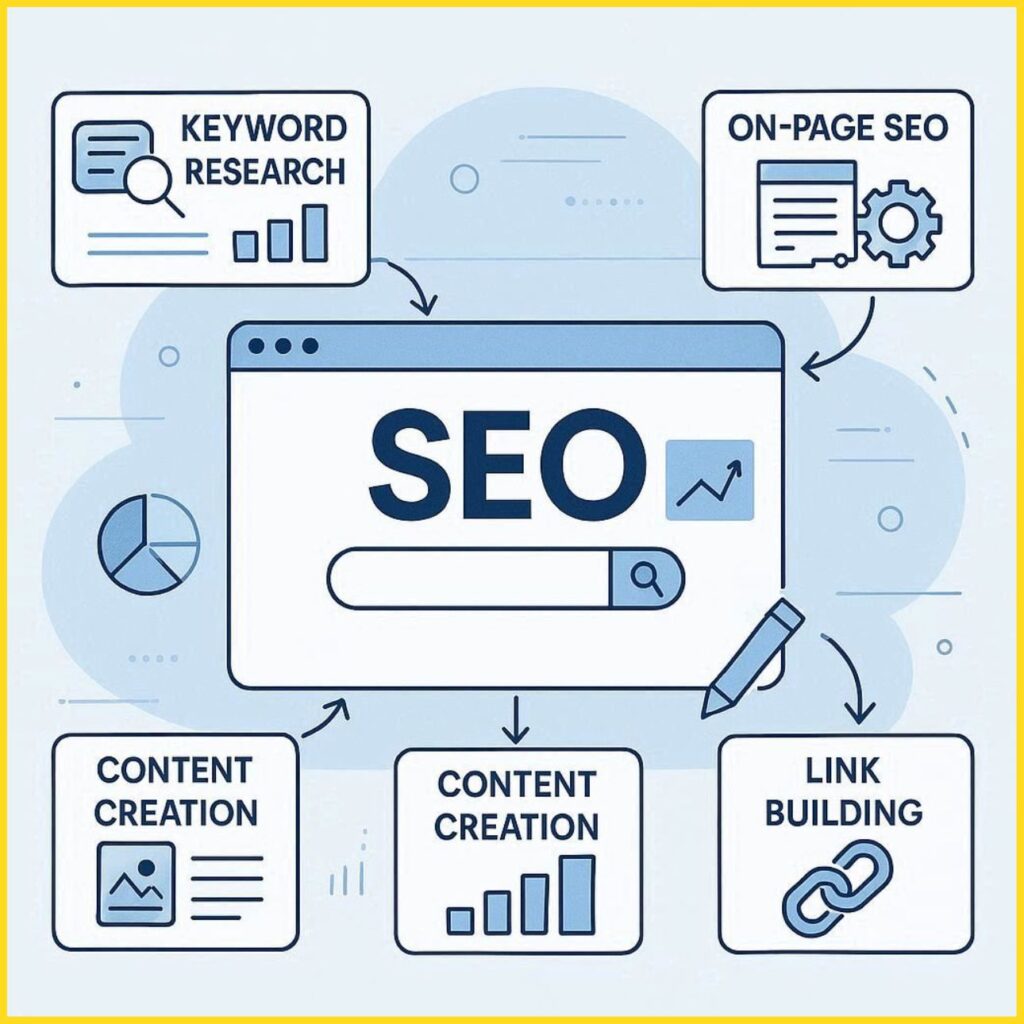
Understanding the SEO workflow visually can make implementation easier.
👉 Flow of SEO Process:
Keyword Research → Content Creation → On-Page SEO → Technical SEO → Link Building → Tracking → Optimization
Key Insight:
Each step is interconnected. Skipping one step can impact your overall rankings.
SEO Tools for Each Step
Using the right tools can speed up your SEO process and improve accuracy.
🔧 Research Tools
- Google Keyword Planner
- SEMrush
- Ahrefs
🔧 Technical SEO Tools
- Google Search Console
- Screaming Frog
- PageSpeed Insights
🔧 Content Optimization Tools
- Surfer SEO
- Yoast SEO / RankMath
🔧 Tracking Tools
- Google Analytics
- Google Search Console
👉 Tools don’t replace strategy—but they make execution smarter.
SEO Process for Beginners vs Advanced Users
👶 Beginner Approach:
- Focus on basic keyword research
- Optimize titles and meta descriptions
- Create simple blog content
- Build a few backlinks
🚀 Advanced Approach:
- Topic cluster strategy
- Advanced technical SEO fixes
- Conversion rate optimization (CRO)
- Data-driven SEO campaigns
👉 At WorkSEO, we combine both approaches depending on business goals.
How to Create an SEO Strategy from This Process
The SEO process becomes powerful when converted into a strategy.
Step-by-Step Strategy Creation:
- Set clear business goals
- Identify target keywords
- Create content calendar
- Optimize website structure
- Build authority through backlinks
- Measure and refine
👉 A strategy ensures your SEO efforts are aligned with business growth.
Role of User Experience (UX) in SEO Process
Google increasingly prioritizes user experience.
UX Factors That Impact SEO:
- Page loading speed
- Mobile usability
- Easy navigation
- Readable content structure
- Low bounce rate
👉 Better UX = Better rankings + Higher conversions
E-E-A-T in SEO Process (Google Ranking Factor)
Google uses E-E-A-T to evaluate content quality.
What It Means:
- Experience – Real-world knowledge
- Expertise – Subject knowledge
- Authoritativeness – Industry credibility
- Trustworthiness – Reliable content
How to Improve E-E-A-T:
- Add author bio
- Use credible sources
- Show real case studies
- Get quality backlinks
👉 This is especially important for ranking in competitive niches.
SEO Process Timeline (Realistic Expectations)
Understanding the timeline helps set proper expectations.
Month-wise Breakdown:
- Month 1: Audit + Research
- Month 2: Fix technical issues + On-page SEO
- Month 3: Content creation begins
- Month 4–6: Ranking improvements
- Month 6+: Authority and traffic growth
👉 SEO is a marathon, not a sprint.
Combine SEO with Content Marketing
SEO alone is not enough in 2026.
Best Practice:
👉 Combine SEO + Content Marketing + Branding
- Publish consistent blogs
- Build topical authority
- Engage users with valuable content
👉 This approach delivers long-term sustainable growth.
SEO vs SEM vs PPC: What’s the Difference?
Many beginners confuse SEO, SEM, and PPC. While they are all part of digital marketing, they work in different ways.
Quick Comparison Chart
Key Differences Explained
🔍 SEO (Search Engine Optimization)
- Focuses on organic (free) traffic
- Improves rankings naturally over time
- Requires content, technical optimization, and backlinks
- Takes longer to show results but delivers long-term growth
👉 Best for: Sustainable traffic and brand authority
📊 SEM (Search Engine Marketing)
- A broader term that includes SEO + Paid Ads
- Combines organic and paid strategies
- Helps maximize visibility on search engines
👉 Best for: Businesses that want both short-term and long-term results
💰 PPC (Pay-Per-Click Advertising)
- Paid advertising model (e.g., Google Ads)
- You pay for every click on your ad
- Instant visibility on top of search results
👉 Best for: Quick leads, product launches, and promotions
Detailed Comparison Table
| Factor | SEO | SEM | PPC |
|---|---|---|---|
| Traffic Type | Organic | Organic + Paid | Paid |
| Cost | Free (effort-based) | Mixed | Paid per click |
| Time to Results | Slow (3–6 months) | Medium | Instant |
| Long-Term Value | High | Medium | Low (stops when budget ends) |
| Sustainability | Strong | Moderate | Weak |
| ROI Over Time | Very High | High | Short-term |
Which One Should You Choose?
Choose SEO if:
- You want long-term traffic
- You have time to invest
- You want consistent leads
Choose PPC if:
- You need immediate results
- You are launching a new service/product
- You have a flexible ad budget
Choose SEM if:
- You want the best of both worlds
- You want to dominate search results
Pro Tip from WorkSEO
👉 The most effective strategy in 2026 is:
SEO + PPC Combination
- Use PPC for quick wins
- Use SEO for long-term growth
This hybrid approach ensures:
✔ Immediate traffic
✔ Sustainable rankings
✔ Higher ROI
Common Mistakes to Avoid in SEO Process
- Ignoring keyword research
- Keyword stuffing
- Poor website speed
- Duplicate content
- Not optimizing for mobile
- Buying low-quality backlinks
How Long Does SEO Take?
SEO is a long-term strategy.
Expected Timeline:
- 1–3 months: Initial improvements
- 3–6 months: Noticeable growth
- 6–12 months: Strong results
👉 Consistency is the key to SEO success.
Why Choose WorkSEO for Your SEO Process?
At WorkSEO, we follow a data-driven and result-oriented SEO process.
What We Offer:
- Customized SEO strategies
- Advanced keyword research
- Technical SEO expertise
- High-quality backlinks
- Transparent reporting
👉 With 10+ years of experience, we help businesses rank higher and grow faster.
Conclusion
The Search Engine Optimization process is a structured approach that transforms your website into a powerful traffic-generating asset. From keyword research to technical SEO and link building, every step plays a crucial role in improving your online visibility.
If you want sustainable growth and long-term success, investing in SEO is not optional—it’s essential.
🚀 Ready to Grow Your Business with the Right SEO Strategy?
Understanding the difference between SEO, SEM, and PPC is just the first step. The real success comes from implementing the right strategy tailored to your business goals.
At WorkSEO, we don’t just optimize websites — we build data-driven growth systems that bring traffic, leads, and revenue.
🎯 What You Get with WorkSEO:
✔ Complete SEO strategy (Keyword + Technical + Content)
✔ High-converting website optimization
✔ Competitor analysis & ranking strategy
✔ Quality backlink building
✔ Transparent monthly reporting
💡 Not Sure Where to Start?
Whether you need:
- Long-term organic growth (SEO)
- Instant leads (PPC)
- Or a complete marketing strategy (SEM)
👉 We’ll guide you step-by-step.
📞 Get Your FREE SEO Audit Today
Let’s analyze your website and show you:
- What’s stopping your rankings
- Hidden traffic opportunities
- Exact steps to outrank your competitors
👉 Contact WorkSEO now and take the first step toward higher rankings and more revenue.
🔥 Limited Offer:
Get a FREE Website SEO Audit + Strategy Plan (Worth ₹5,000)
👉 Call / WhatsApp: +91 94426 11433
👉 Email: [email protected]
👉 Website: https://workseo.in/
FAQs
1. What is the first step in the SEO process?
The first step is a website audit, which helps identify issues and opportunities.
2. How important is keyword research?
Keyword research is critical as it determines what users are searching for.
3. Can I do SEO myself?
Yes, but professional SEO agencies like WorkSEO can deliver faster and better results.
4. How often should I update my SEO strategy?
SEO should be updated regularly based on performance and algorithm changes.
5. Is SEO better than paid ads?
SEO provides long-term results, while paid ads give immediate but temporary traffic.