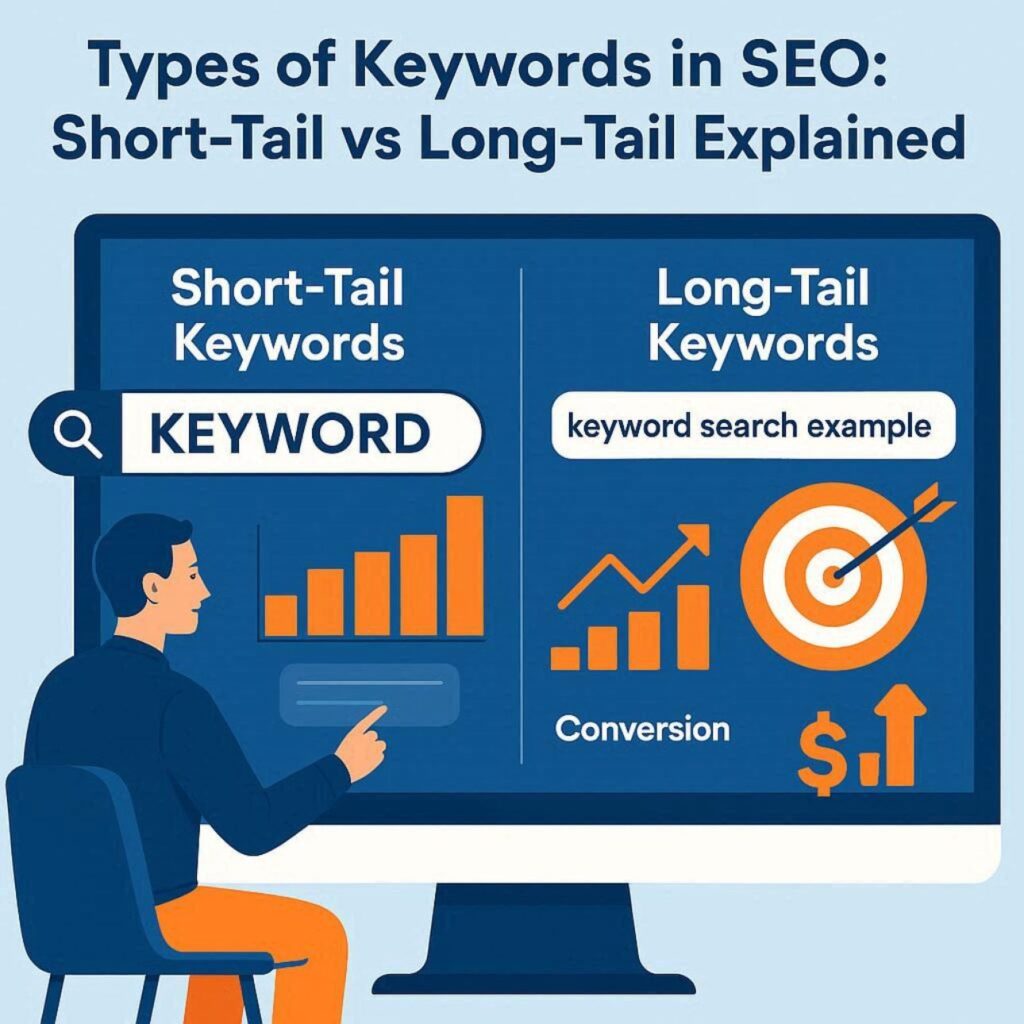
Search Engine Optimization (SEO) starts with one important element: keywords. Keywords are the words and phrases people type into search engines when looking for information, products, or services. Choosing the right keywords can significantly impact your website’s rankings, traffic, and conversions.
One of the most common SEO questions is: Should you target short-tail keywords or long-tail keywords?
The answer depends on your SEO goals, competition level, and target audience. In this guide, WorkSEO explains the differences between short-tail and long-tail keywords, their advantages, disadvantages, and how to use them effectively in your SEO strategy.
What Are Keywords in SEO?
Keywords are search terms that users enter into search engines like Google to find relevant content.
For example:
- SEO
- SEO course
- Online SEO course in Chennai
- Best SEO training institute in Tamil Nadu
Each of these phrases represents a different keyword type and search intent.
Search engines analyze keywords to understand what a webpage is about and determine whether it should appear in search results.
Why Keywords Matter in SEO
Keywords help:
- Improve search engine rankings
- Drive targeted traffic
- Attract potential customers
- Increase conversions
- Understand user intent
- Build content strategies
Without proper keyword research, even high-quality content may struggle to rank.
What Are Short-Tail Keywords?
Short-tail keywords, also known as head keywords, are broad search terms containing one to three words.
Examples of Short-Tail Keywords
- SEO
- Digital Marketing
- SEO Course
- Website Design
- WordPress SEO
- Real Estate
These keywords usually have very high search volumes but also intense competition.
Characteristics of Short-Tail Keywords
1. High Search Volume
Thousands or even millions of users search for these terms monthly.
Example:
- SEO
- Digital Marketing
- Online Business
2. Broad Search Intent
Search engines cannot easily determine what users specifically want.
For example:
Someone searching for “SEO” may be looking for:
- SEO definition
- SEO services
- SEO tools
- SEO courses
- SEO jobs
3. High Competition
Large companies and established websites often compete for short-tail keywords.
Ranking for these keywords can take significant time and effort.
4. Lower Conversion Rates
Because the search intent is broad, users may not be ready to make a purchase or inquiry.
Advantages of Short-Tail Keywords
Massive Traffic Potential
Ranking for a popular keyword can generate large amounts of organic traffic.
Brand Visibility
Appearing for broad industry terms increases brand awareness.
Industry Authority
Top rankings for competitive keywords can establish credibility.
Disadvantages of Short-Tail Keywords
Difficult to Rank
High competition makes rankings challenging.
Lower Conversion Rates
Visitors may not be ready to take action.
Requires More SEO Resources
Ranking often requires:
- Strong backlinks
- Domain authority
- High-quality content
- Technical SEO optimization
What Are Long-Tail Keywords?
Long-tail keywords are more specific search phrases containing three or more words.
Examples of Long-Tail Keywords
- Best SEO course in Chennai
- Affordable digital marketing services for startups
- How to improve website speed for SEO
- Online SEO training with certificate
- SEO consultant for real estate companies
These keywords have lower search volume but higher relevance.
Characteristics of Long-Tail Keywords
Specific Search Intent
Users searching long-tail keywords know exactly what they need.
For example:
Instead of searching:
“SEO”
They search:
“Best online SEO course in Tamil Nadu”
This indicates a stronger intent.
Lower Competition
Fewer websites target highly specific keywords.
This creates better ranking opportunities.
Higher Conversion Rates
Long-tail visitors are often closer to making a decision.
Examples:
- Purchasing a product
- Contacting a business
- Enrolling in a course
- Requesting a quote
Easier Ranking Opportunities
New websites can achieve rankings faster by targeting niche keyword phrases.
Advantages of Long-Tail Keywords
Easier SEO Success
Less competition means faster ranking potential.
Better User Targeting
Content matches user needs more accurately.
Higher Conversion Rates
Visitors often take action because their intent is clear.
Cost-Effective Strategy
Requires fewer resources compared to highly competitive keywords.
Disadvantages of Long-Tail Keywords
Lower Search Volume
Each keyword may generate fewer searches.
Requires More Content
You may need multiple pages targeting different long-tail variations.
Slower Traffic Growth
Traffic accumulates gradually from many keyword variations.
Short-Tail vs Long-Tail Keywords: Comparison Table
| Feature | Short-Tail Keywords | Long-Tail Keywords |
|---|---|---|
| Length | 1-3 words | 3+ words |
| Search Volume | High | Lower |
| Competition | High | Lower |
| Search Intent | Broad | Specific |
| Ranking Difficulty | Difficult | Easier |
| Conversion Rate | Lower | Higher |
| SEO Cost | Higher | Lower |
| Traffic Potential | Massive | Targeted |
Examples of Short-Tail and Long-Tail Keywords
SEO Industry
Short-Tail Keyword
- SEO
Long-Tail Keywords
- SEO services for small businesses
- SEO course in Chennai
- SEO consultant for e-commerce websites
Digital Marketing Industry
Short-Tail Keyword
- Digital Marketing
Long-Tail Keywords
- Digital marketing course online with certificate
- Digital marketing services for startups
- Digital marketing agency in Coimbatore
Real Estate Industry
Short-Tail Keyword
- Apartments
Long-Tail Keywords
- Luxury apartments in Chennai OMR
- Affordable apartments near Chennai airport
- Best gated community apartments in Coimbatore
Understanding Search Intent
Keyword selection should align with user intent.
Search intent generally falls into four categories.
1. Informational Keywords
Users want information.
Examples:
- What is SEO
- How does Google ranking work
- SEO tips for beginners
2. Navigational Keywords
Users want a specific website.
Examples:
- WorkSEO
- Google Search Console
- SEMrush login
3. Commercial Keywords
Users are researching before purchasing.
Examples:
- Best SEO tools
- SEO course reviews
- Top digital marketing agencies
4. Transactional Keywords
Users are ready to take action.
Examples:
- Buy SEO course online
- Hire SEO consultant
- Book SEO audit service
These transactional keywords often perform best for lead generation.
How to Find Long-Tail Keywords
Several tools can help identify profitable long-tail opportunities.
Google Autocomplete
Start typing a keyword in Google and review suggested searches.
Example:
Typing “SEO course” may reveal:
- SEO course online
- SEO course with certificate
- SEO course in Chennai
Google People Also Ask
Google displays related questions users frequently search.
These questions provide excellent content ideas.
Google Search Console
Analyze existing keywords driving impressions and clicks.
You may discover untapped long-tail opportunities.
Keyword Research Tools
Popular tools include:
- Google Keyword Planner
- Ahrefs
- SEMrush
- Ubersuggest
- Moz Keyword Explorer
Best SEO Strategy: Combine Both Keyword Types
Many beginners assume they must choose either short-tail or long-tail keywords.
The most successful SEO strategy combines both.
Use Short-Tail Keywords For:
- Homepage optimization
- Main service pages
- Brand awareness
- Industry authority
Use Long-Tail Keywords For:
- Blog content
- FAQ pages
- Landing pages
- Local SEO campaigns
- Lead generation
This balanced approach helps build traffic while improving conversions.
Keyword Strategy Example for WorkSEO
Suppose WorkSEO offers SEO training and SEO services.
Short-Tail Targets
- SEO Course
- SEO Training
- SEO Services
- Digital Marketing Course
Long-Tail Targets
- Online SEO course in India
- SEO training with live projects
- SEO services for small businesses
- Technical SEO consultant in Chennai
- Affordable SEO packages for startups
This combination creates both visibility and business growth.
Common Keyword Research Mistakes
Avoid these common SEO mistakes:
Targeting Only High-Volume Keywords
Competition may be too strong.
Ignoring Search Intent
Traffic without conversions provides little value.
Keyword Stuffing
Overusing keywords can hurt rankings.
Not Updating Research
Search trends change over time.
Skipping Long-Tail Opportunities
Many businesses miss valuable conversion-focused traffic.
Conclusion
Understanding the difference between short-tail and long-tail keywords is essential for building a successful SEO strategy. Short-tail keywords offer high traffic potential and brand visibility, while long-tail keywords provide better targeting, easier rankings, and higher conversion rates.
The most effective SEO campaigns combine both keyword types to attract visitors at different stages of the customer journey. By conducting proper keyword research and matching content to user intent, businesses can improve search rankings, generate qualified traffic, and increase conversions.
At WorkSEO, we recommend focusing on long-tail keywords initially to achieve faster SEO results while gradually building authority for competitive short-tail keywords. This balanced approach helps businesses create sustainable organic growth and long-term search engine success.
Start your keyword research today and build an SEO strategy that drives real results.