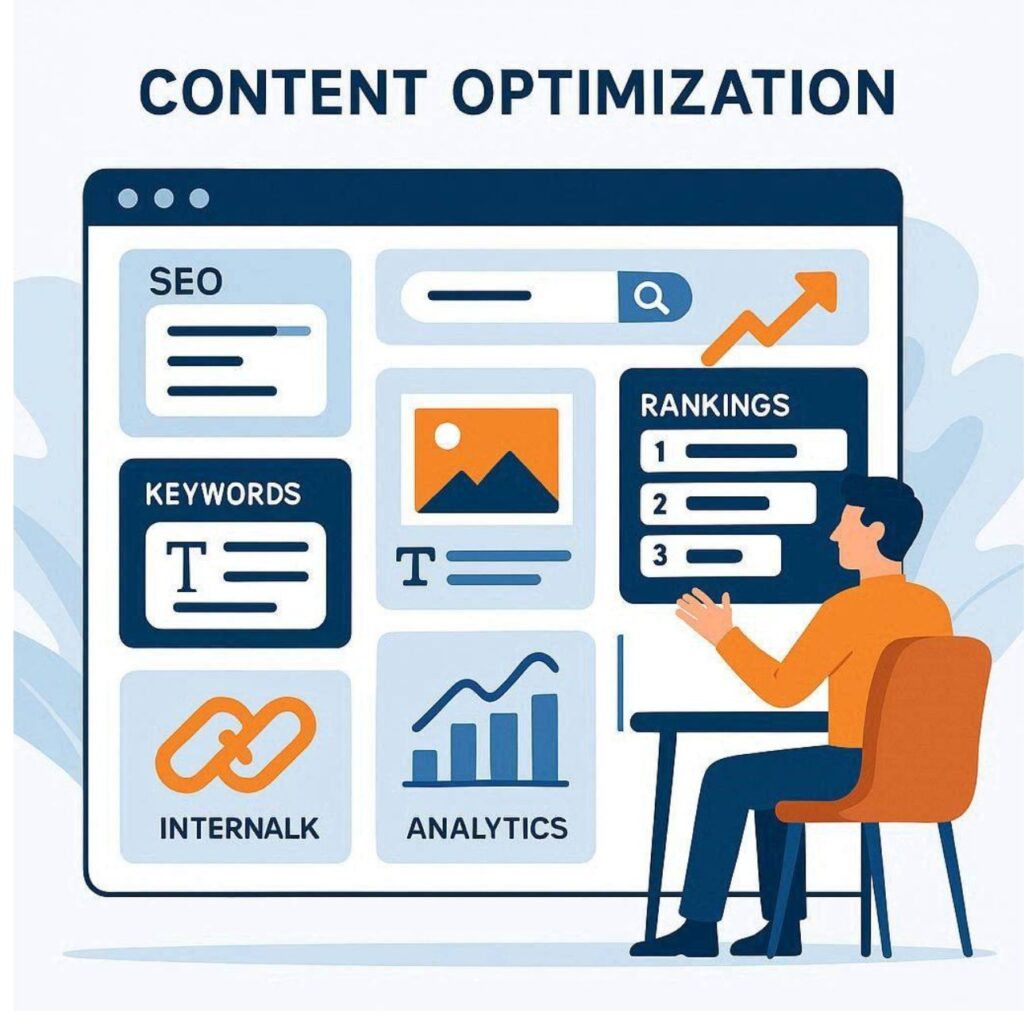
In today’s competitive digital landscape, creating content is only the first step. To achieve better visibility in search engines and provide a superior user experience, businesses must focus on content optimization. Whether you are running a blog, e-commerce website, educational portal, or business website, optimized content can significantly improve organic traffic, engagement, and conversions.
In this guide, we will explain what content optimization is, why it matters, and the best practices you can implement to improve your website’s performance.
What is Content Optimization?
Content optimization is the process of improving website content so that it performs better for both search engines and users. It involves enhancing various elements such as keywords, headings, readability, internal links, metadata, images, and overall content structure.
The primary goal of content optimization is to ensure that your content:
- Matches user search intent
- Ranks higher in search engine results
- Provides valuable information
- Improves user engagement
- Increases conversions and leads
Content optimization is not just about adding keywords. It focuses on delivering the best possible answer to a user’s query while following SEO best practices.
Why is Content Optimization Important?
Many websites publish content regularly but fail to gain traffic because the content is not properly optimized.
Benefits of Content Optimization
Improved Search Engine Rankings
Search engines like Google analyze content quality, relevance, and user experience. Optimized content has a higher chance of ranking for targeted keywords.
Better User Experience
Well-structured content is easier to read and understand. Visitors spend more time on pages that provide clear and valuable information.
Increased Organic Traffic
Higher rankings typically result in more clicks and organic visitors.
Higher Conversion Rates
Optimized content can guide users toward taking desired actions such as contacting your business, purchasing products, or subscribing to newsletters.
Enhanced Content Longevity
Evergreen optimized content can continue generating traffic for months or even years.
Key Elements of Content Optimization
1. Keyword Research
The foundation of content optimization begins with proper keyword research.
Identify:
- Primary keywords
- Secondary keywords
- Long-tail keywords
- Question-based keywords
For example, if your topic is “Content Optimization,” related keywords may include:
- Content optimization techniques
- SEO content optimization
- Content optimization tools
- How to optimize website content
Use tools such as:
- Google Keyword Planner
- Google Search Console
- SEMrush
- Ahrefs
- Ubersuggest
Example
Primary Keyword:
Content Optimization
Secondary Keywords:
SEO content optimization, content optimization strategies, content optimization best practices
2. Understand Search Intent
Search intent refers to the reason behind a user’s search.
There are four major types:
Informational Intent
Example:
“What is content optimization?”
Navigational Intent
Example:
“WorkSEO content optimization services”
Commercial Intent
Example:
“Best content optimization tools”
Transactional Intent
Example:
“Hire content optimization agency”
Your content should align with the intent behind the targeted keyword.
3. Create High-Quality Content
Google rewards content that demonstrates expertise, experience, authority, and trustworthiness.
High-quality content should be:
- Accurate
- Useful
- Original
- Well-researched
- Updated regularly
Avoid:
- Thin content
- Duplicate content
- Keyword stuffing
- AI-generated content without human editing
Example
Poor Content:
“Content optimization is important for SEO. SEO helps rankings.”
Optimized Content:
“Content optimization improves search visibility by aligning website content with user intent, keyword relevance, and search engine ranking factors.”
4. Optimize Content Structure
A clear structure improves readability and SEO.
Use:
- H1 for the page title
- H2 for main sections
- H3 for subtopics
- Bullet points
- Numbered lists
- Short paragraphs
Example Structure
H1: What is Content Optimization?
H2: Why Content Optimization Matters
H2: Best Practices
H3: Keyword Research
H3: Internal Linking
H3: Image Optimization
A logical hierarchy helps search engines understand your content better.
5. Optimize Title Tags and Meta Descriptions
Your title tag is often the first thing users see in search results.
Best Practices for Title Tags
- Include primary keyword
- Keep under 60 characters
- Make it compelling
Example:
What is Content Optimization? Best Practices with Examples
Best Practices for Meta Descriptions
- Keep under 160 characters
- Include target keyword
- Encourage clicks
Example:
Learn what content optimization is, why it matters, and discover proven strategies to improve rankings, traffic, and user engagement.
6. Use Keywords Naturally
Keyword optimization remains important, but overusing keywords can harm rankings.
Best Practices
- Include keyword in title
- Use keyword in first paragraph
- Add keyword to headings where relevant
- Use variations and synonyms
- Maintain natural language
Example
Instead of repeating:
“Content optimization helps content optimization strategies for content optimization.”
Use:
“Effective content optimization strategies help improve search visibility and user engagement.”
7. Improve Readability
Visitors prefer content that is easy to read.
Tips
- Write short sentences
- Use simple language
- Break long paragraphs
- Include bullet points
- Add visual elements
Example
Difficult:
“Organizations implementing optimization methodologies frequently experience substantial improvements.”
Simple:
“Businesses that optimize content often see better rankings and more traffic.”
8. Add Internal Links
Internal linking connects related pages on your website.
Benefits
- Helps users discover more content
- Distributes page authority
- Improves crawlability
Example
A blog about content optimization can link to:
- SEO audit guide
- Keyword research guide
- On-page SEO checklist
- Technical SEO articles
Use descriptive anchor text instead of generic phrases like “click here.”
9. Optimize Images
Images improve user engagement but should also be optimized.
Best Practices
- Use descriptive file names
- Compress images
- Add alt text
- Use modern formats like WebP
- Include relevant visuals
Example
Image File:
content-optimization-guide.webp
Alt Text:
Content optimization checklist for SEO improvement
Optimized images contribute to better page speed and accessibility.
10. Include Relevant Data and Examples
Examples make content more valuable and easier to understand.
Example
Before Optimization:
Monthly Visitors: 1,500
After Optimization:
Monthly Visitors: 4,200
Improvements:
- Updated keywords
- Better headings
- Added internal links
- Improved page speed
This practical example helps readers understand the impact of optimization.
11. Optimize for Featured Snippets
Featured snippets appear at the top of Google search results.
Tips
- Answer questions directly
- Use lists
- Add definitions
- Create FAQ sections
Example
What is Content Optimization?
Content optimization is the process of improving website content to increase search visibility, enhance user experience, and achieve better business results.
This format increases the chances of earning a featured snippet.
12. Update Existing Content Regularly
Content optimization is not a one-time task.
Regular updates can help maintain rankings.
Update Areas
- Statistics
- Examples
- Screenshots
- Internal links
- SEO recommendations
Refreshing older content often leads to traffic improvements.
Common Content Optimization Mistakes
Avoid these mistakes:
Keyword Stuffing
Using keywords excessively makes content unreadable.
Ignoring User Intent
Ranking is difficult when content does not match what users want.
Poor Formatting
Large blocks of text discourage readers.
Missing Internal Links
Lack of internal linking reduces SEO effectiveness.
Outdated Information
Old information can negatively impact credibility and rankings.
Content Optimization Checklist
Use this checklist before publishing content:
✅ Target keyword researched
✅ Search intent identified
✅ SEO-friendly title created
✅ Meta description optimized
✅ Proper heading structure used
✅ Keywords placed naturally
✅ Internal links added
✅ Images optimized
✅ Readability improved
✅ Content proofread
✅ Mobile-friendly formatting checked
✅ Call-to-action included
Best Content Optimization Tools
Several tools can help optimize content effectively.
Google Search Console
Monitor search performance and keyword rankings.
Google Analytics
Track user engagement and conversions.
SEMrush
Analyze keywords, competitors, and content opportunities.
Ahrefs
Identify backlinks and content gaps.
Surfer SEO
Provides content optimization recommendations.
Grammarly
Improves grammar and readability.
Conclusion
Content optimization is one of the most important aspects of modern SEO. Creating great content alone is not enough; it must be structured, relevant, user-focused, and search-engine friendly. By implementing keyword research, understanding search intent, improving readability, optimizing images, adding internal links, and updating content regularly, businesses can significantly improve organic visibility and website performance.
At WorkSEO, we recommend treating content optimization as an ongoing process rather than a one-time activity. Consistently refining your content will help attract more qualified visitors, improve engagement, and generate long-term SEO success.