
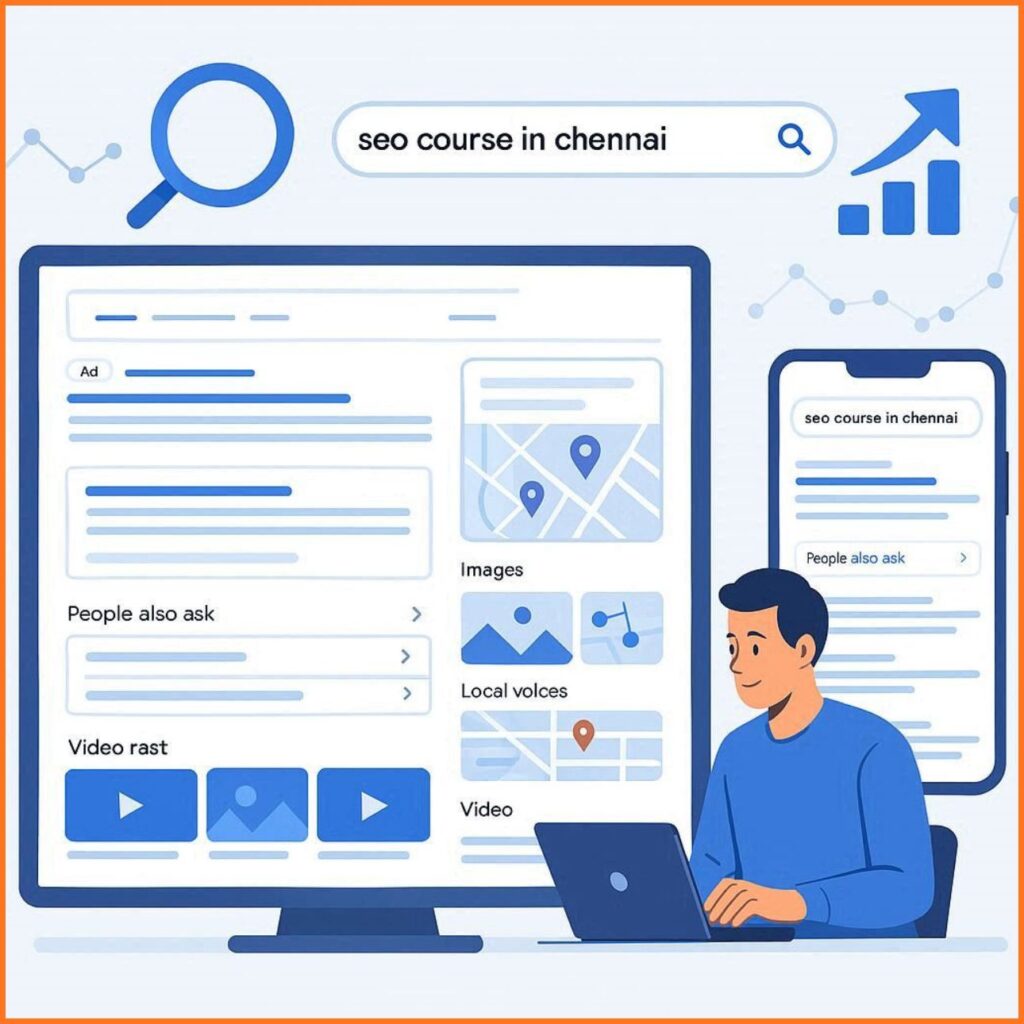
When users search for information on Google, the page they see after entering a query is called a SERP. In the SEO world, understanding SERP is extremely important because it directly affects website visibility, organic traffic, and online business growth.
Whether you run a local business, e-commerce website, educational platform, or blog, appearing on the first page of search engine results can significantly improve your brand awareness and conversions.
At WorkSEO Solutions, we help businesses understand modern SEO strategies and improve their rankings in competitive search results.
What is SERP?
SERP stands for Search Engine Results Page.
It is the page displayed by search engines like Google, Bing, or Yahoo after a user searches for a keyword or phrase.
For example, if someone searches:
- “best SEO company in Chennai”
- “how to improve website traffic”
- “digital marketing course online”
Google displays a list of results related to that query. That entire page is known as the SERP.
SERPs include:
- Organic search results
- Paid advertisements
- Featured snippets
- Images
- Videos
- Local map listings
- FAQs
- Shopping results
- Knowledge panels
Modern SERPs are designed to provide users with quick and accurate information.
Why is SERP Important in SEO?
SERP is one of the most important concepts in search engine optimization because rankings determine how much traffic your website receives.
Most users click websites appearing on the first page of Google. Very few users visit the second or third page.
Benefits of High SERP Rankings
1. More Organic Traffic
Higher rankings usually generate more website visitors.
2. Better Brand Visibility
Appearing consistently on Google increases trust and brand awareness.
3. Higher Click-Through Rate (CTR)
Top search results attract more clicks compared to lower rankings.
4. More Leads & Sales
Commercial keywords ranking on page one can improve enquiries and conversions.
5. Competitive Advantage
Strong SERP visibility helps businesses stay ahead of competitors.
Types of SERP Results
Google displays different types of search results depending on the user query, search intent, location, and device type. Modern SERPs are no longer limited to simple blue links. Google now includes maps, videos, images, FAQs, shopping listings, and AI-based recommendations to improve user experience.
Understanding these SERP result types helps businesses create better SEO strategies and target multiple ranking opportunities.
1. Organic Search Results
Organic search results are unpaid website listings that appear naturally based on Google’s ranking algorithm. These results are generated according to relevance, authority, and content quality.
Organic rankings depend on several SEO factors such as:
- High-quality content
- Keyword optimization
- Backlink profile
- Website speed
- User experience
- Mobile responsiveness
- Domain authority
Unlike paid advertisements, organic results cannot be purchased directly. Websites must earn rankings through proper SEO practices.
For example, when users search:
- “what is SEO”
- “best digital marketing strategies”
- “SEO course in Chennai”
Google shows websites it considers most relevant and trustworthy.
Organic SEO is considered a long-term digital marketing investment because strong rankings can generate continuous traffic without paying for every click.
Benefits of Organic Results
- Long-term traffic generation
- Better user trust
- Higher credibility
- Sustainable online visibility
- Cost-effective marketing strategy
Businesses focusing on consistent SEO optimization often receive better ROI through organic SERP rankings.
2. Paid Search Results
Paid search results are advertisements displayed through Google Ads. These listings usually appear at the top or bottom of search engine result pages.
Google marks these results using labels such as:
- Sponsored
- Ad
Businesses bid on keywords to display their ads when users search related terms.
For example:
If a company bids for:
- “SEO services”
- “buy laptop online”
- “best hotel booking”
their advertisements may appear above organic listings.
Paid search is commonly used for:
- Lead generation
- Product promotions
- E-commerce sales
- Brand awareness
- Local business marketing
Advantages of Paid SERP Results
- Instant visibility
- Fast traffic generation
- Targeted audience reach
- Geographic targeting
- Conversion tracking
However, traffic stops once advertising budgets end. That is why many businesses combine paid advertising with long-term SEO strategies.
3. Featured Snippets
Featured snippets are highlighted answer boxes shown near the top of Google SERPs. These snippets aim to provide quick and direct answers without requiring users to open websites immediately.
Featured snippets may appear as:
- Paragraphs
- Lists
- Tables
- Step-by-step instructions
Example Searches
- What is keyword research?
- How does SEO work?
- What is SERP?
Google extracts snippet content from web pages that provide clear and well-structured answers.
Benefits of Featured Snippets
- Increased visibility
- Higher click-through rates
- Improved authority
- Better brand recognition
To optimize for featured snippets:
- Answer questions clearly
- Use headings properly
- Add bullet points
- Create concise explanations
- Structure content logically
Featured snippets are sometimes called “Position Zero” because they appear above standard organic rankings.
4. Local Pack Results
Local pack results are map-based business listings displayed for location-specific searches.
These usually include:
- Business name
- Ratings and reviews
- Address
- Phone number
- Directions
- Website link
Example Searches
- SEO company near me
- restaurants in Chennai
- hospitals in Coimbatore
- digital marketing agency in Hyderabad
Local pack rankings depend heavily on local SEO optimization.
Important Local SEO Factors
- Google Business Profile optimization
- Customer reviews
- Local keywords
- NAP consistency
- Local backlinks
Local SERPs are extremely valuable for:
- Restaurants
- Clinics
- Educational institutes
- Hotels
- Service providers
- Retail businesses
Businesses appearing in local packs often receive higher calls, visits, and enquiries.
5. Image Results
Google image SERPs display image-based search results for visually relevant queries.
Image packs often appear for searches like:
- logo design ideas
- modern house interiors
- travel destinations
- wedding photography poses
Image SEO helps websites gain additional visibility beyond standard search listings.
Important Image SEO Practices
- Use descriptive file names
- Add alt text
- Compress images
- Use high-quality visuals
- Add structured data
Optimized images can also appear in:
- Google Images
- Featured snippets
- Visual search platforms
For businesses like travel, fashion, real estate, and food industries, image SERPs can generate significant traffic.
6. Video Results
Google increasingly prioritizes video content because users prefer visual learning and quick explanations.
Video SERPs usually display:
- YouTube videos
- Tutorials
- Product demonstrations
- Reviews
- Educational content
Common Video Search Examples
- SEO tutorial for beginners
- how to create Instagram reels
- website design tutorial
Video SEO includes:
- Keyword-rich titles
- Optimized descriptions
- Video transcripts
- Thumbnails
- User engagement
Benefits of Video SERP Rankings
- Better engagement
- Increased website traffic
- Higher retention time
- Improved brand visibility
YouTube optimization has become an important part of modern SEO strategy.
7. People Also Ask (PAA)
The “People Also Ask” section displays related questions users frequently search on Google.
When users click a question, Google expands the answer and reveals additional related questions.
Example Questions
- What are SERP features?
- Why is SEO important?
- How does Google ranking work?
PAA results are valuable because they help businesses:
- Discover user intent
- Find content ideas
- Improve FAQ optimization
- Target long-tail keywords
How to Optimize for PAA
- Use question-based headings
- Write clear answers
- Add FAQ sections
- Create conversational content
PAA optimization improves both SEO visibility and content relevance.
8. Knowledge Panel
Knowledge panels are information boxes displayed mainly on the right side of desktop SERPs.
These panels provide summarized information about:
- Companies
- Celebrities
- Brands
- Organizations
- Locations
- Historical figures
Knowledge panels usually include:
- Images
- Website links
- Social profiles
- Business details
- Reviews
- Descriptions
Google collects this information from:
- Wikipedia
- Google Business Profiles
- Trusted databases
- Structured data
Benefits of Knowledge Panels
- Stronger brand authority
- Better online trust
- Increased visibility
- Enhanced user experience
Businesses can improve their chances of getting knowledge panels by:
- Using schema markup
- Building brand authority
- Maintaining accurate business information
- Optimizing online profiles
Common SERP Features
SERP features are enhanced search elements beyond traditional organic listings. These features are designed to improve search experience and provide faster answers.
Modern SEO strategies focus not only on rankings but also on winning SERP features for better visibility.
Featured Snippet
Featured snippets provide direct answers in:
- Paragraph format
- Bullet lists
- Tables
- Definitions
These snippets usually appear above organic search results and attract significant attention.
Rich Snippets
Rich snippets enhance listings using structured data markup.
They may display:
- Ratings
- Reviews
- FAQs
- Prices
- Product details
- Event dates
Rich snippets improve:
- CTR
- Visual appearance
- User trust
Sitelinks
Sitelinks are additional page links shown below a website’s main search result.
They help users quickly access:
- Contact pages
- Services
- Blogs
- About pages
Sitelinks improve navigation and user experience.
Top Stories
Google displays “Top Stories” for trending or news-related searches.
These usually come from:
- News publishers
- Media websites
- Industry blogs
Fresh and authoritative content improves eligibility for top stories visibility.
Shopping Results
Shopping SERPs display:
- Product images
- Prices
- Reviews
- Brand names
- Online stores
These results are commonly shown for product-related searches.
Example Searches
- buy smartphone online
- best gaming laptop
- running shoes price
E-commerce SEO and Google Shopping optimization are important for these rankings.
How Search Engines Rank SERPs
Search engines like Google use advanced algorithms to determine which websites should appear for a particular search query. Every time a user searches on Google, the search engine scans billions of web pages and ranks the most relevant results within seconds.
Google’s ranking system considers hundreds of SEO signals to decide:
- Which page is most useful
- Which content is trustworthy
- Which website provides the best user experience
- Which result matches user intent most accurately
The main goal of Google is to provide users with the most relevant, high-quality, and reliable information.
SERP rankings are constantly changing because:
- Competitors update their content
- Google algorithms evolve
- User behavior changes
- Search intent shifts over time
That is why SEO is considered an ongoing process rather than a one-time activity.
Important SERP Ranking Factors
Google uses many ranking signals, but some factors play a much bigger role in SEO success. Businesses that optimize these areas effectively usually achieve better search visibility and higher organic traffic.
Understanding these ranking factors helps websites improve both user experience and search engine performance.
1. High-Quality Content
Content remains one of the strongest ranking factors in modern SEO. Google prefers websites that provide useful, informative, and original content for users.
High-quality content helps search engines understand:
- The purpose of the page
- Topic relevance
- User satisfaction level
- Expertise and authority
Good content should always be:
- Informative
- Original
- User-focused
- Well-structured
- Easy to understand
- Updated regularly
Google prioritizes content that genuinely solves user problems instead of content written only for rankings.
Characteristics of High-Quality Content
- Clear headings and subheadings
- Proper formatting
- Accurate information
- Relevant examples
- Internal linking
- Helpful visuals
For example, a detailed blog explaining “What is SERP?” with examples, FAQs, and optimization tips is more valuable than a short generic article.
Why Content Matters in SEO
- Increases organic traffic
- Improves engagement
- Reduces bounce rate
- Builds authority
- Generates backlinks naturally
Consistently publishing quality content is one of the best long-term SEO strategies.
2. Keyword Optimization
Keyword optimization helps search engines understand the topic and relevance of a webpage. Proper keyword usage improves the chances of ranking for specific searches.
When users search for:
- “SEO company in Chennai”
- “keyword research tools”
- “digital marketing course online”
Google looks for pages optimized around those topics.
However, modern SEO is no longer about repeating keywords excessively. Search engines now understand:
- Context
- Synonyms
- User intent
- Semantic meaning
Important Areas for Keyword Optimization
- Title tags
- Headings
- Meta descriptions
- URLs
- Content body
- Image alt text
- Internal links
Best Practices for Keyword Optimization
- Use keywords naturally
- Focus on user intent
- Include related keywords
- Avoid keyword stuffing
- Optimize headings properly
Long-tail keywords are especially useful because they often have:
- Lower competition
- Better conversion rates
- More targeted traffic
Proper keyword research combined with natural optimization improves both rankings and readability.
3. Backlinks
Backlinks are links from other websites pointing to your website. In SEO, backlinks act like trust signals for search engines.
When reputable websites link to your content, Google considers your website more authoritative and trustworthy.
Why Backlinks Matter
Backlinks help improve:
- Domain authority
- Search visibility
- Trustworthiness
- Organic rankings
For example, if multiple trusted websites link to your SEO guide, Google may treat your content as valuable and rank it higher.
Types of Backlinks
- Natural backlinks
- Guest post backlinks
- Editorial links
- Directory links
- Social mentions
However, quality matters more than quantity.
Good Backlinks Usually Come From
- Relevant websites
- High-authority domains
- Industry-related blogs
- Trusted news sources
Bad Backlinks May Harm SEO
Spammy or low-quality backlinks can negatively impact rankings.
Examples include:
- Link farms
- Paid spam links
- Irrelevant directories
- Automated backlinks
Modern SEO focuses on earning backlinks naturally through:
- Valuable content
- Research articles
- Infographics
- Case studies
- Guest blogging
Backlinks remain one of the strongest ranking factors in Google’s algorithm.
4. Mobile Friendliness
Google now follows mobile-first indexing, meaning it primarily evaluates the mobile version of websites for rankings.
Since most users browse the internet through smartphones, mobile optimization has become essential.
A mobile-friendly website should:
- Load properly on all devices
- Adjust screen size automatically
- Use readable fonts
- Provide easy navigation
- Avoid broken layouts
Benefits of Mobile-Friendly Websites
- Better user experience
- Lower bounce rates
- Higher engagement
- Improved rankings
Common Mobile SEO Problems
- Tiny text
- Slow loading speed
- Clickable elements too close together
- Non-responsive design
- Horizontal scrolling
Responsive website design is strongly recommended because it works smoothly across desktops, tablets, and smartphones.
Google prioritizes websites that provide seamless mobile experiences.
5. Page Speed
Website speed is another important ranking factor because users expect pages to load quickly.
Slow websites often lead to:
- Higher bounce rates
- Poor user experience
- Lower conversions
- Reduced engagement
Google wants users to access information quickly and efficiently.
Factors Affecting Page Speed
- Large image sizes
- Poor hosting
- Excessive scripts
- Unoptimized code
- Too many plugins
Benefits of Fast-Loading Websites
- Better user satisfaction
- Improved SEO rankings
- Increased conversions
- Higher retention rates
Ways to Improve Website Speed
- Compress images
- Use caching
- Optimize CSS and JavaScript
- Choose quality hosting
- Use CDN services
Page speed optimization is especially important for:
- E-commerce websites
- Mobile users
- Service businesses
- Educational platforms
Fast websites create better overall experiences for both users and search engines.
6. User Experience (UX)
Google increasingly evaluates how users interact with websites. Positive user experience signals help improve rankings.
User experience includes:
- Navigation
- Readability
- Visual structure
- Accessibility
- Content clarity
A well-designed website encourages users to stay longer and explore additional pages.
Google Evaluates UX Factors Like
- Website navigation
- Readability
- Engagement
- Layout structure
- Mobile usability
- Bounce rate
Characteristics of Good UX
- Clean design
- Fast loading
- Easy menus
- Proper spacing
- Clear call-to-actions
If users quickly leave a website because it is confusing or difficult to use, search engines may interpret that negatively.
Good UX improves:
- Visitor retention
- Conversions
- Brand trust
- SEO performance
Modern SEO is closely connected with user experience optimization.
7. HTTPS Security
Website security is an important trust factor for both users and search engines.
HTTPS stands for:
HyperText Transfer Protocol Secure
Secure websites use SSL certificates to encrypt user data and improve safety.
Why HTTPS Matters
HTTPS helps:
- Protect user information
- Build trust
- Improve credibility
- Prevent security warnings
Google officially confirmed HTTPS as a ranking signal.
Benefits of HTTPS Websites
- Better user confidence
- Improved SEO
- Secure transactions
- Browser compatibility
Websites without HTTPS may display “Not Secure” warnings in browsers, which can reduce trust and increase bounce rates.
Security has become essential for:
- E-commerce websites
- Login portals
- Business websites
- Educational platforms
Every modern website should use HTTPS encryption.
8. Search Intent Matching
Search intent refers to the reason behind a user’s search query. Google aims to rank pages that best satisfy what users actually want.
Understanding search intent is one of the most important parts of modern SEO.
Types of Search Intent
Informational Intent
Users want information or answers.
Examples:
- What is SEO?
- How does SERP work?
Commercial Intent
Users are researching before making a purchase.
Examples:
- best SEO tools
- top hosting providers
Transactional Intent
Users are ready to take action or buy.
Examples:
- buy laptop online
- SEO services pricing
Navigational Intent
Users want to visit a specific website or brand.
Examples:
- YouTube
- Google Search Console login
Why Search Intent Matters
If content does not match user intent, rankings may drop even with strong SEO optimization.
For example:
A user searching “buy SEO course online” expects:
- Pricing
- Course details
- Registration options
not a generic informational article.
Google prioritizes pages that best fulfill user expectations.
Optimizing content according to search intent improves:
- Rankings
- User satisfaction
- Engagement
- Conversion rates.
How to Improve SERP Rankings
Businesses should follow proper SEO practices to achieve better rankings.
Create High-Quality Content
High-quality content is one of the most important foundations of successful SEO. Search engines like Google prioritize websites that provide useful, original, and user-focused information.
Content helps businesses:
- Educate users
- Build authority
- Improve rankings
- Generate traffic
- Increase engagement
Modern SEO is no longer about publishing random articles. Every content piece should solve a specific problem or answer a user query clearly.
Businesses should consistently publish:
- Blog articles
- Guides
- FAQs
- Case studies
- Tutorials
- Industry updates
- Comparison articles
Useful content naturally attracts:
- Organic traffic
- Social shares
- Backlinks
- Better engagement
Why High-Quality Content Matters
Good content improves:
- Search visibility
- User trust
- Time spent on website
- Conversion opportunities
Google evaluates content quality using several signals such as:
- Relevance
- Accuracy
- Readability
- Expertise
- User satisfaction
Characteristics of High-Quality SEO Content
- Clear structure
- Proper headings
- Simple language
- Original insights
- Updated information
- Keyword relevance
For example, a detailed article explaining “What is SERP?” with examples, FAQs, and optimization tips is more valuable than a short generic post.
Types of Content That Perform Well in SEO
Blog Articles
Blogs help target informational keywords and improve organic traffic.
Guides
Comprehensive guides build authority and increase ranking potential.
FAQs
FAQ sections help answer common user questions and improve visibility in “People Also Ask” results.
Case Studies
Case studies build credibility by showing real-world results and experiences.
Tutorials
Step-by-step tutorials attract users looking for practical solutions.
Publishing consistent and valuable content helps websites establish long-term authority in search engines.
Optimize On-Page SEO
On-page SEO refers to the optimization techniques used directly within website pages to improve search engine rankings and user experience.
Proper on-page SEO helps Google understand:
- What the page is about
- Which keywords are targeted
- How relevant the content is for users
Without proper on-page optimization, even good content may struggle to rank.
Important Areas of On-Page SEO
Keywords
Use relevant keywords naturally throughout the content.
Important keyword placement areas:
- Title tags
- Headings
- Meta descriptions
- URLs
- First paragraph
- Image alt text
Avoid keyword stuffing because excessive repetition can negatively affect readability and rankings.
Internal Links
Internal links connect one page of your website to another.
Benefits of internal linking:
- Improves website navigation
- Helps search engines crawl pages
- Distributes SEO authority
- Increases page views
For example:
A blog about “Keyword Research” can internally link to:
- SEO course pages
- Technical SEO guides
- Content marketing articles
Meta Tags
Meta tags provide information about web pages to search engines.
Important meta tags include:
- Meta title
- Meta description
A strong meta title should:
- Include primary keywords
- Be engaging
- Clearly explain the topic
Meta descriptions help improve click-through rates by summarizing page content.
Header Structure
Using proper heading hierarchy improves both SEO and readability.
Recommended structure:
- H1 for main title
- H2 for major sections
- H3 and H4 for subtopics
Well-structured headings help:
- Organize content
- Improve user experience
- Make scanning easier
- Help search engines understand content structure
Image Optimization
Images should be optimized for both SEO and performance.
Important image SEO practices:
- Use descriptive filenames
- Add alt text
- Compress image size
- Use modern formats
- Optimize loading speed
Image optimization can improve visibility in:
- Google Images
- Featured snippets
- Visual search results
Proper on-page SEO creates a strong foundation for higher rankings and better user engagement.
Improve Technical SEO
Technical SEO focuses on optimizing the backend structure of websites so search engines can crawl, index, and understand pages efficiently.
Even excellent content may struggle to rank if technical SEO problems exist.
Technical optimization improves:
- Website performance
- Crawlability
- User experience
- Search engine accessibility
Fast Loading Speed
Website speed is a critical ranking factor.
Slow websites often experience:
- Higher bounce rates
- Lower engagement
- Poor conversions
Google prefers websites that load quickly on both desktop and mobile devices.
Ways to Improve Website Speed
- Compress images
- Minify CSS and JavaScript
- Use browser caching
- Choose reliable hosting
- Use CDN services
Fast-loading websites provide better user experiences and stronger SEO performance.
Mobile Optimization
Most internet users browse websites using smartphones. Google now follows mobile-first indexing, meaning it primarily evaluates the mobile version of websites.
A mobile-friendly website should:
- Display correctly on all devices
- Use responsive design
- Have readable text
- Provide easy navigation
Poor mobile experience can negatively affect:
- Rankings
- Engagement
- Conversion rates
XML Sitemaps
XML sitemaps help search engines discover and crawl website pages more efficiently.
Sitemaps provide:
- URLs of important pages
- Update information
- Website structure guidance
Submitting XML sitemaps through Google Search Console improves indexing efficiency.
Schema Markup
Schema markup is structured data added to websites to help search engines understand content better.
Schema can improve visibility through:
- Rich snippets
- FAQ results
- Product listings
- Reviews
- Event information
Common Types of Schema
- FAQ schema
- Local business schema
- Product schema
- Article schema
- Review schema
Technical SEO ensures websites remain search-engine friendly and perform efficiently across devices.
Build Quality Backlinks
Backlinks are links from external websites pointing to your website. They act as trust signals in SEO.
When authoritative websites link to your content, search engines view your website as more reliable and valuable.
Why Backlinks Are Important
Quality backlinks help improve:
- Domain authority
- Organic rankings
- Website trust
- Search visibility
Backlinks remain one of Google’s strongest ranking signals.
Characteristics of Quality Backlinks
Good backlinks usually come from:
- Relevant websites
- Trusted domains
- Industry-related blogs
- High-authority sources
For example:
A backlink from a respected digital marketing blog is far more valuable than links from random spam websites.
Effective Link Building Strategies
Guest Blogging
Writing articles for other websites can generate relevant backlinks.
Content Marketing
Useful content naturally attracts backlinks from other creators.
Business Directories
Listing businesses in trusted directories improves local SEO.
PR & Outreach
Networking with bloggers and publishers can increase brand mentions and backlinks.
Avoid Low-Quality Backlinks
Spammy backlinks can harm SEO.
Avoid:
- Link farms
- Automated link building
- Paid spam links
- Irrelevant directory submissions
Modern SEO focuses on earning backlinks naturally through quality content and genuine authority building.
Focus on Local SEO
Local SEO helps businesses appear in location-based searches and Google Maps results.
It is especially important for:
- Restaurants
- Clinics
- Educational institutes
- Travel agencies
- Service businesses
Local SEO improves visibility for nearby customers searching online.
Optimize Google Business Profile
A properly optimized Google Business Profile improves local rankings and visibility.
Businesses should update:
- Business name
- Address
- Phone number
- Website
- Working hours
- Services
- Images
Accurate information improves trust and local SEO performance.
Add Location Keywords
Location-specific keywords help businesses target regional searches.
Examples:
- SEO company in Chennai
- digital marketing course in Coimbatore
- travel agency in Hyderabad
Using location keywords naturally in:
- Titles
- Meta descriptions
- Content
- URLs
can improve local rankings.
Collect Customer Reviews
Positive reviews improve:
- Trust
- Local rankings
- Customer confidence
Google considers:
- Review quality
- Review frequency
- Ratings
- User engagement
Encouraging satisfied customers to leave genuine reviews can significantly improve local SEO visibility.
Monitor SEO Performance
SEO performance tracking helps businesses understand:
- What works
- What needs improvement
- Which pages generate traffic
- Which keywords perform well
SEO is an ongoing process that requires continuous monitoring and optimization.
Google Search Console
Google Search Console helps monitor:
- Search rankings
- Click-through rates
- Indexing issues
- Mobile usability
- Keyword performance
It is one of the most important free SEO tools.
Google Analytics
Google Analytics provides detailed insights into:
- Website traffic
- User behavior
- Traffic sources
- Conversions
- Engagement metrics
Businesses can use this data to improve content and marketing strategies.
SEMrush
SEMrush is a powerful SEO tool used for:
- Keyword research
- Competitor analysis
- Site audits
- Rank tracking
It is widely used by SEO professionals worldwide.
Ahrefs
Ahrefs helps analyze:
- Backlinks
- Organic rankings
- Competitor strategies
- Content opportunities
Ahrefs is particularly strong for backlink analysis and SEO research.
Why SEO Monitoring Matters
Regular SEO monitoring helps businesses:
- Identify ranking drops
- Discover new opportunities
- Improve weak pages
- Track competitor performance
- Maintain long-term growth
Continuous optimization is essential for sustainable SEO success.
SERP Example Explained
Understanding real-world SERP examples helps businesses see how different search features appear together.
Search Query Example
“SEO course in Chennai”
When users search this keyword, Google may display:
- Paid advertisements
- Local map pack
- Organic website results
- FAQs
- Videos
- Reviews
- Featured snippets
Different SERP features compete for user attention on the same page.
How Businesses Benefit from SERP Features
Appearing in multiple SERP positions improves:
- Visibility
- Click-through rates
- Brand authority
- Traffic opportunities
For example:
A business may appear:
- In Google Maps through local SEO
- In organic results through content SEO
- In video results through YouTube SEO
- In FAQ snippets through structured content
This multi-position strategy increases overall online presence.
Importance of SERP Optimization
Businesses should optimize content strategically to improve chances of appearing in:
- Featured snippets
- Local packs
- Organic rankings
- Image results
- Video results
- FAQ sections
Modern SEO success depends not only on ranking but also on maximizing visibility across multiple SERP features.
Difference Between SEO and SERP
Many beginners confuse SEO and SERP.
| SEO | SERP |
|---|---|
| Process of optimizing websites | Result page shown by search engines |
| Improves rankings | Displays rankings |
| Includes on-page & off-page optimization | Includes all search result features |
SEO helps websites perform better in SERPs.
Future of SERP in SEO
SERPs continue evolving rapidly due to:
- AI-generated answers
- Voice search
- Mobile-first indexing
- Visual search
- Personalized search results
Businesses must adapt modern SEO strategies to stay competitive.
AI-powered search experiences are changing how users interact with search engines.
Common SERP Mistakes to Avoid
Ignoring Search Intent
Content must match user expectations.
Keyword Stuffing
Overusing keywords harms readability and rankings.
Poor Mobile Experience
Non-responsive websites lose traffic and rankings.
Slow Website Speed
Users quickly leave slow websites.
Duplicate Content
Copied content negatively impacts SEO performance.
Final Thoughts
SERP plays a major role in modern SEO and digital marketing. Understanding how search engine result pages work helps businesses improve visibility, attract targeted visitors, and generate more leads.
From featured snippets and local packs to organic listings and video results, modern SERPs provide multiple opportunities for businesses to grow online.
By focusing on:
- High-quality content
- Strong SEO strategy
- Technical optimization
- User experience
- Search intent
websites can achieve higher rankings and long-term online success.
If you want professional SEO guidance, training, or website optimization services, WorkSEO Solutions provides practical SEO solutions for businesses, students, startups, and professionals.
Frequently Asked Questions (FAQs)
What does SERP stand for?
SERP stands for Search Engine Results Page.
Why is SERP important?
SERP determines how visible your website appears in search engines and affects traffic and conversions.
What are SERP features?
SERP features are enhanced search results like:
- Featured snippets
- Local packs
- FAQs
- Images
- Videos
How can I improve SERP rankings?
You can improve rankings through:
- SEO optimization
- Quality content
- Backlinks
- Technical SEO
- Better user experience
What is the difference between organic and paid SERP results?
Organic results are unpaid rankings, while paid results are advertisements displayed through Google Ads.