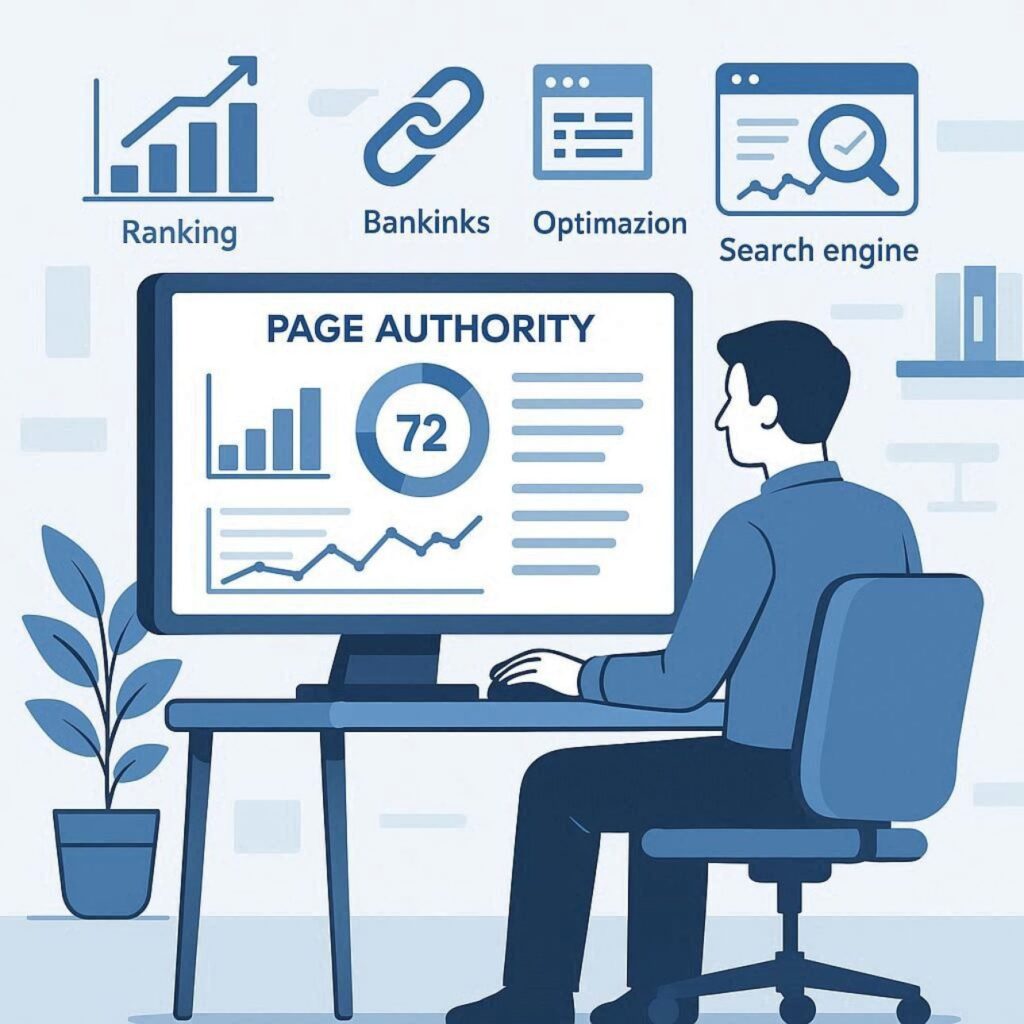
In the world of SEO, website authority plays a major role in determining how well pages perform in search engine rankings. While many people focus on Domain Authority, another equally important metric is Page Authority (PA).
Page Authority helps SEO professionals understand the ranking potential of an individual webpage. Whether you run a business website, blog, e-commerce store, or portfolio site, improving Page Authority can help increase organic traffic and visibility.
In this complete guide by WorkSEO Solutions, you will learn what Page Authority is, why it matters, how it works, and the best optimization tips to improve PA effectively.
What is Page Authority?
In the world of SEO, website authority plays a major role in determining how well pages perform in search engine rankings. While many people focus on Domain Authority, another equally important metric is Page Authority (PA).
Page Authority helps SEO professionals understand the ranking potential of an individual webpage. Whether you run a business website, blog, e-commerce store, or portfolio site, improving Page Authority can help increase organic traffic and visibility.
In this complete guide by WorkSEO Solutions, you will learn what Page Authority is, why it matters, how it works, and the best optimization tips to improve PA effectively.
What is Page Authority?
Page Authority, commonly known as PA, is a score developed by Moz that predicts how well a specific webpage is likely to rank on search engines.
The score ranges from 1 to 100:
- Lower scores indicate weaker ranking potential
- Higher scores indicate stronger ranking potential
Unlike Domain Authority, which measures the strength of an entire website, Page Authority focuses only on an individual webpage.
For example:
- Your homepage may have PA 40
- A blog post may have PA 25
- A service page may have PA 35
Each page on a website can have a different Page Authority score.
Is Page Authority a Google Ranking Factor?
No. Google does not officially use Moz Page Authority as a direct ranking factor.
However, the factors that influence Page Authority — such as backlinks, content quality, and SEO optimization — are highly important in Google rankings.
This means improving PA often helps improve real search performance indirectly.
How is Page Authority Calculated?
Page Authority is calculated using multiple SEO factors.
Some of the key factors include:
Quality Backlinks
Backlinks from trusted and relevant websites increase page strength.
Number of Referring Domains
Pages linked by multiple websites usually gain more authority.
Content Quality
Useful, original, and well-structured content performs better.
Internal Linking
Internal links help distribute authority across important pages.
SEO Optimization
Proper on-page SEO contributes to stronger ranking signals.
User Experience
Fast-loading and mobile-friendly pages tend to perform better.
Difference Between Domain Authority and Page Authority
Many beginners confuse DA and PA.
Here is the main difference:
| Feature | Domain Authority | Page Authority |
|---|---|---|
| Measures | Entire website | Individual webpage |
| Focus | Domain-level strength | Page-level strength |
| Score Range | 1–100 | 1–100 |
| Usage | Compare websites | Compare pages |
Both metrics are useful for SEO analysis.
Why Page Authority is Important
Page Authority helps identify which pages on your website have strong ranking potential.
Benefits of improving PA include:
- Better keyword rankings
- Increased organic traffic
- Improved search visibility
- Stronger backlink profile
- Better user engagement
- Higher credibility
A page with strong authority often ranks faster compared to weak pages.
What is a Good Page Authority Score?
There is no perfect PA score because competition varies across industries.
General guidelines:
| PA Score | Strength |
|---|---|
| 1–20 | Weak |
| 20–40 | Average |
| 40–60 | Strong |
| 60+ | Excellent |
Instead of comparing your PA with major brands, compare it with competitors in your niche.
How to Check Page Authority
You can check PA using several SEO tools.
Popular tools include:
These tools help analyze backlink strength and ranking potential.
How to Increase Page Authority
Improving Page Authority requires a combination of content strategy, backlink building, and technical SEO.
Below are some proven optimization tips.
Create High-Quality Content
Content is the foundation of strong Page Authority.
Your content should:
- Solve user problems
- Match search intent
- Include updated information
- Be easy to read
- Use proper headings
Long-form, valuable content tends to attract more backlinks naturally.
Examples include:
- Tutorials
- Guides
- Case studies
- Research posts
- Industry insights
Build Quality Backlinks to the Page
Backlinks are one of the strongest PA factors.
Focus on earning backlinks from:
- Relevant blogs
- Industry websites
- News portals
- Educational sites
- Trusted directories
A few high-quality backlinks are better than hundreds of spammy links.
Improve Internal Linking
Internal linking passes authority between pages.
Best practices:
- Link relevant articles together
- Use descriptive anchor text
- Link from high-authority pages
- Avoid broken internal links
Internal links help search engines understand content relationships.
Optimize On-Page SEO
Good on-page SEO improves page relevance and visibility.
Important elements include:
Title Tags
Use clear and keyword-rich titles.
Meta Descriptions
Write compelling descriptions to improve CTR.
Header Tags
Use H1, H2, H3 properly for content structure.
Keyword Optimization
Naturally include primary and related keywords.
Image Optimization
Compress images and use descriptive alt text.
Improve Page Loading Speed
Page speed affects both SEO and user experience.
Ways to improve speed:
- Compress images
- Enable caching
- Use fast hosting
- Minify CSS and JavaScript
- Use CDN services
Faster pages usually retain users longer.
Make Pages Mobile-Friendly
Most users browse websites on mobile devices.
Responsive design helps:
- Improve user experience
- Reduce bounce rates
- Improve rankings
Google also uses mobile-first indexing.
Update Old Content Regularly
Refreshing content can improve rankings and authority.
Update:
- Statistics
- Examples
- Screenshots
- SEO information
- Internal links
Fresh content signals relevance to search engines.
Use Social Media Promotion
Sharing content on social media helps increase exposure.
Promote your pages on:
More visibility can lead to natural backlinks.
Reduce Bounce Rate
When users leave quickly, it may signal poor content quality.
To reduce bounce rates:
- Improve readability
- Add visuals
- Use short paragraphs
- Include clear navigation
- Improve page speed
Better engagement supports SEO growth.
Earn Links Through Guest Posting
Guest posting remains an effective link-building method.
Write useful content for relevant websites and link back to your important pages.
Benefits include:
- Referral traffic
- Better branding
- Strong backlinks
- Improved authority
Focus on quality rather than quantity.
Avoid Spammy SEO Techniques
Black-hat SEO can damage Page Authority.
Avoid:
- Buying backlinks
- Link farms
- Keyword stuffing
- Duplicate content
- Automated link building
Search engines prioritize natural optimization strategies.
Importance of Page Authority for Blogs
Blog posts with strong Page Authority can:
- Rank for competitive keywords
- Generate organic traffic
- Earn backlinks naturally
- Increase brand visibility
This is why many SEO experts focus heavily on blog optimization.
Importance of Page Authority for E-Commerce Websites
For e-commerce websites, PA helps product and category pages rank better.
Benefits include:
- Increased product visibility
- Better organic sales
- Higher search traffic
- Improved trust
Optimizing category pages and product descriptions can improve page authority over time.
Common Mistakes That Affect Page Authority
Many website owners unknowingly reduce their page performance.
Common mistakes:
- Thin content
- Slow-loading pages
- Poor internal linking
- Broken links
- Duplicate pages
- Low-quality backlinks
Fixing these issues can significantly improve SEO performance.
How Long Does It Take to Improve Page Authority?
Page Authority growth depends on:
- Competition
- Content quality
- Backlink profile
- SEO consistency
Some improvements may appear within weeks, while competitive industries may take several months.
SEO is a long-term investment.
Final Thoughts
Page Authority is an important SEO metric that helps measure the ranking strength of individual webpages. While it is not a direct Google ranking factor, the elements influencing PA are highly important for SEO success.
To improve Page Authority effectively:
- Publish valuable content
- Build quality backlinks
- Improve technical SEO
- Strengthen internal linking
- Optimize user experience
Instead of chasing numbers alone, focus on creating pages that genuinely help users and provide useful information.
At WorkSEO Solutions, we recommend combining ethical SEO strategies with high-quality content marketing to achieve sustainable growth and better search rankings.