
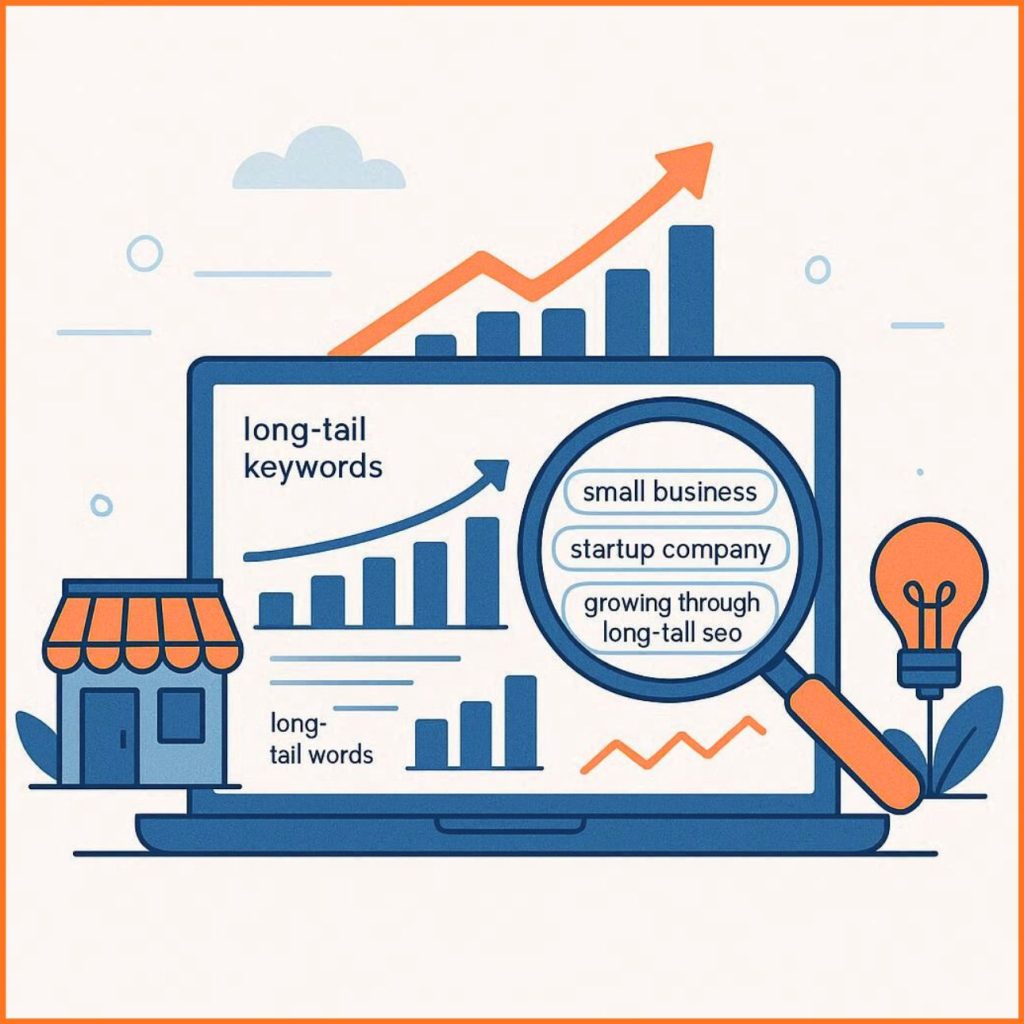
Small businesses and startups often struggle to rank for highly competitive keywords due to limited budgets and brand recognition. That’s where long-tail SEO steps in — a smart, cost-effective way to attract targeted traffic. But can long-tail SEO be effective for small businesses and startups? The answer is a resounding yes. In this blog, WorkSEO SEO Agency breaks down 10 powerful reasons why long-tail SEO can fuel your growth online.
FAQs: Long-Tail SEO for Small Businesses
Q1. Can long-tail SEO really help small businesses rank faster?
Q2. Is long-tail SEO better than targeting broad keywords?
Q3. Does long-tail SEO work for new websites?
Why Long-Tail SEO Works for Small Businesses and Startups (Updated for 2026 SEO trends)
Long‑tail keywords are longer, more specific search phrases that usually attract smaller search volumes but deliver visitors who are ready to act. Because they mirror how real people ask questions, they help you capture highly qualified traffic instead of chasing broad, fiercely competitive terms. Below, WorkSEO SEO Agency explains can long‑tail SEO be effective for small businesses and startups?—and why the answer is a resounding “yes.”
Lower competition, faster wins
Competing for “shoes” pits you against global brands. Target “handmade vegan leather shoes in Chennai” and you can rank sooner, even with a modest backlink profile.Higher conversion intent
Visitors who type a 5‑ to 7‑word phrase already know what they want. When they land on your page, purchase or inquiry rates jump, maximizing your ad‑spend and content budget.Precise audience targeting
Long‑tails let neighborhood stores, SaaS startups, or niche service providers speak directly to hyper‑specific needs—improving relevance scores in both organic and paid search.Cost‑efficient PPC synergy
In Google Ads, low‑volume terms often cost a fraction of head keywords, enabling lean marketing teams to stretch budgets while testing messaging that feeds back into SEO.Voice and mobile search alignment
Conversational phrases such as “best accountant for freelancers near me” match how people speak into phones, positioning your brand for the next wave of search behavior.Content authority building
Publishing clusters of long‑tail articles around a core topic signals topical depth to search engines, accelerating your authority and rankings for broader terms over time.
Put simply, long‑tail SEO helps small businesses punch above their weight. WorkSEO SEO Agency specializes in uncovering and optimizing these high‑intent phrases so your startup can compete—and convert—without the enterprise budget.
10 Reasons Why Long-Tail SEO is Effective (2026 updated)
1. Lower Keyword Competition
Long-tail keywords offer a clear advantage for small businesses and startups—lower competition. While broad keywords like “marketing services” or “CRM software” are dominated by large corporations with established SEO authority and high budgets, long-tail keywords open the door for smaller players to rank faster and more affordably.
Here’s how:
Fewer Sites Competing
Long-tail phrases such as “affordable CRM software for freelancers” or “local marketing services for yoga studios” are less competitive because fewer websites are targeting them directly. This allows newer sites to secure rankings more easily, without needing hundreds of backlinks or high domain authority.Quicker Indexing and Ranking
Search engines can more quickly index and evaluate your content when targeting less saturated keywords. This helps small brands get on page one faster, giving them early exposure and valuable traffic during critical growth stages.Smarter Use of Resources
Instead of exhausting time and budget trying to rank for head terms, small businesses can allocate efforts toward specific keyword groups that offer faster results. At WorkSEO SEO Agency, we help startups discover clusters of low-competition, high-relevance keywords tailored to their niche.Greater Niche Visibility
Long-tail keywords often include industry, location, or audience qualifiers. This improves your visibility in targeted searches, increasing relevance and click-through rates.
If you’re wondering can long-tail SEO be effective for small businesses and startups?, the answer is yes—it levels the playing field and gets you seen by the right audience sooner.
2. Higher Conversion Rates
One of the most powerful benefits of long-tail SEO for small businesses and startups is its ability to drive higher conversion rates. Unlike broad keywords that attract general traffic, long-tail keywords reflect clear user intent—meaning the person searching is further along in the buying journey and more likely to take action.
Here’s why long-tail keywords lead to better quality traffic and conversions:
Clearer Purchase Intent
A user searching for “best CRM software” might just be browsing options. In contrast, someone searching for “best CRM software for small businesses under ₹1000/month” is likely ready to sign up or request a demo. The more specific the query, the closer the user is to making a decision.Improved Relevance and Engagement
When your content aligns closely with a detailed search phrase, users are more likely to stay on the page, engage with your offer, and follow through with the next step—whether that’s a purchase, contact form submission, or email signup. This boosts conversion rates and lowers bounce rates.Optimized Landing Pages
Long-tail SEO lets you create landing pages tailored to very specific queries. At WorkSEO SEO Agency, we help startups build keyword-targeted content that speaks directly to the pain points and motivations behind each search—resulting in more meaningful interactions.Better ROI from Organic and Paid Campaigns
Since the traffic is more qualified, your customer acquisition cost goes down. Every visitor has a higher chance of converting, making your SEO spend more efficient.
Still wondering can long-tail SEO be effective for small businesses and startups? Higher conversion rates make the answer a clear yes.
3. Cost-Effective SEO Strategy
Long-tail SEO is one of the most budget-friendly digital marketing approaches available, making it an ideal strategy for startups and small enterprises with limited resources. Unlike large corporations that invest heavily in ranking for highly competitive keywords, small businesses can achieve meaningful results by targeting long-tail phrases that are both affordable and accessible.
Here’s why long-tail SEO is a cost-effective solution:
Lower Competition, Lower Investment
Targeting broad keywords often requires extensive link building, technical optimization, and high-authority content. In contrast, long-tail keywords like “affordable web design services for dentists in Delhi” have far less competition. This reduces the amount of time, content, and budget required to rank well.Organic Visibility Without High Ad Spend
Startups often rely on paid ads to get visibility, but those costs add up quickly. With long-tail SEO, you can attract organic traffic from users actively searching for what you offer—without having to bid on expensive keywords.Faster Results for Less Effort
While SEO is a long-term investment, long-tail keywords tend to rank faster because they serve more specific, less saturated queries. At WorkSEO SEO Agency, we specialize in uncovering long-tail opportunities that allow your business to gain traction within weeks, not months.More ROI for Every Rupee Spent
Because the traffic is highly targeted and more likely to convert, every rupee spent on content creation and optimization delivers better returns.
So, can long-tail SEO be effective for small businesses and startups? Absolutely—it’s a lean, smart way to grow your online presence without burning your marketing budget.
4. Easier to Build Topical Authority
For small businesses and startups, building topical authority is essential to gaining trust from both users and search engines. One of the most effective ways to do this is by targeting multiple long-tail keywords within a specific niche. Instead of trying to rank for a single broad term, long-tail SEO allows you to cover related subtopics thoroughly, signaling depth and expertise.
Here’s how long-tail SEO helps you build topical authority:
Cluster-Based Content Strategy
Targeting long-tail phrases such as “email marketing tips for fitness studios,” “how to automate email follow-ups for gyms,” and “best email subject lines for personal trainers” helps you create a comprehensive content hub. This interconnected content reinforces your relevance for the main topic—email marketing for fitness businesses, for example.Improved Internal Linking Opportunities
A site with well-structured long-tail content enables stronger internal linking. This helps distribute SEO value across related pages and improves overall site architecture—both of which are key ranking signals for Google.Higher Engagement and Lower Bounce Rates
When users find content that precisely matches their search query, they are more likely to stay longer and explore related articles. This sends positive engagement signals that contribute to higher rankings over time.Trust and Recognition Within a Niche
Publishing in-depth content on various angles of a single topic positions your brand as a go-to resource in your field. At WorkSEO SEO Agency, we help small brands leverage long-tail SEO to dominate niche markets and outshine larger competitors in specific segments.
Still asking can long-tail SEO be effective for small businesses and startups? It’s one of the smartest ways to build authority and long-term SEO success.
5. Better Audience Targeting
Long-tail keywords allow small businesses and startups to connect with highly specific customer segments. Instead of trying to appeal to a broad audience, which often leads to irrelevant clicks and low engagement, long-tail SEO helps filter out unqualified traffic and focus on users who are actively looking for exactly what you offer.
Here’s how better audience targeting through long-tail SEO benefits your business:
Reaches Niche Markets with Precision
A search like “eco-friendly packaging suppliers for handmade soaps in India” reflects a highly specific need. By creating content around such phrases, you’re not just attracting more traffic—you’re attracting the right traffic with real purchasing intent.Reduces Bounce Rate and Increases Dwell Time
When users find content tailored to their exact query, they’re more likely to stay, read, and take the next step. This improves dwell time and sends positive user signals to search engines, helping your pages rank higher.Improves Content Relevance and Engagement
Pages optimized for long-tail keywords resonate more with readers because they address unique pain points or questions. As a result, visitors are more likely to interact—whether by filling out a form, making a purchase, or subscribing to a newsletter.Enhances Personalization Across Channels
Insights from long-tail keyword traffic can guide your messaging in email campaigns, landing pages, and ads. At WorkSEO SEO Agency, we help startups turn these insights into personalized strategies that convert.
So, can long-tail SEO be effective for small businesses and startups? Yes—especially when audience relevance is your top priority.
6. Faster Ranking Results
For startups and small businesses, early visibility is critical. Waiting six to twelve months to rank for competitive head keywords isn’t always feasible when you’re trying to grow leads or revenue quickly. That’s where long-tail SEO gives you a major advantage—faster rankings with less effort.
Here’s why long-tail keywords deliver quicker results:
Less Competition, Quicker Wins
Long-tail search terms like “affordable coworking space in Whitefield Bangalore” have fewer pages competing for top spots. Google can identify your page as relevant and rank it faster, often within weeks rather than months.Faster Indexing and Ranking by Search Engines
Because fewer pages target these niche queries, search engines don’t need as much time or data to determine your page’s relevance. This leads to shorter ranking cycles and earlier organic traffic.Early ROI for Limited Budgets
For startups operating with lean marketing budgets, long-tail SEO is a practical way to generate qualified leads before investing heavily in broader campaigns. Even ranking for 5–10 long-tail keywords can deliver meaningful traction early on.Test and Learn Approach
Long-tail terms allow you to test various messages and offers with minimal risk. At WorkSEO SEO Agency, we help clients monitor performance, refine content, and scale what works—all based on real-time results from long-tail traffic.
So, can long-tail SEO be effective for small businesses and startups? Absolutely. It gets your content discovered sooner, builds momentum early, and lays the groundwork for sustainable SEO growth.
7. Improves Voice Search Visibility
Voice search is rapidly changing how users interact with search engines. Instead of typing short, generic phrases, people are asking full, conversational questions like “what’s the best budget hotel near me with free parking?” or “how can I start an online store without coding skills?” These are naturally long-tail queries—making long-tail SEO a direct path to voice search optimization.
Here’s how long-tail keywords improve your visibility in voice search:
Aligned with Natural Speech Patterns
Voice queries tend to be longer and more specific because users speak in full sentences. Optimizing your content for these conversational phrases increases your chances of being selected as a voice search result.Targeted Answers for “Micro-Moments”
Voice searches are often performed during decision-making moments—like “best plumber in Chennai open now” or “top-rated vegan restaurant near me.” Content that directly answers these types of questions ranks better, especially in local and mobile voice searches.Featured Snippets and Position Zero
Long-tail optimization increases your chances of being selected for featured snippets, which voice assistants often pull answers from. At WorkSEO SEO Agency, we structure content with Q&A formats, schema markup, and conversational tone to improve snippet eligibility.Better Mobile SEO Alignment
Since most voice searches happen on mobile devices, optimizing for long-tail voice queries naturally complements mobile-first SEO strategies—improving both visibility and user experience.
So, can long-tail SEO be effective for small businesses and startups? Yes—especially if you want to future-proof your SEO strategy in the voice-first era.
8. Supports Local SEO
Long-tail SEO plays a vital role in boosting local visibility for small businesses and startups. Most local searches are naturally long-tail because users include specific details like location, service type, or budget in their queries. A search for “affordable SEO agency in Chennai” is far more actionable than a broad search like “SEO agency”—and it’s exactly where long-tail SEO excels.
Here’s how long-tail keywords strengthen your local SEO strategy:
Captures Geo-Specific Searches
Users often search using phrases like “best bakery in Anna Nagar” or “emergency plumber near Nungambakkam.” These location-based, long-tail keywords are easier to rank for and drive highly targeted traffic from people in your service area.Improves Map Pack Rankings
Optimizing your content with local long-tail terms increases your chances of appearing in Google’s local 3-pack (map listings). This is crucial for driving foot traffic, phone calls, or direct inquiries from local prospects.Drives Intent-Driven Local Traffic
Long-tail queries show strong intent. Someone searching “SEO agency offering free consultation in T Nagar” is much closer to taking action than someone searching “digital marketing.” By targeting these long-tail local searches, small businesses can attract users ready to convert.Enhances Local Landing Pages
At WorkSEO SEO Agency, we help businesses build local landing pages optimized for long-tail terms like “affordable website design for startups in Coimbatore,” ensuring you rank for multiple local variations and neighborhoods.
Still asking can long-tail SEO be effective for small businesses and startups? For local visibility and high-conversion traffic, it’s one of the smartest strategies you can implement.
9. Enhances Content Relevance
Long-tail keywords are more than just a tactic for ranking—they are a framework for writing content that genuinely serves the reader’s needs. When your blog posts, product pages, or service descriptions are built around specific, intent-driven search terms, you naturally produce content that is more focused, helpful, and valuable.
Here’s how long-tail SEO enhances content relevance for small businesses and startups:
Addresses Specific User Questions
A long-tail keyword like “how to file GST returns as a freelancer in India” signals a clear informational need. When you build content around such terms, your page answers real questions in detail—improving user satisfaction and retention.Reduces Keyword Stuffing and Improves Natural Flow
Broad keywords often lead to vague, over-optimized writing. In contrast, long-tail keywords support natural, conversational content that reads well and satisfies searcher intent—something search engines now prioritize in rankings.Boosts Semantic SEO
Content focused on long-tail queries tends to include related terms and concepts naturally. This improves your site’s semantic relevance, making it easier for Google to understand what your content is about and when to show it.Strengthens Topical Clarity
At WorkSEO SEO Agency, we use long-tail keyword research to help startups structure blog posts and landing pages around very specific pain points. This not only helps you rank but ensures your content aligns with what your audience actually wants to read.
So, can long-tail SEO be effective for small businesses and startups? Yes—because it leads to more relevant, actionable, and user-focused content that drives both engagement and rankings.
10. Boosts ROI on Content Marketing
For small businesses and startups working with limited marketing budgets, every piece of content must justify its cost. Long-tail SEO helps maximize return on investment (ROI) by ensuring your content attracts visitors who are more likely to convert, rather than just generating high but untargeted traffic.
Here’s how targeting long-tail keywords increases content marketing ROI:
Focuses on Intent-Based Traffic
Long-tail queries such as “best accounting software for solo entrepreneurs in India” reflect a clear need and often a purchase mindset. Content built around these queries drives readers who are actively researching or ready to take action—reducing drop-off rates and increasing conversions.Reduces Traffic Waste
Broad keywords attract general audiences who may not be a good fit for your product or service. Long-tail SEO filters out unqualified visitors and brings in users who are more aligned with your offerings. This means you spend less on customer acquisition and generate more value per visit.Improves Lead Quality
Pages optimized for specific pain points or use cases tend to attract high-quality leads. For example, a guide targeting “how to choose CRM software for real estate agents” can yield highly relevant inquiries for a CRM company serving that niche.Sustains Long-Term Value
Long-tail content often stays relevant longer, with fewer algorithm fluctuations affecting its ranking. At WorkSEO SEO Agency, we focus on evergreen, intent-rich content that continues to deliver leads and conversions long after it’s published.
Still asking can long-tail SEO be effective for small businesses and startups? Yes—it’s one of the most efficient ways to get better results from your content marketing with minimal waste.
Combine Long-Tail Keywords with FAQs
For small businesses and startups, one of the most effective ways to enhance SEO performance is by integrating long-tail keywords into FAQ sections. This approach not only addresses specific customer queries but also increases your chances of ranking in Google’s featured snippets and voice search results.
Here’s how combining FAQs with long-tail SEO adds value:
Directly Answers User Intent
When users search for specific queries like “how to choose a digital marketing agency for startups” or “does SEO work for new websites with no traffic,” they’re looking for immediate, clear answers. FAQ sections built around such long-tail phrases provide concise responses that match searcher expectations.Increases Chances of Earning Featured Snippets
Google often pulls content for featured snippets from well-structured FAQ sections. If your FAQ uses long-tail queries as headings or questions, you improve the likelihood of being selected for position zero—driving higher visibility and click-through rates.Improves On-Page SEO and Relevance
Embedding relevant long-tail keywords into your FAQs enhances the overall keyword density and topical depth of the page, helping search engines better understand your content’s focus.Supports Conversational and Voice Search
FAQs mirror the natural language used in voice queries. At WorkSEO SEO Agency, we structure FAQ content using question-based long-tail terms like “can long-tail SEO be effective for small businesses and startups?” to align with how real people search.
This smart content format allows you to educate visitors, improve engagement, and boost your search performance—all from a single, strategic section.
Use Long-Tail Keywords for Blogging and Internal Linking
Long-tail SEO doesn’t just improve visibility—it builds a strong, interconnected content strategy that benefits both users and search engines. One of the most effective ways to apply this is through blogging and internal linking.
Here’s how small businesses and startups can benefit from using long-tail keywords in blog content and internal link structures:
Create Blog Clusters Around Specific Topics
Rather than writing generic blog posts, focus on detailed topics like “best digital marketing tips for real estate agents” or “how to grow an Instagram page for handmade jewelry.” These long-tail topics allow you to create content that solves real user problems and targets low-competition search terms.Link Content Internally to Build Topical Authority
When each blog post targets a related long-tail keyword, you can strategically link them to one another—creating a content cluster around a broader theme. This helps search engines understand the topical relevance of your site and improves ranking potential for both short- and long-tail keywords.Guide Visitors Through the Buyer Journey
Internal links move users through your site logically. A blog on “SEO for handmade jewelry businesses” can link to related content like “how to write product descriptions for Etsy,” keeping visitors engaged and increasing conversion opportunities.Support Keyword Variety Without Keyword Stuffing
Long-tail terms offer more natural ways to include variations of your main keyword without over-optimization. At WorkSEO SEO Agency, we help startups build blog calendars based on long-tail clusters to grow rankings and authority systematically.
Still wondering can long-tail SEO be effective for small businesses and startups? When used for blogging and internal linking, the results speak for themselves.
Conclusion
Long-tail SEO isn’t just a side strategy — it’s a core growth tactic for small businesses and startups looking to punch above their weight. By targeting specific, intent-driven keywords, you can attract more qualified visitors who are ready to take action. It allows your brand to compete in less crowded spaces, gain visibility faster, and convert traffic more efficiently than broad, high-competition terms.
From improved local SEO and voice search readiness to better audience targeting and content relevance, long-tail SEO offers scalable advantages across your entire marketing funnel. Whether you’re building blog content, landing pages, or service descriptions, these keywords align closely with real user needs—turning your website into a high-converting resource.
At WorkSEO SEO Agency, we specialize in helping startups and growing businesses identify long-tail opportunities that drive meaningful results. If you’ve been asking, can long-tail SEO be effective for small businesses and startups? — the answer is a definite yes. It’s affordable, powerful, and perfectly suited to help you grow sustainably in today’s search-driven world.
Ready to Grow Your Traffic with Smart SEO?
At WorkSEO SEO Agency, we specialize in long-tail SEO strategies tailored for startups and small businesses. Let’s turn your niche into a competitive edge.
Contact us today for a free SEO consultation!
Latest Insights from Our SEO Experts
Stay updated with actionable SEO tips, strategies, and trends from the WorkSEO editorial team—designed to help your business grow organically and rank higher on search engines.
Completing a B.Sc. or M.Sc. in Geology is a significant achievement. During your studies, you gain knowledge about Earth’s structure, […]
In today’s digital world, every business wants to appear on the first page of Google. Whether you are a student, […]
In today’s digital world, many business owners believe that online success is impossible without spending thousands of rupees on advertising. […]