
Introduction
If you are planning to learn SEO and build a career in digital marketing, you are on the right path. Search Engine Optimization is one of the most in-demand skills today, helping businesses grow online and individuals earn through freelancing, jobs, or their own websites.
But many beginners feel confused about how to learn SEO, what to start with, and how long it takes.
This SEO course roadmap will give you a clear, step-by-step learning path — even if you have zero technical background.
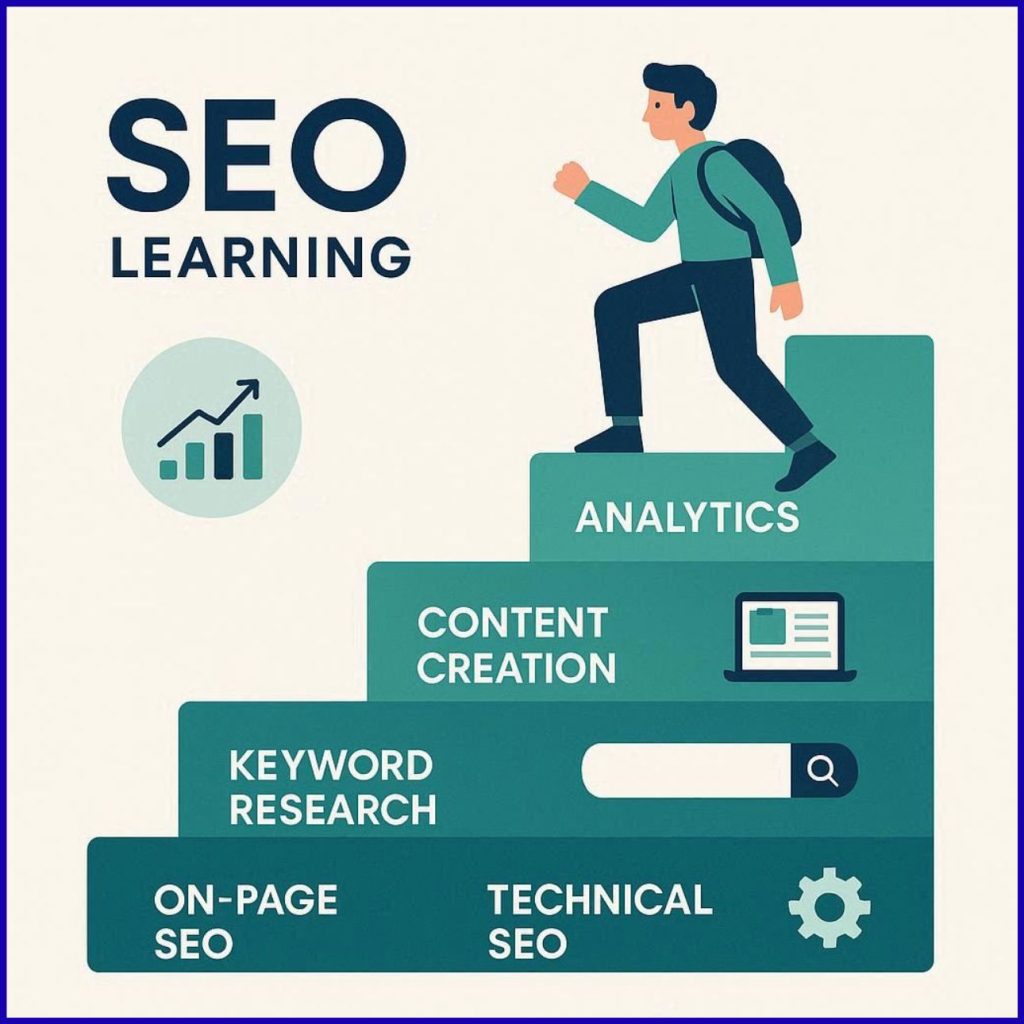
What is SEO and Why Should You Learn SEO?
SEO (Search Engine Optimization) is the process of improving a website to rank higher in search engines like Google. It involves optimizing different elements of a website so that search engines can understand the content and show it to the right audience at the right time.
When you start to learn SEO marketing, you are not just learning a single skill — you are building a powerful combination of technical knowledge, content strategy, and analytical thinking.
With proper SEO learning, you gain the ability to:
- Understand how users search online and what they are looking for
- Analyze keywords and identify high-traffic opportunities
- Optimize website content to match search intent
- Improve website structure for better user experience
- Track performance using tools and data insights
As your skills grow, SEO opens multiple career and income opportunities. You can:
- Increase website traffic organically without paid ads
- Generate qualified leads and boost sales for businesses
- Build niche websites that create long-term passive income
- Work as a freelancer and handle global clients
- Secure high-paying jobs in digital marketing agencies or companies
In today’s digital-first world, almost every business — from small local shops to large enterprises — depends on online visibility. This makes SEO one of the most valuable and future-proof skills.
Unlike many careers that require heavy technical knowledge, SEO can be learned step by step with consistent practice. That’s why SEO learning is not just a skill, but a smart and sustainable career choice for anyone looking to grow in the digital space.
SEO Course Roadmap Overview
Here is the simple roadmap to follow:
- Understand SEO Basics
- Learn Keyword Research
- Master On-Page SEO
- Learn Technical SEO
- Practice Content SEO
- Learn Off-Page SEO
- Work on Real Projects
- Learn SEO Tools
- Build Portfolio & Start Earning
Let’s break each step in detail.
Step 1: Understand SEO Basics
Start with the fundamentals of SEO, because a strong base will make every advanced concept easier to understand. Many beginners try to jump directly into tools or backlink strategies, but without clarity on the basics, it becomes confusing and ineffective.
At this stage, your goal is to clearly understand how SEO works at a core level. Focus on learning concepts like:
- What is SEO optimization and why it is important
- Types of SEO: On-page SEO, Off-page SEO, and Technical SEO
- How search engines like Google discover and rank websites
- The process of crawling, indexing, and ranking
To make it simpler:
- Crawling is when search engines scan your website pages
- Indexing is storing those pages in their database
- Ranking is deciding where your page appears in search results
When you understand these concepts, you start thinking like a search engine, which is the key to mastering SEO.
You should also begin exploring:
- How websites are structured (basic understanding of pages and links)
- The importance of relevant and high-quality content
- How user experience impacts rankings
This stage does not require any coding knowledge. Even non-technical learners can easily grasp these fundamentals with the right guidance and practice.
Building this foundation is very important because every advanced SEO strategy — whether it is keyword research, content optimization, or link building — depends on these core principles. Once your basics are strong, learning the next steps in SEO becomes much faster and more effective.
Step 2: Learn Keyword Research
Keyword research is the heart of SEO because it helps you understand exactly what your target audience is searching for on search engines. Without proper keyword research, even the best content may fail to reach the right people.
If you want to learn SEO optimization effectively, you must first learn how to identify the right keywords that bring traffic, leads, and conversions. This step connects your content directly with user intent, making your SEO efforts more strategic and result-driven.
Start by understanding the basics:
- What are keywords and how they represent user search queries
- The difference between short-tail keywords (broad, high competition) and long-tail keywords (specific, lower competition)
- Search intent:
- Informational (users want to learn something)
- Transactional (users want to buy or take action)
- Navigational (users are looking for a specific website or brand)
- Competitor keyword analysis to discover what is already working in your niche
As you go deeper, you will also learn:
- How to find low-competition, high-traffic keywords
- How to group keywords for better content planning
- How to map keywords to specific pages on your website
To practice keyword research, you can start with beginner-friendly tools like:
- Google Keyword Planner for basic keyword ideas and search volume
- Ubersuggest for keyword suggestions and competition analysis
- Ahrefs (advanced) for in-depth research, competitor insights, and backlink data
Mastering keyword research gives you a strong advantage, because it helps you create content that people are already searching for — which is the foundation of successful SEO.
Step 3: Master On-Page SEO
On-page SEO is about optimizing your website content so that both search engines and users can clearly understand what your page is about. It is one of the most important parts of SEO because it gives you full control over how your content is structured and presented.
When you are learning SEO, on-page optimization is the first practical step where you start applying your knowledge. Even small improvements in on-page SEO can make a big difference in rankings and visibility.
You should focus on the following key elements:
- Title tags and meta descriptions
These are the first things users see in search results. A clear, keyword-rich title and an engaging meta description can improve your click-through rate. - URL structure
Keep URLs short, clean, and relevant to your content. Avoid unnecessary numbers or symbols, and include your target keyword naturally. - Header tags (H1, H2, H3)
Proper use of headings helps organize your content and improves readability. It also helps search engines understand the hierarchy of your content. - Keyword placement
Use your main keyword in important places like the title, headings, introduction, and throughout the content — but always keep it natural and avoid keyword stuffing. - Internal linking
Linking to other relevant pages on your website helps users navigate better and allows search engines to crawl your site more effectively. - Image optimization
Use proper file names, compress images for faster loading, and add alt text with relevant keywords to improve accessibility and SEO.
As you continue learning SEO, you will realize that on-page SEO is not just about keywords — it is about delivering value, improving user experience, and making your content easy to understand. This step is crucial because strong on-page optimization directly impacts how well your pages rank in search results.
Step 4: Learn Technical SEO
Technical SEO helps search engines understand, access, and index your website efficiently. While content and keywords are important, technical SEO ensures that your website is properly structured so search engines can read and rank it without any issues.
When you are learning SEO, this step might seem slightly technical, but you don’t need deep coding knowledge to get started. A basic understanding of how websites function is enough to handle most technical SEO tasks.
Here are the key areas you should focus on:
- Website speed optimization
A fast-loading website improves user experience and is a confirmed ranking factor. You can optimize speed by compressing images, using caching, and choosing good hosting. - Mobile-friendliness
Most users browse on mobile devices, so your website must be responsive and easy to use on all screen sizes. Google also uses mobile-first indexing. - XML sitemap
This is a file that helps search engines find and understand all the important pages on your website. Submitting a sitemap improves crawling efficiency. - Robots.txt
This file tells search engines which pages they should or should not crawl. It helps control how your website is accessed by search engines. - Fixing crawl errors
Errors like broken links, 404 pages, or blocked resources can affect your rankings. Regularly checking and fixing these issues is important. - Core Web Vitals
These are performance metrics that measure user experience, such as loading speed, interactivity, and visual stability.
As you progress in your SEO learning journey, technical SEO will give you a strong advantage over others. Many beginners ignore this area, but even basic technical improvements can significantly boost your website performance and rankings.
The key is to start simple, use tools like Google Search Console, and gradually build your confidence in handling technical aspects of SEO.
Step 5: Practice Content SEO
Content is the backbone of SEO because search engines aim to deliver the most relevant and useful information to users. No matter how strong your technical setup or backlinks are, without quality content, it is difficult to achieve long-term rankings.
If you want to learn SEO marketing effectively, you must understand how to create content that not only attracts visitors but also satisfies their search intent. Good content builds trust, increases engagement, and encourages users to take action.
To get started, focus on these important areas:
- Writing SEO-friendly blog posts
Create content that answers user queries clearly and in detail. Your blog posts should be informative, engaging, and aligned with what people are searching for. - Content structure and readability
Use proper headings (H1, H2, H3), short paragraphs, and bullet points to make your content easy to read. Well-structured content improves user experience and helps search engines understand your page better. - Using keywords naturally
Include your target keywords in the title, headings, and throughout the content, but avoid overusing them. The goal is to keep the content natural and valuable for readers. - Optimizing for featured snippets
Provide clear, direct answers to common questions. Use lists, definitions, and concise explanations so your content has a chance to appear in Google’s featured snippets.
As you continue learning SEO, you will realize that content is not just about writing — it is about strategy. You need to plan topics, understand your audience, and deliver value consistently.
Consistency in content creation is what brings real SEO results. Publishing high-quality content regularly helps you build authority, improve rankings, and generate steady organic traffic over time.
Step 6: Learn Off-Page SEO
Off-page SEO builds your website authority and trust in the eyes of search engines. While on-page SEO focuses on optimizing your own website, off-page SEO is about how other websites and platforms perceive and reference your content.
When you learn SEO, understanding off-page SEO is essential because search engines use external signals to measure your website’s credibility and popularity. The more high-quality references your site gets, the stronger your chances of ranking higher.
Here are the key areas you should focus on:
- Backlink building strategies
Backlinks are links from other websites to your site. They act like votes of confidence. Focus on earning links from relevant and authoritative websites in your niche. - Guest posting
Writing articles for other websites helps you gain exposure, build authority, and earn quality backlinks. It is one of the safest and most effective off-page SEO techniques. - Directory submissions
Submitting your website to trusted online directories can help with initial visibility, especially for local SEO. Make sure you choose only high-quality and relevant directories. - Social signals
Sharing your content on social media platforms increases visibility and can indirectly drive traffic and engagement, which supports your SEO efforts. - Brand mentions
Even when your website is not directly linked, mentions of your brand across the web help build trust and authority.
As you continue learning SEO, remember that off-page SEO is not about quick wins. Building authority takes time and consistent effort.
Most importantly, avoid spammy backlinks or low-quality link-building tactics. These can harm your website and even lead to penalties. Always focus on quality over quantity, and aim to build genuine relationships and valuable content that naturally earns links.
Step 7: Work on Real Projects
This is where most people fail in their SEO journey. Many learners spend time watching videos or reading blogs, but they don’t apply what they learn. Without practical implementation, SEO remains just theoretical knowledge.
To truly learn SEO and gain confidence, consistent practice is essential. SEO is a skill that improves only when you work on real websites, face real challenges, and analyze real results.
You can start practicing in simple and effective ways:
- Start your own blog
Create a basic website and begin publishing content. This allows you to experiment with keyword research, on-page SEO, and content strategies in a real environment. - Offer free SEO for small businesses
Approach local businesses and help them improve their online presence. This gives you hands-on experience and also helps you build case studies. - Work on friends’ websites
If your friends or contacts have websites, offer to optimize them. This is a great way to practice without pressure.
As you work on these projects, you will begin to understand:
- How rankings change over time
- What strategies work and what don’t
- How to fix errors and improve performance
- How to use SEO tools effectively
This stage is where real learning happens. You will make mistakes, but those mistakes will teach you more than any course or tutorial.
Real experience is far more valuable than theory because it prepares you for actual client work, job roles, and business growth. The more you practice, the faster you will grow into a confident SEO professional.
Step 8: Learn SEO Tools
SEO tools help you work faster, smarter, and more accurately. While it is possible to learn SEO without tools, using the right tools gives you data-driven insights that improve your decisions and results.
When you are serious about learning SEO, tools become your daily working companions. They help you track performance, identify issues, analyze competitors, and measure growth effectively.
Here are the must-learn tools for every SEO beginner and professional:
- Google Search Console
This is a free tool that shows how your website performs in search results. You can track impressions, clicks, keyword rankings, and also identify technical issues like indexing errors. - Google Analytics
Helps you understand user behavior on your website. You can see how visitors interact with your content, where they come from, and which pages perform best. - Ahrefs / SEMrush
These are advanced SEO tools used for keyword research, competitor analysis, backlink tracking, and site audits. They are widely used by SEO professionals and agencies. - Screaming Frog
A powerful website crawler that helps you audit technical SEO issues such as broken links, duplicate content, missing tags, and more.
As you continue your SEO learning journey, you will realize that these tools save time and provide valuable insights that are difficult to gather manually.
Instead of guessing what works, you can make informed decisions based on real data. This is what separates beginners from professionals.
Mastering these tools is essential if you want to work in an SEO job, handle client projects, or scale your own websites successfully.
Step 9: Build Portfolio & Start Earning
Once you complete your SEO learning roadmap, the next important step is to monetize your skills. Learning SEO is valuable, but applying it to generate income is what makes it a powerful career choice.
SEO offers multiple earning opportunities, whether you prefer a job, freelancing, or building your own online business. The flexibility of this field allows you to choose a path that suits your goals and lifestyle.
Here are some of the most effective ways to earn using your SEO skills:
- Freelancing (Fiverr, Upwork)
Start by offering SEO services like keyword research, on-page optimization, and website audits. As you gain experience and positive reviews, you can increase your pricing and attract international clients. - SEO jobs
Many companies and digital marketing agencies are actively hiring SEO professionals. With the right skills and basic experience, you can secure a stable and well-paying job. - Blogging
Create your own niche website and publish SEO-optimized content. Over time, you can earn through ads, sponsored posts, and organic traffic. - Affiliate marketing
Promote products or services through your content and earn commissions for every sale generated through your links. This is one of the best ways to build passive income. - Local business SEO services
Help local businesses improve their Google rankings, especially for location-based searches. This is a high-demand and high-conversion service.
To succeed in any of these paths, it is important to build a strong portfolio. Instead of just listing skills, show real results such as:
- Traffic growth
- Keyword ranking improvements
- Lead generation results
- Case studies of your projects
A well-presented portfolio builds trust and makes it easier to attract clients or employers. It proves that you can deliver results, which is the most important factor in the SEO industry.
How Long Does It Take to Learn SEO?
- Basics: 1–2 weeks
- Intermediate: 1–2 months
- Advanced (with practice): 3–6 months
If you follow this roadmap consistently, you can become job-ready within 3 months.
Common Mistakes to Avoid While Learning SEO
Many beginners make common mistakes while learning SEO, which slows down their progress and leads to frustration. Being aware of these mistakes early can help you stay on the right path and achieve better results.
Here are some of the most common mistakes you should avoid:
- Learning without practice
Just reading or watching tutorials is not enough. SEO is a practical skill, and without applying what you learn, you won’t gain real understanding or confidence. - Focusing only on theory
Understanding concepts is important, but over-consuming theory without execution leads to confusion. Balance learning with hands-on implementation. - Ignoring technical SEO
Many beginners focus only on content and keywords while ignoring technical aspects like site speed, mobile optimization, and indexing. This can limit your growth and rankings. - Building spam backlinks
Trying to get quick results through low-quality or spammy backlinks can harm your website. It may even lead to penalties from search engines. - Expecting instant results
SEO is not a quick-win strategy. It takes time for search engines to crawl, index, and rank your content. Patience and consistency are key.
As you continue your SEO learning journey, remember that mistakes are part of the process. What matters is learning from them and improving your strategy over time.
SEO takes time, but the results are long-lasting. Once your website starts ranking, it can bring consistent traffic, leads, and income without relying on paid advertising.
Final Thoughts
If you are serious about building a career online, this SEO course roadmap is all you need to get started.
You don’t need coding skills or a technical background. With the right strategy and consistent practice, anyone can learn SEO and build a successful career.
Start today, follow this roadmap step-by-step, and your SEO journey will become much easier.
If you are looking for a practical SEO course with real-time projects, you can join our training program at WorkSEO.
- Beginner to Advanced SEO
- Live projects
- Job & freelancing guidance
Contact us today to start your SEO career.
Frequently Asked Questions (FAQ)
What is the best way to learn SEO for beginners?
The best way to learn SEO is to start with the basics and follow a step-by-step roadmap. Begin by understanding how search engines work, then move to keyword research, on-page SEO, and content creation. The most important part is practicing on real websites, such as your own blog or small projects.
How long does it take to learn SEO?
You can learn the basics of SEO in 1 to 2 weeks. To become intermediate, it usually takes 1 to 2 months. With consistent practice and real project experience, you can become job-ready in around 3 to 6 months.
Can I learn SEO without coding?
Yes, you can learn SEO without coding. Most SEO tasks like keyword research, content optimization, and basic technical SEO do not require programming knowledge. However, having a basic understanding of HTML can be helpful but is not mandatory.
What are the main types of SEO?
There are three main types of SEO:
- On-page SEO (content and page optimization)
- Off-page SEO (backlinks and authority building)
- Technical SEO (website performance and structure)
All three work together to improve your website rankings.
Which tools are best for SEO beginners?
Some of the best tools for beginners include:
- Google Search Console
- Google Analytics
- Google Keyword Planner
- Ubersuggest
Advanced tools like Ahrefs and SEMrush can be learned later as you gain experience.
Is SEO a good career in 2026?
Yes, SEO is a highly in-demand skill in 2026. Businesses are focusing more on online visibility, making SEO professionals valuable across industries. It offers opportunities in jobs, freelancing, and business growth.
Can I earn money after learning SEO?
Yes, you can earn money through various methods such as freelancing, SEO jobs, blogging, affiliate marketing, and offering SEO services to local businesses. Many people start earning within a few months of consistent learning and practice.
What is the difference between SEO and digital marketing?
SEO is a part of digital marketing. It focuses on improving organic (free) search visibility, while digital marketing includes other channels like social media, paid ads, email marketing, and content marketing.
Do I need a certification to get an SEO job?
No, certification is not mandatory. Most companies look for practical skills and real results. Having a strong portfolio with case studies and proven outcomes is more valuable than certificates.
Why is keyword research important in SEO?
Keyword research helps you understand what people are searching for online. It allows you to create content that matches user intent, which increases your chances of ranking higher and getting targeted traffic.