If you run a travel blog, brand, or business, you already know the importance of visibility in search engines. But the real game-changer? Travel SEO keywords research. In today’s content-saturated world, finding the right keywords is what sets top-performing travel sites apart.
In this post, we’ll break down 10 proven tips to help you master travel SEO keyword research, with strategies you can apply across blogs, YouTube, Instagram, and Pinterest. Let’s dive in.
Why Travel SEO Keywords Research Matters More Than Ever
In today’s digital landscape, the travel industry is more saturated than ever. Millions of travel bloggers, influencers, and agencies publish content daily, all competing for the attention of eager travelers. Amid this crowded space, strategic SEO keyword research has become essential for any travel-related content to succeed.
Rather than just increasing website traffic, keyword research helps in targeting users with the right intent. These are users who are not just browsing—they are actively planning trips, seeking recommendations, or ready to make bookings. Without proper keyword optimization, even the most visually stunning blogs or detailed itineraries risk being buried under thousands of search results.
Here’s why keyword research is more crucial than ever in the travel niche:
Increased Competition: With countless travel websites and influencers online, only optimized content stands a chance to rank on search engines.
User Intent Targeting: Keyword research helps align your content with what users are genuinely searching for, such as “family-friendly resorts in Goa” or “budget travel tips for Europe.”
Content Planning: Understanding keyword demand allows you to create blogs, guides, and landing pages that directly address traveler needs.
Seasonal Trends: Travel interests change throughout the year. Keywords can reflect real-time demand, enabling timely and relevant content.
Local SEO Advantage: Focusing on location-specific keywords boosts visibility for regional searches, especially for travel services and local guides.
Higher Conversion Rates: Targeted traffic tends to convert better, resulting in more bookings, inquiries, and newsletter sign-ups.
Effective travel keyword research bridges the gap between content creation and user discovery, making it a vital part of any successful travel marketing strategy.
Want to master SEO keyword research for Instagram, YouTube & Google?
Learn practical SEO strategies with real case studies and live projects.
Join the SEO Course by WorkSEO
1. Understand Your Audience’s Intent
Clarify primary search intent before keyword research
Begin each project by reviewing reader personas and mapping their most common questions or problems. A clear understanding of travel keywords for SEO ensures that every article, video, or guide solves a real user need rather than chasing vanity traffic.Differentiate intent buckets to build topical depth
Inspirational intent – Focus on aspirational phrases like “underrated Greek islands” or “winter wonderlands in Europe.” These evergreen ideas attract discovery-stage readers and are excellent targets for travel SEO keywords that generate social shares and backlinks.
How-to intent – Questions such as “how to travel cheap in Italy” or “how to plan a solo trip to Japan” convert well because they signal a readiness to act. Incorporate step-by-step solutions and cost breakdowns to satisfy searchers using keywords for blogs on travel and travel keyword research variations.
Itinerary intent – Detailed plans like “10-day Thailand backpacking route” or “ultimate road-trip itinerary Iceland” attract planners looking for ready-made schedules. Optimizing headlines, subheads, and schema with keyword research for travel phrases can push these pages into featured snippets.
Visual discovery intent – Platforms such as Pinterest and YouTube reward descriptive file names and alt text. Phrases like “Iceland drone footage itinerary” or “Greece aesthetic travel video” should appear in captions to rank for long-tail keywords travel where competition is lighter yet highly intentional.
Align keyword mapping with funnel stages
Match SEO keywords for travel blog to the informational top of the funnel, and save higher-commitment phrases like “best travel insurance for Europe” for decision-stage content. This balance supports a comprehensive travel SEO strategy that nurtures readers from curiosity to conversion.Use intent insights to refine on-page elements
Craft benefit-driven title tags under 60 characters using your primary keywords for travel blog.
Write meta descriptions with clear calls to action and secondary keyword for travel phrases.
Add internal links that guide users from inspirational articles to practical itineraries, keeping them on site longer and increasing the likelihood of sign-ups or affiliate clicks.
Measure and iterate
Track click-through rates and engagement metrics for each intent type. If inspirational posts drive views but few email sign-ups, adjust calls to action. Use findings to update existing content, ensuring your keyword targeting evolves with reader needs and search trend
2. Start With Seed Keywords
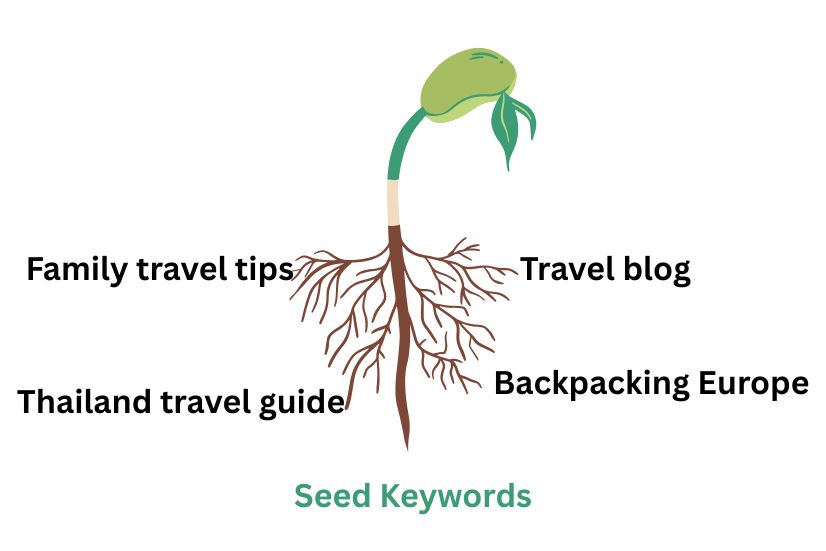
Seed keywords are the starting point of your keyword research journey. They’re short, general phrases that describe the core topic of your content. Think of them as the root words that grow into keyword clusters and long-tail opportunities.
Examples of Seed Keywords:
Travel blog
Backpacking Europe
Thailand travel guide
Family travel tips
These terms reflect high-level themes in travel. Once you identify them, you can start expanding using SEO tools and suggestions.
Tools to Explore Seed Keywords:
Google Autocomplete – Type in a seed keyword and see what suggestions appear.
People Also Ask – Found in search results; reveals related questions users ask.
Google Trends – Helps you compare interest over time and by region.
Expand With Long-Tail Keywords:
Starting from a seed like “Thailand travel guide”, you might uncover:
Thailand travel guide for couples
Thailand travel visa for Indians
Thailand travel guide 2025 pdf
These long-tail keywords have lower competition and higher intent, making them perfect for blog posts, lead magnets, or YouTube titles.
Pro Tip:
Use tools like Ubersuggest, AnswerThePublic, or Semrush Keyword Magic Tool to dig deeper and find clusters of related long-tail keywords.
3. Use Keyword Research Tools (With Travel Filters)
Keyword research tools are essential for uncovering profitable, low-competition travel keywords. These tools do the heavy lifting by showing you real search volume, keyword difficulty, and related phrases.
Top Keyword Research Tools for Travel SEO:
Ubersuggest (Free + Paid) – Beginner-friendly with solid keyword suggestions and SEO difficulty metrics.
Semrush or Ahrefs – Advanced tools for deep SEO insights, keyword gaps, and competitor analysis.
Google Keyword Planner – Great for paid campaigns, but also valuable for organic SEO insights.
KeywordTool.io – Perfect for discovering keywords from Pinterest, Instagram, YouTube, and even Amazon.
Smart Filters to Apply:
Location-based (e.g., “trekking spots in Himachal Pradesh”)
Question-based queries (e.g., “What to pack for a Europe trip?”)
Long-tail variations (e.g., “affordable honeymoon destinations in South India”)
💡 Pro Tip:
Prioritize low-competition, high-intent keywords that are easier to rank for.
For example:
“Best hidden spots in Bali” → Easier to rank, more specific
“Bali travel” → Broad, highly competitive
These niche keywords attract ready-to-convert traffic — people who know what they want and are looking for exactly your kind of content.

4. Prioritize Long-Tail Keywords
Long-tail keywords are an essential part of a successful travel SEO strategy. These are keyword phrases typically containing three or more words that target very specific search intents. Unlike broad terms, long-tail keywords bring in high-quality, conversion-ready traffic.
Why Focus on Long-Tail Keywords?
Lower competition
Broad travel keywords for SEO like “Travel India” or “Europe trip” are saturated and hard to rank for—especially for newer blogs.Higher conversion rates
Users searching for “budget-friendly Europe itinerary for first-time travelers” are more likely to read your full post, engage with your content, or make a booking.Better search intent alignment
These queries reflect a clear goal, whether it’s planning, comparing, or booking—perfect for seo keywords for travel blog that serve specific stages of the customer journey.
Examples of Effective Long-Tail Travel Keywords:
Best solo travel destinations in India for women 2025
Budget-friendly Europe itinerary for first-time travelers
Family road trip ideas in South India during summer
7-day backpacking plan for Thailand under ₹30,000
These long-tail keywords travel may not show up with massive search volume, but they’re easier to rank for and often outperform broad keywords in engagement and conversions.
How to Use Long-Tail Keywords Effectively:
Blog titles and subheadings
Incorporate specific keywords for blogs on travel directly in H1s and H2s to boost relevance and SERP visibility.Meta descriptions
Write compelling descriptions that include your target keyword for travel to improve click-through rates.Image alt texts
Add descriptive text like “Hampi solo travel 2025 photo” or “family road trip in Kerala” to enhance image SEO.Anchor text and internal links
Use long-tail phrases as anchor text to guide users between related content, increasing session time and page views.
By strategically integrating long-tail travel keyword research into your content plan, you’ll not only drive targeted traffic but also improve user satisfaction—two key factors in sustained SEO success.
5. Analyze Competitor Blogs
One of the most effective ways to sharpen your travel SEO keywords strategy is by analyzing what’s already working for others in your niche. Studying competitor blogs helps uncover high-performing travel keywords for SEO that you might not have considered—and gives you the opportunity to create even better content.
Why Competitor Research Works
Reveals proven keyword opportunities
Rather than guessing, competitor analysis shows you which seo keywords for travel blog posts are already ranking and bringing in traffic.Identifies content gaps
You can spot areas your competitors haven’t covered in depth—perfect for targeting untapped long-tail keywords travel.Provides backlink insights
Discover where their backlinks are coming from and pitch similar sources for your own blog.
Tools to Use for Competitor Keyword Research:
Ahrefs Site Explorer – Explore top-performing pages, organic keywords, and backlink sources.
Semrush Domain Overview – Analyze domain authority, keyword positions, and competitor content clusters.
Ubersuggest – Access keyword gaps, top content pages, and ranking difficulty.
What to Look For:
Top-ranking pages – What themes and destinations do they cover? Which keywords for travel blog are repeated across their site?
Organic keyword lists – Use travel keyword research tools to find search terms like “best travel destinations in Asia for couples” or “Europe itinerary for students.”
Backlink sources – Check who’s linking to them and why. High-quality links often go to helpful, in-depth guides.
Examples of Competitor Blogs to Study:
Nomadic Matt – A leader in budget-focused travel with strong travel keywords for SEO use.
The Blonde Abroad – Popular for women-centric and lifestyle travel content.
Expert Vagabond – Covers adventure travel and destination photography with strong audience engagement.
How to Outperform Competitors:
Go deeper – If their article is “10-day Bali itinerary,” write “10-Day Bali Itinerary With Hidden Gems & Local Tips for 2025.”
Add original insights – Share personal experiences, interviews, or local perspectives that they missed.
Improve UX and visuals – Use interactive maps, downloadable PDFs, or better-structured content to make your guide more engaging.
Competitor analysis is not about copying—it’s about learning, improving, and offering more value using better-optimized keywords for blogs on travel and more authoritative content. This is how you build long-term SEO advantage in a competitive niche.

Tired of Low Traffic and Zero Conversions?
WorkSEO helps businesses dominate search rankings with smart, scalable SEO.
From technical audits to high-converting content — we handle it all.
6. Focus on Visual Platforms: YouTube, Pinterest, Instagram
In the modern digital landscape, visual platforms are essential for travel content success. Travelers are increasingly searching on platforms like YouTube, Pinterest, and Instagram—not just Google—so expanding your keyword strategy to these channels is crucial for visibility and engagement.
✈️ YouTube Travel SEO
YouTube is a powerful search engine in itself. Use tools like TubeBuddy or VidIQ to discover trending travel keywords and analyze competition. For example, titles like “Vietnam Travel Vlog 2025” or “Backpacking India on a Budget” perform well. Optimize your video title, description, and tags with these high-intent keywords. Include time-specific and experience-specific phrases (e.g., “Spring 2025 Japan Travel Guide”) to attract seasonal traffic.
📌 Pinterest SEO for Travel
Pinterest works like a visual search engine. Start by optimizing Board names, Pin titles, and descriptions using targeted keywords. For instance, searching “Travel India” may suggest niches like “honeymoon spots,” “offbeat travel,” or “street food.” Use these suggestions to create highly niche content. Pinterest rewards consistency and quality pins, so keep visuals vertical, high-resolution, and keyword-rich.
📸 Instagram Travel SEO
Instagram isn’t just about pretty photos—SEO matters. Optimize your bio with travel-related keywords and location tags. Use a strategic mix of broad and niche hashtags (e.g., #solotravelasia, #traveljapan2025, #hiddenparis). Go beyond emojis in captions—write keyword-rich descriptions that describe the place, mood, or story behind the photo.
Leveraging YouTube, Pinterest, and Instagram with a strong travel SEO plan can significantly boost your discoverability and organic reach.
7. Optimize for Voice Search and Questions
With the rising use of voice-activated assistants such as Google Assistant, Siri, and Alexa, more travelers are shifting from typing to speaking their search queries. Voice search is typically more conversational and question-based, and optimizing your travel content for this trend is essential for improving visibility and capturing featured snippets.
Voice searches often include long-tail keywords that reflect natural speech patterns. Instead of typing “cheap travel destinations,” users are now asking, “Hey Google, where can I travel cheap this summer?” or “What are the best things to do in Kerala in April?”
To effectively optimize your travel content for voice search:
Use Question-Based Keywords: Include queries like “What’s the best time to visit Dubai?” or “How to get a travel visa for Japan?” These reflect how users speak when asking for travel advice or planning tips.
Incorporate in Key Sections: Add these questions to headings (H2 or H3 tags), FAQ sections, and opening paragraphs to improve your chances of appearing in voice search results and Google’s featured snippets.
Write in Conversational Tone: Use natural language that mirrors how people speak, making your content more relatable and easily understood by voice assistants.
Structure Content Clearly: Use bullet points, numbered lists, and short, concise answers under each question to help search engines parse and present your content efficiently.
Answer ‘Who, What, Where, When, Why, and How’: Cover these in travel guides, blog posts, and location-specific articles to address user intent more directly.
Adapting to voice search behavior makes your travel site more discoverable and aligned with how modern users explore their travel options.
8. Use Location-Based Modifiers
Generic keywords like “travel guide” or “vacation tips” are highly competitive and too broad to attract qualified traffic. In travel SEO, specificity is key. Adding location-based modifiers helps narrow your focus and target users who are looking for information on specific places, regions, or events. These modifiers make your content more relevant, increase your chances of ranking for geo-targeted searches, and improve conversion rates.
For example, instead of writing a generic headline like “Travel Guide,” enhance it with specific details:
“Travel guide to Kyoto for first-timers”
“Family travel tips for Greece in summer”
“Backpacking itinerary for Northern Vietnam”
“Luxury honeymoon ideas in the Maldives”
These variations attract users who are closer to making decisions, whether it’s planning a trip, booking accommodations, or looking for activity suggestions.
Incorporate the following types of modifiers to boost your SEO strategy:
Location-Based Modifiers: Mention cities, countries, regions, or landmarks (e.g., “Things to do in Paris at night”).
Seasonal Modifiers: Add timeframes such as months or seasons (e.g., “Best places to visit in April” or “Winter travel ideas for Europe”).
Event-Based Modifiers: Target events or holidays (e.g., “Easter travel deals Europe 2025” or “Diwali travel destinations in India”).
Audience-Specific Modifiers: Cater to specific groups (e.g., “Solo travel tips for women in South America”).
These modifiers align your content with how travelers actually search, giving your pages better visibility and stronger engagement.
9. Refresh & Reoptimize Old Content
Many travel websites have older blog posts that once performed well but have now lost visibility. Instead of letting these valuable assets fade, you can revive them with strategic updates. Refreshing and reoptimizing old content not only improves rankings but also increases relevance for current travel trends and search behavior.
Search engines reward updated, high-quality content. By modernizing existing posts, you maintain authority and provide value to users who expect up-to-date travel information.
Steps to effectively refresh and reoptimize travel content:
Conduct Fresh Keyword Research
Re-evaluate your existing keywords and identify new long-tail keywords that reflect current travel interests. Trends shift—ensure your content aligns with what people are searching for now.Add Updated Travel Information
Include the latest travel guidelines such as visa requirements, transportation options, entry rules, COVID-related protocols, and budget tips. Keeping your content accurate builds trust with readers.Revise Headlines and Subheadings
Update titles to include trending or more specific keywords, such as “Budget Travel Guide to Thailand in 2025” instead of “Thailand Travel Guide.”Improve Readability and Structure
Break up long paragraphs, use bullet points, add internal links, and improve formatting for better user experience and SEO.Use Google Search Console
Identify which pages have declining traffic and underperforming keywords. Look for impressions with low click-through rates (CTR) and optimize meta titles and descriptions for stronger engagement.
Refreshing old content is a low-cost, high-return SEO strategy that keeps your travel site competitive and relevant.
10. Build Topic Clusters Around Your Keywords
In today’s competitive SEO landscape, writing a single, broad article on a travel topic like “Thailand travel” isn’t enough. To improve rankings, increase authority, and meet user intent more effectively, you need to create topic clusters—a structured group of interlinked pages focused on a central theme.
A topic cluster consists of:
A pillar page (comprehensive main guide)
Multiple supporting pages (focused, in-depth subtopics)
Internal linking between all related pages to guide users and search engines
This strategy not only improves user experience by organizing your content clearly, but it also signals to search engines that your site is a reliable resource on the subject.
Example: Thailand Travel Topic Cluster
Main Pillar Page:
Ultimate Thailand Travel Guide 2025Supporting Pages:
Best Islands in Thailand for Relaxation and Adventure
Thailand Travel Budget for Couples: Complete Breakdown
Street Food Guide: What to Eat in Bangkok
Thai Culture Tips Every Foreigner Should Know Before Visiting
Backpacking Routes Through Northern Thailand
Benefits of topic clusters:
Boosts SEO Authority: Interlinked content helps search engines understand your website’s structure and expertise.
Improves Keyword Coverage: You rank for both high-volume and niche long-tail keywords.
Enhances User Engagement: Readers stay longer on your site by navigating through related posts.
Supports Better Content Planning: Helps you identify and cover gaps in your content strategy.
By building topic clusters, you establish your site as a go-to travel resource while improving rankings across multiple related keywords.
Common Mistakes to Avoid in Travel SEO Keywords Research
Travel bloggers and digital marketers often dive into SEO with enthusiasm—but even small mistakes can hurt visibility. Here are key pitfalls to avoid:
1. Targeting Overly Competitive Keywords
Many beginners aim for broad terms like “travel blog” or “best places to visit.” These are dominated by large authority sites and offer little chance for new or niche bloggers to rank. Instead, target long-tail keywords like “best cafes in Old Delhi for solo travelers”—lower competition, higher intent.
2. Ignoring Long-Tail Opportunities
Long-tail keywords may have lower search volumes, but they convert better and are easier to rank for. For example, “backpacking in Himachal in March” attracts users who are actively planning that specific trip.
3. Failing to Do Platform-Specific Research
Don’t assume that keywords work the same across Google, YouTube, and Pinterest. Each platform has its own user intent and search behavior. Use tools like Google Keyword Planner, TubeBuddy, and Pinterest Trends to find what people are searching for in each space.
4. Not Updating Keywords
Travel trends change. What worked in 2022 may not be relevant now. Continuously research seasonal and trending topics like “2025 digital nomad hotspots” or “eco-tourism trends in Southeast Asia.”
Avoiding these mistakes not only improves your content strategy but also enhances your visibility for search terms like “travel SEO mistakes” and “common travel blog SEO errors.”
How to Optimize Your Travel Blog for Featured Snippets
- Purpose: Teach readers how to target specific content formats (e.g., questions, lists) for ranking in Google’s featured snippets.
SEO Benefit: Matches keywords like “travel blog featured snippet tips” or “SEO for travel blog snippets.”
Competitor Analysis: Stealing the Best Keywords
Purpose: Discuss how to analyze competitors’ content and leverage their high-performing keywords.
SEO Benefit: Helps rank for terms like “competitor analysis for travel blogs” or “keyword analysis for travel websites.”
Technical SEO Tips for Travel Websites
Purpose: Cover key technical aspects like improving site speed, optimizing images, and ensuring mobile responsiveness.
SEO Benefit: Targets “technical SEO for travel blogs” or “SEO for travel website performance.”
How to Use Content Marketing to Amplify Your Travel SEO
While keyword research is the foundation of travel SEO, content marketing is the engine that drives long-term visibility, engagement, and trust. When used strategically, content marketing not only helps you rank for keywords like “content marketing for travel websites” or “SEO content strategy for travel blogs,” but also keeps your audience engaged beyond a single visit.
Here’s how to leverage content marketing to boost your travel SEO:
Create Keyword-Rich Blog Series
Develop a themed blog series around destinations, travel styles (family, solo, luxury), or seasonal trends. This builds keyword depth and keeps users returning for more content.Use Email Newsletters
Send regular newsletters with curated content, travel deals, and blog updates. This keeps your brand top-of-mind and drives recurring traffic to your optimized articles.Share Content on Social Media
Post your SEO content on platforms like Instagram, Pinterest, and Facebook using location and niche-specific hashtags. Visual content performs well in the travel niche and helps you reach a wider audience.Collaborate with Influencers and Bloggers
Partner with micro-influencers to co-create blog posts, destination reviews, or guest articles. This builds backlinks and brings fresh audiences to your website.Repurpose Content Across Channels
Turn a blog post into a YouTube video, Instagram carousel, or Pinterest infographic to expand your content reach while staying keyword-focused.
A strong content marketing strategy supports your SEO efforts by increasing content visibility, earning backlinks, and driving high-intent, repeat traffic to your travel site.
Internal Linking Strategies for Travel Blogs
Internal linking is a powerful yet often underused SEO technique for travel blogs. By linking related posts and pages within your site, you guide both search engines and readers through your content more effectively. Strong internal linking improves crawlability, distributes page authority, and enhances user experience—resulting in better rankings and reduced bounce rates.
Optimizing your travel blog’s structure with internal links helps you rank for target keywords like “internal linking for travel SEO” or “SEO for travel blog structure.”
Why internal linking matters in travel SEO:
Improves SEO Crawlability
Internal links help search engine bots discover and index your content efficiently. The more connected your posts, the better the crawl coverage.Distributes Page Authority
Linking to important pages (like destination guides or booking pages) from multiple blog posts passes SEO value and increases their ranking potential.Enhances User Navigation
Readers are more likely to explore your blog when you offer related content links, reducing bounce rate and increasing time on site.Builds Topical Relevance
Clustering related posts using internal links reinforces your authority on specific topics, like “Backpacking Southeast Asia” or “Family Travel in Europe.”
Best practices for internal linking on a travel blog:
Use descriptive, keyword-rich anchor text (e.g., “Thailand visa tips” instead of “click here”).
Link to both older and newer articles to keep all content connected.
Place links naturally within the flow of content, not just in footers or sidebars.
Regularly audit and update broken or outdated internal links.
A well-structured internal linking strategy turns casual readers into long-term visitors—and strengthens your overall SEO footprint.
How to Scale Your Travel SEO Strategy as You Grow
Once your travel blog starts gaining traction, organic traffic, and engagement, the next challenge is scaling your SEO strategy to sustain growth. What worked in the early stages—basic keyword targeting and a few cornerstone posts—won’t be enough to compete with more established sites. Scaling SEO means expanding your content, diversifying keywords, optimizing technical elements, and exploring new monetizable travel niches.
This phase is where you move beyond foundational work and build a more advanced, long-term SEO ecosystem. It’s also the stage where you can target broader and more competitive terms like “scaling travel SEO” or “growing your travel blog with SEO.”
Steps to effectively scale your travel SEO strategy:
Expand Content Volume and Depth
Add new destination guides, seasonal content, and detailed niche articles (e.g., luxury stays, offbeat travel, wellness retreats).Target New Keyword Segments
Explore related keyword clusters, such as travel gear reviews, visa processes, or travel insurance guides. Use tools like SEMrush, Ahrefs, or Google Search Console to discover emerging opportunities.Diversify into Related Niches
Branch out into travel-adjacent areas such as digital nomad tips, expat guides, eco-tourism, or local food and culture.Build a Content Team
Consider hiring writers, editors, or SEO assistants to scale your output while maintaining quality and consistency.Improve Technical SEO
As your site grows, ensure fast loading speeds, clean URL structures, mobile optimization, and schema markup are in place.Strengthen Link Building
Actively pursue backlinks from higher-authority travel sites, media outlets, or guest post opportunities.
Scaling your SEO turns a popular travel blog into a sustainable, revenue-generating brand.
List of 90+ travel-related keywords
🔹 Core Travel Keywords (High Intent – Foundational)
travel keywords
travel keyword list
travel related keywords
keywords related to travel
top travel keywords
popular travel keywords
most searched travel keywords
travel niche keywords
travel industry keywords
tourism keywords
🔹 Travel Blog & Content Creator Keywords
travel blog keywords
keywords for travel blog
best keywords for travel blog
seo keywords for travel blog
travel blog seo keywords
keywords for travel blogger
keywords for blogs on travel
travel blogging keywords
travel content keywords
travel blog keyword research
🔹 Travel SEO–Focused Keywords (Your Core Strength)
travel seo keywords
travel keywords for seo
seo keywords for travel
seo for travel website
seo for travel blog
travel seo strategy
travel seo guide
travel website seo
tourism seo keywords
seo friendly travel keywords
🔹 Travel Website & Agency Keywords (Commercial)
keywords for travel websites
best keywords for travel websites
keywords for travel agency
seo keywords for travel agency
best keywords for travel agency
travel agency keywords
tour operator keywords
online travel agency keywords
travel booking keywords
tourism business keywords
🔹 Long-Tail Travel Keywords (Ranking Faster)
long tail keywords for travel industry
long tail travel keywords
low competition travel keywords
long tail keywords for travel blog
travel seo long tail keywords
travel keywords with low competition
long tail tourism keywords
travel keyword ideas for seo
destination based travel keywords
travel intent keywords
🔹 Destination & Theme-Based Keywords
bali travel long tail keywords
bali travel guide keywords
bali tourism keywords
asian travel keywords
himalayan travel keywords
motorcycle travel keywords
hill station travel keywords
adventure travel keywords
backpacking travel keywords
luxury travel keywords
🔹 Platform-Specific Travel Keywords
travel keywords for youtube
travel keywords youtube
travel seo keywords for youtube
travel instagram keywords
travel reel keywords
travel video seo keywords
travel content youtube keywords
travel vlog keywords
travel pinterest keywords
travel social media keywords
🔹 Informational & Research-Oriented Keywords
travel keyword research
keyword research for travel
how to find travel keywords
travel keyword strategy
travel seo keyword research
travel keyword analysis
travel keyword examples
travel keyword list pdf
travel seo checklist keywords
travel content seo keywords
🔹 Country / Market Targeting Keywords (Matches Your GSC Data)
travel keywords india
travel seo keywords india
travel keywords usa
travel seo keywords uk
international travel keywords
global travel keywords
travel keywords for us market
travel keywords for uk market
travel keywords for australia
travel keywords for asia
🔹 Bonus (Perfect for Future Blogs / PDFs)
travel keywords list for beginners
travel seo keywords 2026
updated travel keyword list
travel keywords for fast ranking
travel keywords for organic traffic
📈 Need experts to execute this SEO strategy for your business?
From keyword research to rankings and leads, WorkSEO helps brands grow organically.
👉 Hire the Best SEO Agency in Chennai
Final Thoughts
When it comes to succeeding with travel SEO keyword research, it’s not just about finding keywords—it’s about understanding traveler intent, using the right tools, and optimizing for multiple platforms (Google, YouTube, Pinterest, and Instagram).
Apply these 10 tips consistently, and you’ll turn your travel blog or brand into a traffic-generating machine.
🔁 Quick Recap
Tip | Focus Area |
1 | Understand user intent |
2 | Start with seed keywords |
3 | Use keyword tools |
4 | Long-tail keyword strategy |
5 | Competitor research |
6 | Visual platform SEO |
7 | Voice search & questions |
8 | Location modifiers |
9 | Update old content |
10 | Create topic clusters |
✨ Bonus Tip:
Track your progress using Google Search Console, and revisit your keyword strategy every 2-3 months based on performance.
Latest Insights from Our SEO Experts
Stay updated with actionable SEO tips, strategies, and trends from the WorkSEO editorial team—designed to help your business grow organically and rank higher on search engines.
If you want a career that doesn’t depend on campus placements, coding degrees, or expensive masters programs — learning SEO […]
If you’re planning to build a career in SEO and want real job opportunities (not just a certificate), choosing the […]
Video content marketing is no longer optional. In 2026, brands that combine SEO + video strategy are dominating both Google […]