Selling jewelry online is competitive. Clear keywords help you stand out and reach the right shoppers. They show search engines what you offer and guide buyers to your products.
Different searches show different needs. For example:
A search for “engagement rings under $1000” shows strong buying intent.
A search for “history of gold jewelry” shows interest but no plan to purchase.
Understanding this difference helps you target real customers. It also improves how your store appears in search results.
Use focused keywords to:
Increase visibility
Attract qualified leads
Reach buyers ready to shop
Improve your conversion rate
WorkSEO helps you choose these keywords with simple, data-based methods. This makes your jewelry store more discoverable and easier to grow.
Understanding Search Intent for Jewelry Keywords
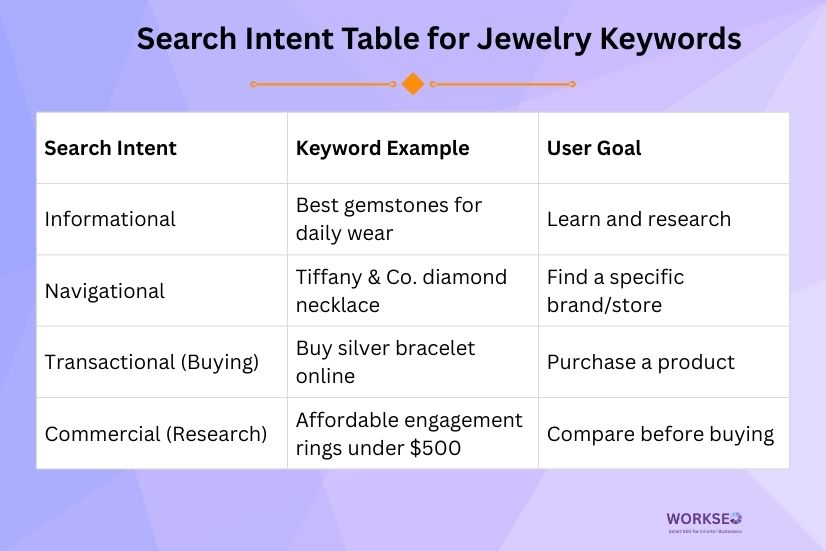
Search intent is the reason someone types a phrase into Google. It shows what the user wants at that moment. When you understand this, you can target real buyers instead of casual readers. This helps your jewelry store attract people who are more likely to convert.
There are three main types of search intent:
Informational: The user wants to learn something.
Example: “Best gemstones for daily wear.”
These searches bring traffic but rarely lead to a purchase.Navigational: The user looks for a specific brand or store.
Example: “Tiffany & Co. diamond necklace.”
The buyer already trusts a brand and wants to reach it faster.Transactional (Buying): The user is ready to purchase.
Example: “Buy silver bracelet online.”
These keywords show strong intent and often lead to sales.
For jewelry brands, transactional and commercial keywords are the most valuable. They connect you with shoppers who are close to making a decision. A search like “engagement ring under $1000” is a clear sign of buying intent, not casual browsing.
Focusing your SEO strategy on these keywords helps you:
Rank higher for terms that convert
Attract shoppers who are ready to buy
Reduce traffic from users who only want information
Improve sales without increasing marketing costs
At WorkSEO, we suggest creating clear content and product pages that match these intent types. This approach helps jewelry businesses gain visibility, reach high-intent customers, and turn search traffic into real sales.
1. Why Product Keywords Matter for Jewelry SEO
Product keywords describe the exact items you want to sell. These keywords are clear and specific. They match what buyers type when they know what they want. This makes them powerful for sales-focused SEO.
Common examples include:
Gold pendant necklace
Silver engagement ring
Diamond stud earrings
These searches show strong buying intent. A person typing “buy silver engagement ring” is already close to making a purchase. They are not researching. They are looking for the right product and the right store.
Using product keywords in your SEO strategy offers many benefits:
Improves product visibility: Your items appear for direct searches.
Increases qualified traffic: Visitors reach your page with clear intent.
Builds trust: Your content matches exactly what users expect.
To apply this method, add product keywords in key areas:
Page titles
Meta descriptions
Product descriptions
Image alt text
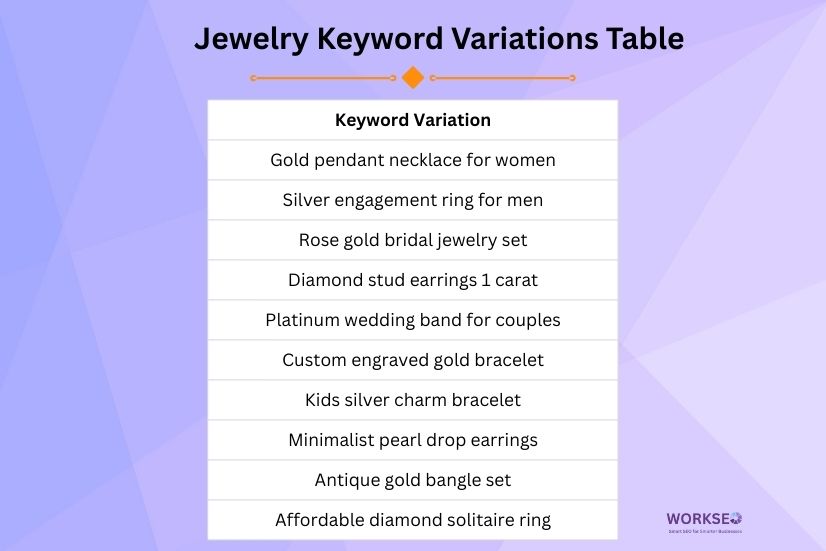
You can also target keyword variations to reach more shoppers. Examples include:
Gold pendant necklace for women
Custom silver engagement ring
Men’s diamond stud earrings
These variations help you capture a wider audience while still focusing on buyers ready to act.
At WorkSEO, we guide jewelry brands to use these keywords in a structured way. This approach improves visibility, brings high-intent customers, and helps your store convert more searches into sales.
At WorkSEO, we recommend starting with product keywords and then building out these variations. This ensures your store ranks for both broad searches and highly targeted buyer queries.
2. Why Occasion-Based Keywords Matter in Jewelry SEO
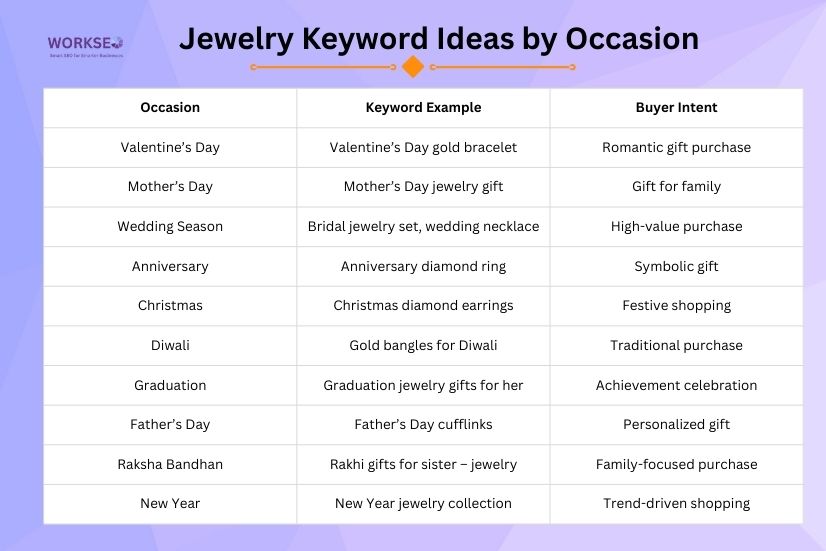
Many shoppers search for jewelry with a specific occasion in mind. These searches are valuable because they show clear intent. The buyer is not browsing. They are looking for a meaningful gift for a special moment.
Common examples include:
Anniversary diamond ring
Mother’s Day jewelry gift
Valentine’s Day gold bracelet
These keywords connect with strong emotions. People buying for anniversaries, weddings, festivals, or holidays often have a fixed budget and a clear reason to buy now. This makes occasion-based searches important for conversion-focused SEO.
Using these keywords offers several benefits:
Drives seasonal traffic: Your store appears when demand rises during events.
Boosts conversions: Shoppers searching for an occasion are close to buying.
Builds relevance: Your content feels timely and speaks to real needs.
To use this strategy well, create targeted landing pages or blog posts. Examples include:
A guide on “Top Valentine’s Day Jewelry Gifts”
A landing page for “Wedding Jewelry Sets”
A blog post on “Best Raksha Bandhan Gifts for Sisters”
Adding variations can help you reach even more shoppers, such as:
Graduation jewelry gifts for her
Christmas diamond earrings for mom
Festive gold bangles for Diwali
Father’s Day personalized cufflinks
At WorkSEO, we help jewelry brands plan content around major seasons and celebrations. This approach keeps your store visible when buyers search for meaningful gifts and are ready to take action.
3. Why Material-Based Keywords Matter in Jewelry SEO
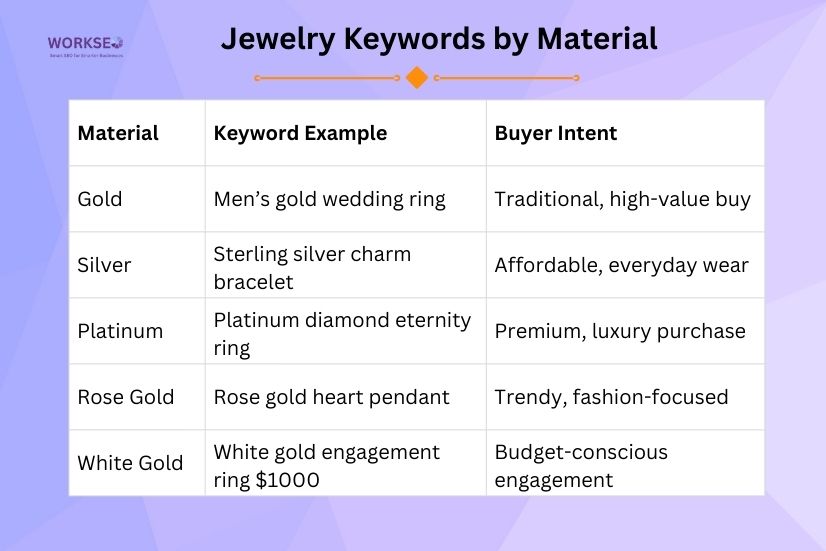
Many jewelry buyers decide on the material before they start searching. These searches are clear, direct, and show strong buying intent. A shopper looking for gold, silver, or platinum jewelry already knows what they want. They are not exploring. They are comparing options to make a purchase.
Common examples include:
Platinum wedding band
Sterling silver chain
Rose gold engagement ring
Material-specific keywords help your store reach focused buyers. A person searching “platinum wedding band for men” knows the material, product type, and audience. This level of clarity often leads to fast buying decisions.
Using material-based keywords offers strong SEO benefits:
Targets niche buyers: You attract customers with exact preferences.
Improves conversion rates: Specific searches often lead to quicker purchases.
Increases relevance: Your products match the user’s expectations from the start.
To optimise for these keywords, add the material name in:
Product titles
Meta descriptions
Category pages
Blog posts or buying guides
You can also create simple variations by adding style, audience, or price. Examples include:
Men’s gold wedding ring
Sterling silver charm bracelet
Platinum couple bands set
Rose gold heart pendant
White gold engagement ring under $1000
Antique silver anklet design
Platinum diamond eternity ring
Kids gold kada bracelet
Minimalist rose gold stud earrings
Silver chain for daily wear
These variations help you reach more buyers without losing intent.
At WorkSEO, we guide jewelry stores to build dedicated product pages for each material. This strategy helps you rank higher for intent-driven searches and capture customers who come with clear buying needs.
4. Style-Oriented Keywords
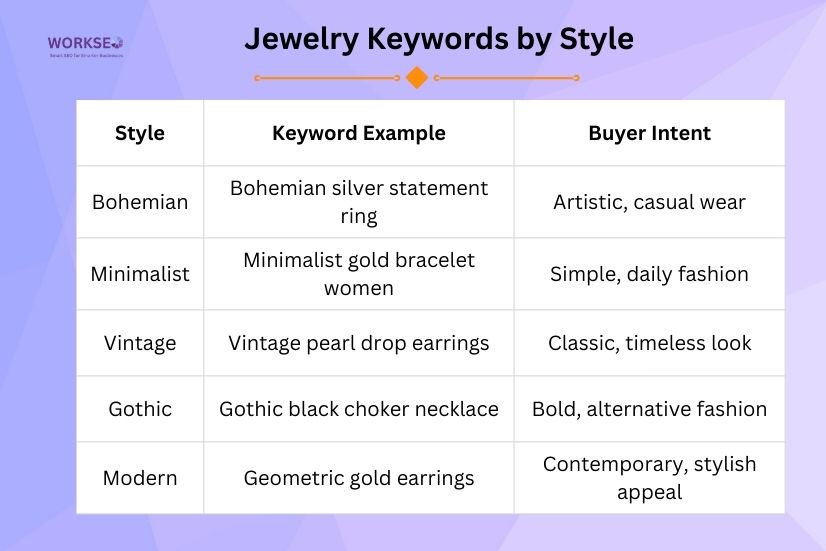
Jewelry is more than just material; it reflects personal style and fashion choices. Many shoppers search for jewelry that matches their personality or the latest trend. These searches often highlight lifestyle preferences and fashion-driven intent.
For example:
Bohemian earrings
Minimalist gold bracelet
Vintage pearl necklace
Style-oriented keywords are powerful because they connect your products with identity. Customers typing these searches are not only looking for jewelry; they are seeking a piece that matches their taste or the image they want to project.
Using style keywords in your SEO strategy offers several benefits:
Attracts trend-seekers: Appeals to buyers following fashion and seasonal styles.
Increases engagement: Customers feel understood when products match their personality.
Expands reach: Helps you connect with niche fashion markets.
To apply this effectively:
Add style-focused keywords to product descriptions.
Use blogs and guides to cover jewelry trends.
Showcase styles with images that match the keyword theme.
Here are 10 variations of style-oriented jewelry keywords:
Bohemian silver statement ring
Minimalist gold bracelet for women
Vintage pearl drop earrings
Gothic black choker necklace
Classic diamond tennis bracelet
Modern geometric gold earrings
Retro cocktail ring design
Elegant bridal tiara with crystals
Casual everyday silver studs
Trendy layered chain necklace
Here’s a quick table to map style-based searches with buyer intent:
At WorkSEO, we recommend jewelry brands highlight trending styles in both product descriptions and blog content. This approach ensures your store stays relevant and captures style-conscious buyers who value personality in their purchases.
5. Gender & Audience Keywords
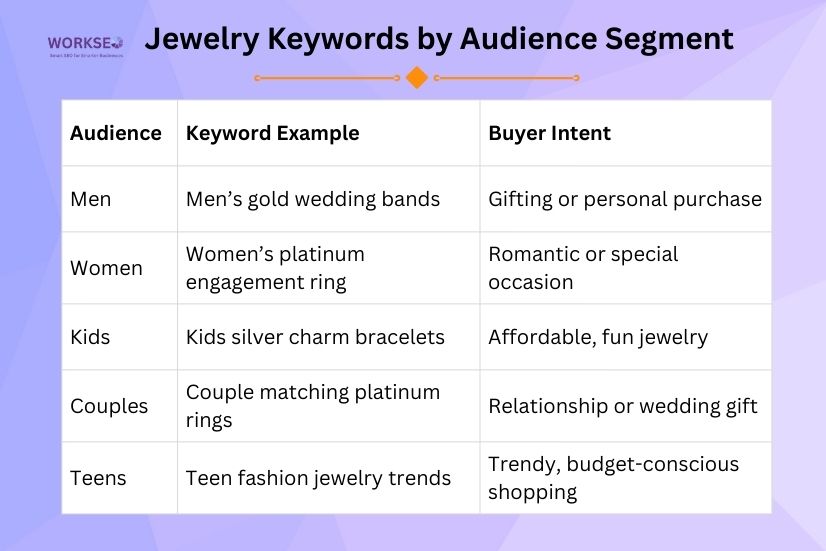
Jewelry buyers often search with a specific audience in mind. Instead of just typing “gold chain,” many shoppers add details such as gender, age group, or relationship. These keywords show intent and help connect your products to the right customer segment.
For example:
Men’s gold chains
Kids jewelry sets
Women’s diamond bracelet
These searches are powerful because they narrow down the buyer’s need. Someone looking for “kids jewelry sets” is not interested in adult designs. By targeting gender and audience keywords, you can deliver more relevant results and improve conversions.
Using gender and audience-based keywords in your SEO strategy offers key benefits:
Improves product discovery: Shoppers find items tailored to their needs.
Boosts relevance: Your store feels personalized to different audiences.
Increases sales: Specific targeting reduces wasted traffic.
To apply this effectively:
Add audience filters on product category pages (Men, Women, Kids, Couples).
Include gender-specific keywords in product titles and descriptions.
Create dedicated landing pages for each audience segment.
Here are 10 examples of gender and audience keyword variations:
Men’s gold wedding bands
Women’s platinum engagement ring
Kids silver charm bracelets
Girls’ pearl stud earrings
Boys’ gold kada design
Couple matching platinum rings
Unisex silver chain necklace
Women’s rose gold pendant set
Men’s diamond cufflinks
Teen fashion jewelry trends
Here’s a quick table to show how these keywords map to buyer intent:
At WorkSEO, we recommend jewelry brands structure their websites with clear audience filters and optimized category pages. This approach improves user experience and ensures that every customer finds jewelry designed just for them.
6. Price-Focused Keywords
Price is one of the most common factors in jewelry searches. Many buyers already have a budget in mind before they start shopping. Instead of searching broadly, they type specific price-related keywords to find jewelry within their range.
For example:
Engagement rings under $500
Affordable gemstone jewelry
Gold chains below 10,000 INR
These searches show strong purchase intent because the shopper is not only looking for a product but also filtering by price. When you optimize for price-focused keywords, you attract qualified buyers who are more likely to convert.
Using price-based keywords in your SEO strategy offers several benefits:
Matches buyer intent: Aligns your products with the customer’s budget.
Improves conversions: Shoppers searching by price are closer to making a decision.
Boosts visibility: Helps capture long-tail searches with less competition.
To apply this strategy effectively:
Create category pages for different price ranges (e.g., Rings under $500, Jewelry under $100).
Add filters for price brackets on product pages.
Include price-related keywords in product titles, meta descriptions, and headings.
Here are 10 examples of price-focused keyword variations:
Engagement rings under $1000
Diamond earrings below $200
Affordable gold bracelet for women
Silver chains under $50
Wedding bands under $300
Platinum rings under $2000
Kids jewelry below $100
Budget-friendly pearl necklace
Rose gold rings under $150
Luxury watches under $5000
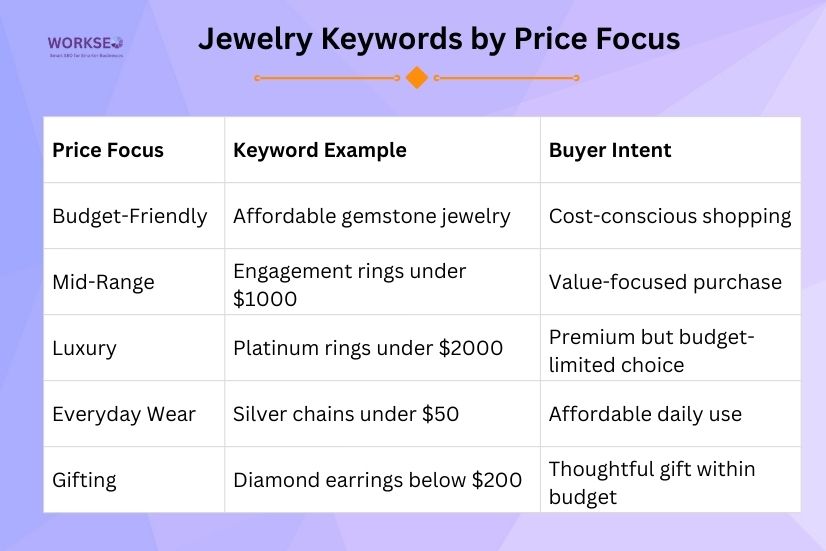
Here’s a quick table to show how price keywords align with buyer intent:
At WorkSEO, we recommend structuring your jewelry website with dedicated price-based landing pages. This approach improves user experience, boosts SEO, and ensures you rank for high-converting searches.
7. Local Jewelry Keywords
If you sell jewelry in a specific city or region, local keywords are essential. Many buyers prefer shopping nearby, especially for high-value jewelry where trust and service matter. Adding geographic terms to your keywords helps connect with these local shoppers.
For example:
Jewelry store in Trichy
Buy silver anklets in Chennai
Gold necklace shop near me
Local keywords are powerful because they match the intent of buyers who are ready to visit a store or make a nearby purchase. A customer searching “engagement rings in Coimbatore” is not browsing casually—they are likely comparing local stores before deciding where to buy.
Using local jewelry keywords in your SEO strategy offers several benefits:
Drives foot traffic: Attracts buyers who want to visit your showroom.
Builds trust: Customers often prefer local jewelers for authenticity and service.
Boosts visibility: Helps you appear in local Google searches and Maps results.
To use this strategy effectively:
Optimize your Google Business Profile with local keywords.
Add your city or region to product titles and descriptions.
Create location-specific landing pages (e.g., “Gold Bangles in Trichy”).
Collect local reviews to strengthen visibility in Maps.
Here are 10 examples of local keyword variations:
Diamond jewelry shop in Bangalore
Gold bangle store in Hyderabad
Silver anklets in Madurai
Platinum wedding rings in Delhi
Best jewelry store in Pune
Bridal jewelry shop in Coimbatore
Custom gold chains in Chennai
Affordable silver jewelry in Kolkata
Antique jewelry shop in Jaipur
Men’s gold kada in Mumbai
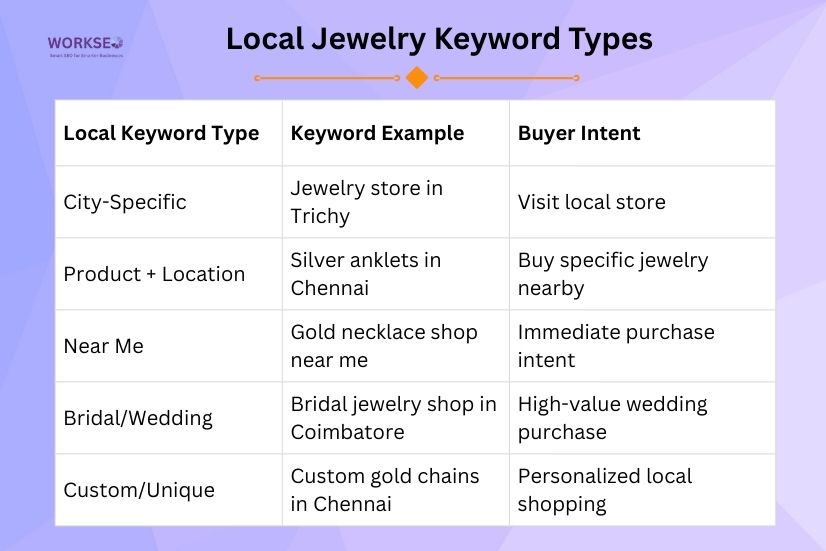
Here’s a quick table to show how local searches connect with buyer intent:
At WorkSEO, we recommend combining local SEO with jewelry keywords. This ensures your store attracts both online buyers and customers searching for trusted jewelers nearby.
8. Brand-Specific Keywords
Many jewelry buyers search by brand name. Well-known brands carry trust, recognition, and prestige. If you sell branded jewelry, targeting brand-specific keywords can help you capture high-intent traffic.
For example:
Cartier bracelet
Tanishq diamond earrings
Malabar Gold bangles
Shoppers using these keywords are usually loyal to a brand or comparing similar options. They already know the brand they want, which makes their intent much stronger than general searches.
Using brand keywords in your SEO strategy offers clear benefits:
Captures brand-loyal buyers: Attracts customers who already trust the brand.
Increases conversions: Shoppers searching brand names are often ready to purchase.
Improves visibility: Helps your store appear in searches for specific products.
To use this strategy effectively:
Optimize product pages with the brand name in titles, descriptions, and image alt text.
Create brand-focused category pages (e.g., “Tanishq Diamond Jewelry Collection”).
Write comparison blogs, such as “Cartier vs Tiffany: Which Bracelet is Best?”.
Here are 10 examples of brand keyword variations:
Cartier diamond engagement ring
Tanishq bridal gold necklace
Malabar Gold bangles design 2025
Tiffany silver charm bracelet
Kalyan Jewellers men’s kada
BlueStone diamond solitaire ring
Mia by Tanishq gold earrings
PC Jeweller platinum couple rings
Tiffany heart pendant necklace
Malabar antique gold set
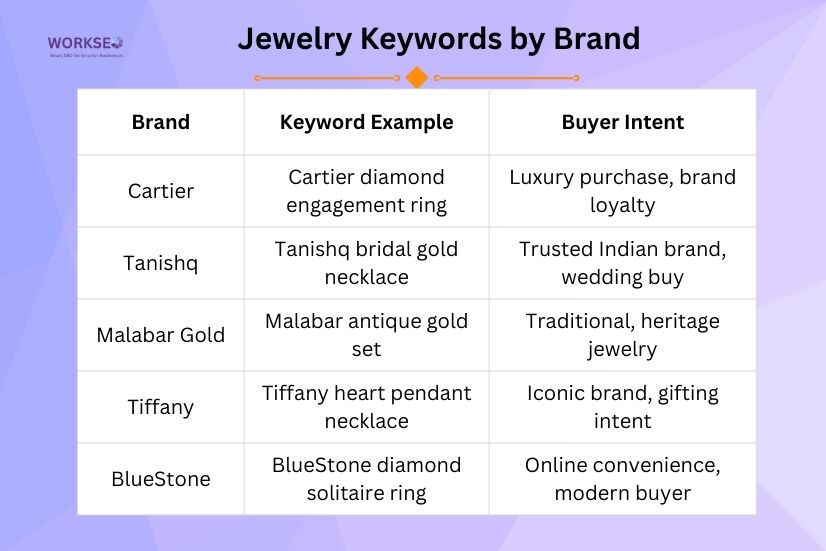
Here’s a quick table to show brand keywords and buyer intent:
At WorkSEO, we recommend using brand-specific landing pages and optimized product listings. This helps you rank for searches from buyers who already have a brand in mind, increasing both traffic and conversions.
9. Gift-Related Keywords
Jewelry is one of the most popular gift choices worldwide. People often buy it for birthdays, anniversaries, weddings, and other special moments. Because of this, gift-related keywords are powerful for attracting ready-to-buy customers.
For example:
jewelry gifts for wife
friendship bracelets for best friend
gold chain gift for husband
Mother’s Day diamond pendant
Shoppers searching with these terms are usually in a decision stage. They know they want to buy jewelry, but they are looking for the right type of gift. This makes gift-related searches highly valuable for conversions.
Here’s why these keywords work:
Clear intent: The buyer is actively looking for a gift.
High emotional value: Gifts often connect to special moments, making customers willing to spend more.
Wide reach: Works across multiple audiences—partners, friends, parents, and even colleagues.
To maximize results:
Create gift guides (e.g., “Top 10 Jewelry Gifts for Anniversaries”).
Build landing pages around specific occasions (“Valentine’s Day Jewelry Gifts”).
Add product filters such as “Gifts for Him” or “Gifts Under ₹5000”.
Highlight packaging, customization, or engraving options that make gifts more personal.
Here are 10 examples of gift keyword ideas:
best jewelry gifts for mom
birthday gold earrings for sister
Valentine’s Day couple rings
personalized jewelry gifts for friends
diamond anniversary ring for wife
rakhi gift ideas for sister jewelry
affordable jewelry gifts under $100
graduation jewelry gifts for daughter
retirement gift bracelet for women
luxury jewelry gifts for husband
At WorkSEO, we recommend creating seasonal campaigns and content calendars around these keywords. This approach ensures your store ranks at the right time—when shoppers are most likely to buy jewelry as a gift.
10. Long-Tail Keywords
Long-tail keywords are longer, highly specific search phrases. They usually include details about style, material, occasion, or personalization. These keywords may have lower search volume, but they often convert better than broad terms.
For example:
Best gemstone engagement ring for Aries
Custom gold jewelry with initials
Affordable rose gold bracelet for women under $200
Diamond pendant necklace for anniversary gift
Long-tail searches show high buyer intent. A person searching “custom gold jewelry with initials” knows exactly what they want. They are closer to purchasing than someone who searches “gold jewelry”.
Using long-tail keywords in your SEO strategy provides several benefits:
Lower competition: Easier to rank for compared to broad, generic keywords.
Higher conversion rate: Users searching with specific terms are ready to buy.
Better targeting: Helps capture niche audiences with unique preferences.
To implement long-tail keywords effectively:
Include modifiers like style, occasion, material, audience, or personalization.
Optimize product pages, meta descriptions, and headings with these keywords.
Create blog posts that answer specific queries (e.g., “How to choose the best gemstone ring for your zodiac sign”).
Here are 10 examples of long-tail jewelry keywords:
Best gemstone engagement ring for Aries
Custom gold bracelet with initials
Affordable diamond stud earrings under $150
Rose gold wedding ring for women with engraving
Minimalist silver necklace for everyday wear
Personalized charm bracelet for mother’s day
Antique gold bangle set for brides
Men’s platinum ring with black diamonds
Kids friendship jewelry set under $50
Trendy layered chain necklace for teenagers
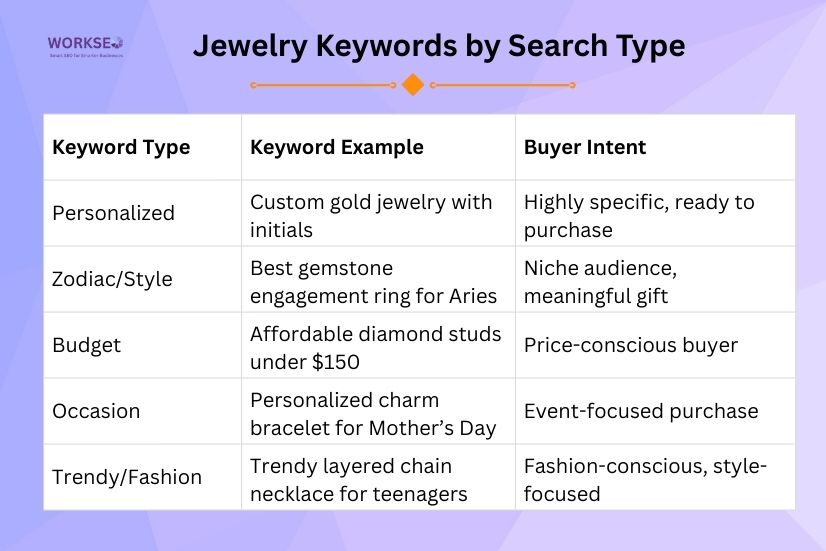
Here’s a quick table showing long-tail keywords and buyer intent:
At WorkSEO, we recommend combining long-tail keywords with product and occasion targeting. This approach helps jewelry stores rank for highly specific searches and attract buyers who are closer to completing a purchase.
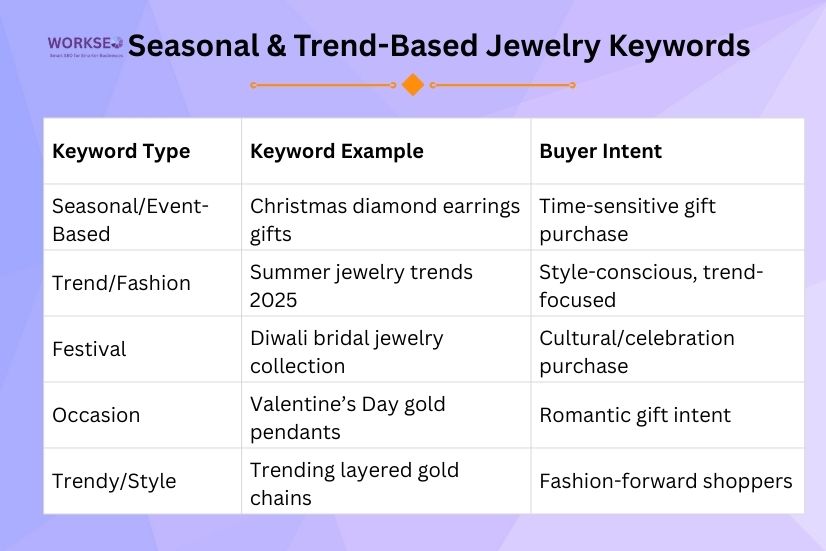
11. Seasonal & Trend Keywords
Jewelry searches are often influenced by seasons, festivals, and trends. Shoppers look for pieces that match current styles or suit upcoming events. Optimizing for seasonal and trend keywords helps your store stay relevant and capture timely traffic.
For example:
Summer jewelry trends 2025
Christmas jewelry gifts
Diwali gold bangles collection
Valentine’s Day couple rings
These keywords are powerful because they align with time-sensitive buyer intent. A customer searching “Christmas jewelry gifts” is planning a purchase for the holiday season, making them highly motivated to buy.
Using seasonal and trend keywords in your SEO strategy offers several benefits:
Captures timely searches: Appears when shoppers are actively looking for gifts or trendy pieces.
Boosts engagement: Content around trends attracts fashion-conscious buyers.
Improves relevance: Keeps your website current with seasonal demand and popular styles.
To implement this effectively:
Regularly update blog posts and landing pages with seasonal keywords.
Create trend-focused guides (e.g., “Top 10 Summer Jewelry Trends 2025”).
Highlight limited-time collections or festive promotions.
Monitor social media and fashion websites to spot emerging trends.
Here are 10 examples of seasonal and trend keyword variations:
Summer jewelry trends 2025
Christmas diamond earrings gifts
Valentine’s Day gold pendants
Diwali bridal jewelry collection
Winter fashion silver rings
Spring floral-themed jewelry
New Year party statement necklaces
Raksha Bandhan gift bracelets
Autumn gemstone rings 2025
Trending layered gold chains
Here’s a quick table showing seasonal and trend keywords with buyer intent:
At WorkSEO, we recommend updating your website content regularly with seasonal and trending keywords. This ensures your jewelry store ranks when buyers are actively searching, keeping your traffic and sales consistent throughout the year.
12. Comparison Keywords
Many jewelry buyers research and compare options before making a purchase. Comparison keywords reflect this intent. Shoppers are looking for information to make an informed choice between two or more products or materials.
For example:
Gold vs platinum ring
Diamond vs moissanite engagement ring
Rose gold vs yellow gold bracelet
Sterling silver vs white gold necklace
These searches are valuable because the buyer is in the decision-making stage. They are actively evaluating products and likely to purchase once they have the right information.
Using comparison keywords in your SEO strategy offers several benefits:
Educates the buyer: Helps customers understand differences in price, durability, and style.
Builds trust: Informative content positions your brand as an expert source.
Drives conversions: Comparison posts can guide buyers toward products you sell.
To implement this effectively:
Create blog posts or guides comparing jewelry types, materials, or brands.
Include pros and cons, pricing, and visual examples.
Add internal links to the products you sell within the comparison content.
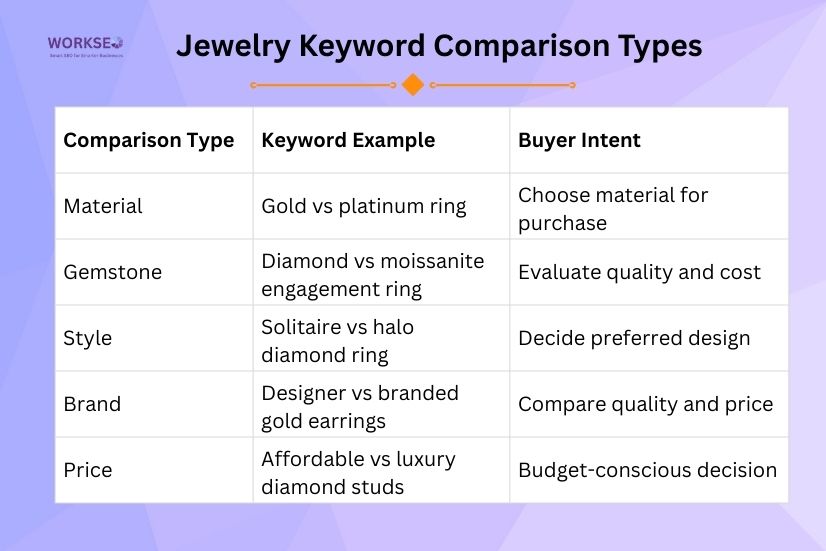
Here are 10 examples of comparison keyword variations:
Gold vs platinum ring
Diamond vs moissanite engagement ring
Rose gold vs yellow gold bracelet
Sterling silver vs white gold necklace
Solitaire vs halo diamond ring
Vintage vs modern pearl necklace
Men’s gold ring vs platinum ring
Designer vs branded gold earrings
Affordable vs luxury diamond studs
Custom engraved vs plain gold bracelets
Here’s a quick table showing comparison keywords and buyer intent:
At WorkSEO, we recommend using comparison-focused blog content to guide buyers. These posts not only improve your search visibility but also help convert research-driven. shoppers into customers.

Tired of Low Traffic and Zero Conversions?
WorkSEO helps businesses dominate search rankings with smart, scalable SEO.
From technical audits to high-converting content — we handle it all.
Conclusion
Choosing the right keywords for selling jewelry online goes beyond just listing product names. To attract qualified buyers, focus on intent-driven keywords. This includes:
Product-specific keywords
Occasion-based searches
Style-oriented phrases
Material and audience targeting
Price-focused, seasonal, and trend-based terms
By aligning your keywords with customer intent, your store not only ranks higher in search results but also draws the right audience. This approach increases the chances of turning visitors into loyal buyers, not just clicks.
Smart keyword strategy ensures your jewelry brand remains visible, relevant, and competitive in the crowded online marketplace.
At WorkSEO, we help jewelry brands and online stores:
Identify profitable keywords
Optimize product listings
Drive more sales with data-driven Jewelry SEO strategies
👉 Ready to boost your jewelry store’s visibility and conversions?
Visit WorkSEO today to explore tailored SEO solutions that grow your business.
Latest Insights from Our SEO Experts
Stay updated with actionable SEO tips, strategies, and trends from the WorkSEO editorial team—designed to help your business grow organically and rank higher on search engines.
If you want a career that doesn’t depend on campus placements, coding degrees, or expensive masters programs — learning SEO […]
If you’re planning to build a career in SEO and want real job opportunities (not just a certificate), choosing the […]
Video content marketing is no longer optional. In 2026, brands that combine SEO + video strategy are dominating both Google […]