In today’s online world, the terms SEO and digital marketing are often used interchangeably — but they are not the same. Understanding the difference between these two can help you choose the right strategy for your business growth. At WorkSEO, we believe knowledge is the first step towards making smarter marketing decisions. This guide will clearly explain what SEO and digital marketing are, how they differ, their benefits, and which one is the right choice for you.
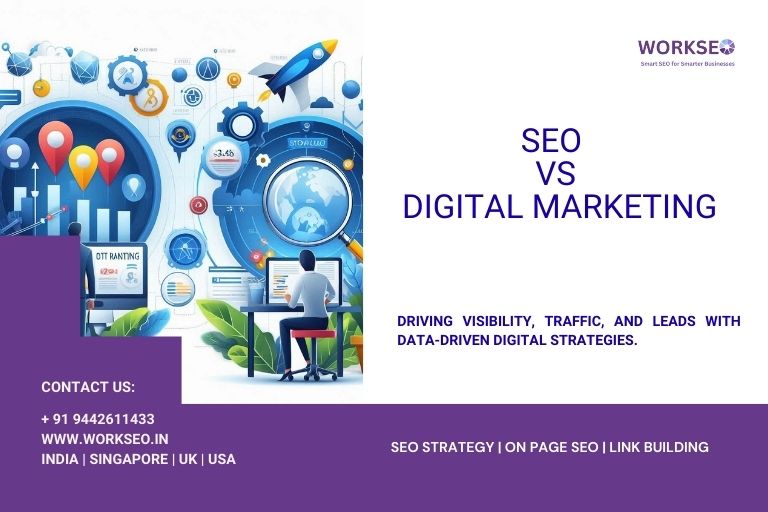
What is SEO and What is Digital Marketing?
SEO (Search Engine Optimization) is the process of making your website more visible on search engines like Google. It focuses on using the right keywords, improving website structure, and creating quality content. The goal is to attract visitors through organic search results, without paying for ads.
SEO helps:
Increase your website’s visibility
Drive targeted traffic
Build trust with search engines and users
Digital marketing is a broader term. It includes all online marketing strategies used to promote a business. This can involve SEO, but also:
Social media marketing
Email marketing
Pay-per-click (PPC) advertising
Content marketing
Online reputation management
You can think of it like this:
SEO is a part of digital marketing.
Digital marketing is the complete toolkit for growing your business online.
While SEO focuses on ranking higher in search engines, digital marketing uses multiple channels to reach your audience. This includes both organic and paid methods.
For example:
SEO can help your website appear in the top search results for relevant keywords.
PPC ads can instantly show your business to potential customers on Google or social media.
At WorkSEO, we believe both strategies work best when combined. SEO builds a strong foundation for long-term growth. Digital marketing provides faster results and broader reach. Together, they can help your business achieve sustainable online success.
1.Scope of Work
SEO (Search Engine Optimization) focuses on making your website more visible in search engines. It involves improving content, structure, and performance so users can find your business online.
The main activities in SEO include:
Keyword optimization – choosing and using the right search terms
Technical SEO – improving website speed, mobile friendliness, and crawlability
Link building – getting quality links from trusted websites to boost authority
These steps aim to increase your organic traffic and search rankings over time.
Digital marketing covers a wider range of online marketing efforts. It includes SEO but also other strategies that promote your business across multiple platforms.
Common digital marketing activities include:
Pay-Per-Click (PPC) advertising – paid ads on Google or social media
Social media marketing – building a brand presence on platforms like Facebook or Instagram
Content marketing – creating blogs, videos, and guides to attract your audience
Email marketing – sending targeted messages to engage and retain customers
The main difference is scope. SEO is one part of the digital marketing puzzle. Digital marketing brings together multiple tools and channels to reach your audience.
At WorkSEO, we help businesses choose the right mix. SEO gives long-term growth, while digital marketing campaigns can drive faster visibility and broader reach. Together, they create a balanced, effective online strategy.
2. Cost Involvement
SEO (Search Engine Optimization) usually requires lower ongoing costs compared to paid advertising. The main investment is in time, expertise, and tools. Once your website ranks well, you can continue attracting traffic without paying for every click.
Typical SEO costs include:
Hiring an SEO specialist or agency
Investing in keyword and analytics tools
Creating and updating high-quality content
Optimizing technical aspects of your website
SEO is cost-effective in the long run. However, it takes time to see results, often several months.
Digital marketing can involve higher costs, especially when using paid campaigns like Google Ads or social media ads. The investment covers both the cost of running ads and managing campaigns.
Typical digital marketing expenses include:
Paid ad budgets for PPC campaigns
Social media advertising costs
Email marketing software
Creative design and video production
The key difference is in spending patterns. SEO requires more upfront work and patience, but the benefits last longer. Digital marketing can deliver quick results, but you need to keep investing to maintain visibility.
At WorkSEO, we recommend combining both approaches. SEO builds a strong foundation for sustainable traffic. Digital marketing adds speed and reach, especially for promotions, seasonal campaigns, or new product launches. Together, they can give you both immediate impact and long-term growth.
3. Timeframe for Results
SEO (Search Engine Optimization) is a long-term strategy. It focuses on building your website’s authority and trust with search engines. Because of this, results do not appear overnight.
On average, SEO can take 3 to 6 months to show noticeable improvements. The exact time depends on:
How competitive your industry is
The current state of your website
The quality and consistency of your SEO work
Once SEO gains momentum, the results are long-lasting. Your website can keep attracting organic traffic even if you slow down active promotion — as long as you maintain basic updates.
Digital marketing can deliver results much faster. Paid advertising, such as Google Ads or Facebook campaigns, can start driving traffic within hours or days. Social media promotions can also create quick engagement and brand awareness.
However, the results from paid campaigns are temporary. When the ad budget stops, traffic and leads often drop immediately.
The key difference is speed versus sustainability:
SEO is like planting a tree — it grows slowly but lasts for years.
Digital marketing is like turning on a tap — instant flow, but it stops when you close it.
At WorkSEO, we advise clients to start SEO as early as possible for long-term growth. Meanwhile, digital marketing can be used alongside SEO to deliver faster returns while your organic rankings improve.
4. Traffic Source
SEO (Search Engine Optimization) drives organic traffic. This means visitors find your website naturally through search engines like Google, without you paying for each click.
Organic traffic comes from:
People searching for your products or services
Users finding your blog posts or guides in search results
Visitors who click on your website after searching for related keywords
Because SEO targets search intent, the visitors you get are often highly interested in what you offer. They are actively looking for solutions, which can lead to higher conversion rates.
Digital marketing can drive both organic and paid traffic. Paid traffic comes from channels like:
Google Ads (Pay-Per-Click)
Facebook, Instagram, or LinkedIn ads
Sponsored content or influencer promotions
Paid traffic can reach people who may not be searching for you yet but fit your ideal customer profile. This is useful for building brand awareness and generating quick leads.
The main difference is in how the traffic is generated:
SEO attracts visitors naturally over time.
Digital marketing can bring immediate traffic through paid campaigns.
At WorkSEO, we use both strategies to balance reach and cost. SEO builds a steady stream of organic visitors, while digital marketing expands your audience and delivers faster exposure. Together, they create a healthy mix of consistent and scalable website traffic.
5. Target Audience Reach
SEO (Search Engine Optimization) focuses on reaching people who are actively searching for your products or services. These users have a clear intent — they are looking for answers, solutions, or options to buy.
With SEO, you can target your audience based on:
Relevant keywords they search for
The location they are in (local SEO)
The type of content they prefer, such as blog posts or guides
This makes SEO very effective for attracting high-quality leads who are more likely to take action.
Digital marketing allows you to target a broader audience. You are not limited to people searching for your business. Instead, you can reach potential customers who match your ideal profile, even if they have not yet shown interest.
Digital marketing targeting options include:
Age, gender, and location
Interests and online behavior
Past interactions with your brand (retargeting)
The main difference is intent versus reach:
SEO connects you with people already looking for what you offer.
Digital marketing helps you reach new people and create demand.
At WorkSEO, we combine both approaches. SEO ensures you capture existing demand, while digital marketing helps you expand your audience and grow brand awareness. This combination increases your chances of generating both short-term and long-term business growth.
6. Measurement of Success
SEO (Search Engine Optimization) success is measured by how well your website performs in search engines and how much organic traffic it generates.
Common SEO performance metrics include:
Keyword rankings – how high your site appears for target keywords
Organic traffic – the number of visitors from search engines
Click-through rate (CTR) – how often people click your search result
Conversions – leads, sales, or inquiries generated from organic visits
Because SEO is a long-term strategy, progress is tracked over months, not days. Even small ranking improvements can lead to significant increases in traffic and leads.
Digital marketing success depends on the specific channels and campaigns used. The results are often faster and can be measured in real time.
Common digital marketing metrics include:
Return on investment (ROI) – revenue generated compared to ad spend
Cost per click (CPC) – the amount paid for each ad click
Lead volume – the number of potential customers generated
Engagement rates – likes, shares, and comments on social media posts
The difference lies in the time frame and goals:
SEO focuses on steady growth over time.
Digital marketing delivers immediate results and clear short-term data.
At WorkSEO, we track both sets of metrics to give you a complete view of performance. This ensures every strategy is accountable, measurable, and results-driven.
7. Content Approach
SEO (Search Engine Optimization) focuses on creating content that matches what people search for online. The goal is to meet search intent — giving users the exact information they want.
SEO content is:
Keyword-focused – includes phrases people use when searching
Structured – uses headings, bullet points, and short paragraphs for easy reading
Optimized – includes meta tags, image alt text, and internal links
Informative – answers specific questions clearly and completely
This type of content is designed to rank higher in search results and attract consistent organic traffic.
Digital marketing uses a wider range of content types and formats. It’s not limited to search engine rankings — the focus is on engaging audiences wherever they are online.
Examples of digital marketing content include:
Social media posts and stories
Paid ad creatives and landing pages
Promotional videos and brand storytelling
Email newsletters and automated campaigns
The difference lies in the purpose:
SEO content is designed to attract and convert search engine users.
Digital marketing content is designed to engage and influence people across multiple platforms.
At WorkSEO, we combine these two approaches. Our SEO content brings targeted traffic, while our digital marketing content builds relationships and drives action. This ensures your brand message reaches the right people in the right way.
8. Sustainability of Results
SEO (Search Engine Optimization) delivers long-lasting results when maintained properly. Once your website ranks high in search engines, it can keep attracting organic traffic without ongoing ad spend.
However, SEO requires regular updates to remain effective. You need to:
Refresh content to match current trends
Monitor keyword performance
Keep technical SEO in good shape
Adapt to search engine algorithm updates
When done consistently, SEO can provide steady traffic for years, even with minimal changes.
Digital marketing often delivers results that are short-term. Paid ads, for example, stop generating traffic as soon as you pause the budget. Social media campaigns may bring engagement during the promotion but fade quickly afterward.
This doesn’t mean digital marketing has no long-term value. Branding campaigns, audience growth, and email list building can create lasting business benefits. But the traffic from paid channels needs continuous investment.
The key difference is in maintenance versus spend:
SEO can keep working for you with ongoing but lower-cost maintenance.
Digital marketing requires active campaigns and regular spending to sustain results.
At WorkSEO, we recommend using SEO as the foundation for lasting visibility. Digital marketing can then be layered on top to boost reach during important campaigns, product launches, or seasonal promotions.
9. Skill Requirements
SEO (Search Engine Optimization) requires a deep understanding of how search engines work. To succeed, you need both technical and creative skills.
Key SEO skills include:
Keyword research – finding the right terms people search for
On-page optimization – improving content, meta tags, and site structure
Technical SEO – fixing site speed, mobile issues, and indexing problems
Link building – earning quality backlinks to improve authority
Analytics – tracking rankings, traffic, and user behavior
An SEO specialist must be detail-oriented, patient, and able to adapt to frequent search engine updates.
Digital marketing demands a broader skill set because it covers multiple channels. A digital marketer often works across:
Paid advertising platforms like Google Ads and Facebook Ads
Social media management and content creation
Email marketing strategy and automation
Video production and graphic design basics
Campaign tracking and ROI measurement
While SEO is highly specialized, digital marketing requires a mix of creative, analytical, and strategic skills.
The difference comes down to focus:
SEO specialists work mainly on improving organic search visibility.
Digital marketers manage multiple channels to reach and convert audiences.
At WorkSEO, our team combines these skills. We bring together SEO experts and digital marketing specialists to create strategies that are both technically sound and creatively engaging
10. Best Use Cases
SEO (Search Engine Optimization) works best for businesses that want steady, long-term growth. It is ideal when you need to:
Build a strong online presence over time
Attract visitors who are actively searching for your products or services
Reduce dependency on paid advertising
Establish authority and trust in your industry
Examples of best SEO use cases:
Local businesses wanting to rank for location-based keywords
E-commerce stores aiming for higher product rankings
Service providers targeting specific search queries
Because SEO delivers results gradually, it’s suited for businesses willing to invest time for future gains.
Digital marketing is best for businesses that need fast visibility or want to reach a broader audience quickly. It’s a great choice when you need to:
Launch a new product or service
Run seasonal promotions or time-sensitive offers
Reach audiences beyond search engines, such as on social media
Drive immediate traffic and leads through paid ads
Examples of best digital marketing use cases:
Startups needing quick brand awareness
Event promotions with short deadlines
Businesses entering a new market
At WorkSEO, we often recommend using both approaches together. SEO builds a foundation for sustainable traffic, while digital marketing boosts reach during important campaigns or launches. This combination ensures both short-term wins and long-term success.

Tired of Low Traffic and Zero Conversions?
WorkSEO helps businesses dominate search rankings with smart, scalable SEO.
From technical audits to high-converting content — we handle it all.
Conclusion
SEO and digital marketing are both powerful tools, but they serve different purposes. SEO is your long-term growth engine, helping you build a strong, lasting presence in search results. Digital marketing is your fast-track option, delivering quick visibility and the ability to reach a wide audience through multiple channels.
The best choice depends on your business goals:
If you want sustainable, cost-effective traffic, invest in SEO.
If you need instant visibility or want to promote time-sensitive offers, use digital marketing.
In most cases, combining both delivers the strongest results. SEO builds a solid foundation, while digital marketing accelerates growth and expands reach.
At WorkSEO, we don’t just choose one approach — we blend the best of both. Our strategies are tailored to your industry, target audience, and growth goals, ensuring every marketing dollar is spent wisely.
Ready to grow your business?
Let WorkSEO create a strategy that combines the long-term power of SEO with the speed of digital marketing. Contact us today for a free consultation and start building your path to online success.
📩 Email: admin@workseo.in
📞 Call/WhatsApp: +9442611433
FAQs
1. What is the main difference between SEO and digital marketing?
2. Is SEO part of digital marketing?
3. Which is better for small businesses — SEO or digital marketing?
4. How long does it take to see results from SEO and digital marketing?
5. Can SEO and digital marketing be used together for better results?
Latest Insights from Our SEO Experts
Stay updated with actionable SEO tips, strategies, and trends from the WorkSEO editorial team—designed to help your business grow organically and rank higher on search engines.
If you want a career that doesn’t depend on campus placements, coding degrees, or expensive masters programs — learning SEO […]
If you’re planning to build a career in SEO and want real job opportunities (not just a certificate), choosing the […]
Video content marketing is no longer optional. In 2026, brands that combine SEO + video strategy are dominating both Google […]