The way people search for local businesses has shifted dramatically in recent years. With the rise of voice search and AI-powered assistants like Siri, Alexa, and Google Assistant, customers are asking questions in a more natural, conversational way. For local business owners, this means optimizing for new search patterns to stay visible. Let’s explore how these technologies are reshaping local search and what you can do to adapt.
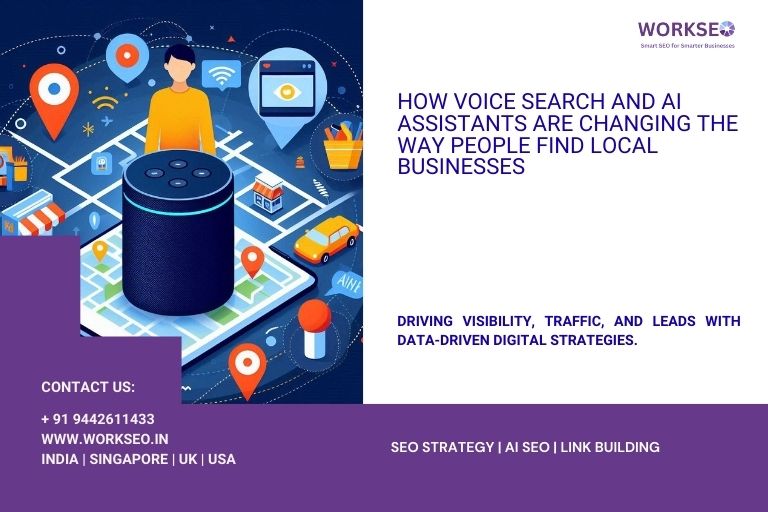
Why Voice Search Matters for Local Businesses
Voice search is changing how people find local services and products. It is no longer a small trend. It is quickly becoming the normal way to search.
When customers use voice search, they speak in complete sentences. This feels natural and faster than typing. For example, instead of typing “best coffee near me,” they say, “Where can I find the best coffee nearby?”
AI assistants like Siri, Alexa, and Google Assistant answer these questions in seconds. They can give personalized results based on location, past searches, and user preferences. This means your business can show up exactly when a customer is ready to buy.
Here’s why it matters for your business:
Voice search brings more targeted traffic.
Customers searching by voice often have high purchase intent.
AI assistants highlight top-rated, nearby businesses.
Optimizing for voice can give you an edge over competitors.
Voice search also improves local visibility. If your business appears in these results, you are more likely to attract people in your area. That leads to more calls, visits, and sales.
To benefit, your business needs the right strategy. This includes optimizing for natural language keywords, using clear answers on your site, and keeping your online profiles updated.
At WorkSEO, we help local businesses adapt to these changes. By making your business voice-search ready, we ensure you stay ahead in the new era of local discovery.
The Impact of Voice Search & AI on Local Business Discovery
1. The Shift from Keywords to Natural Language
Voice search has changed the way people ask for information. Instead of short keywords, users now speak in full sentences. These searches sound more like natural conversations.
For example, a typed search might be “best pizza near me.” A voice search might be “Where’s the best pizza place open right now?”
This shift is important for local businesses. Voice search queries are often longer, more detailed, and more specific. This means your content must match the way people actually speak.
Here are key points to consider:
Use long-tail keywords that reflect conversational phrases.
Include questions and answers in your content.
Write in a natural, human tone instead of robotic keyword lists.
Natural language optimization helps search engines understand your content better. It also increases your chances of being chosen as the spoken answer by voice assistants.
Why this matters:
People using voice search often have high intent.
They are looking for specific solutions now, not just browsing.
Matching their language makes your business easier to find.
At WorkSEO, we guide businesses in adapting their content for this change. We focus on conversational keyword strategies that connect with real people, not just search engines. By doing this, we help you appear in more voice search results and attract more ready-to-buy customers.
2. Rise of “Near Me” Searches
“Near me” searches are one of the fastest-growing trends in local SEO. People now expect instant, location-based answers. Instead of browsing many results, they rely on AI assistants to recommend nearby options.
A user might ask, “Find a plumber near me” or “Best coffee shop open now near me.” AI assistants use location data to show the most relevant local results.
To appear in these searches, your business needs strong local SEO signals. Key actions include:
Optimize your Google Business Profile with correct details, photos, and regular updates.
Build local citations by listing your business in trusted online directories.
Collect positive reviews on Google and other platforms to boost credibility.
Use location-based keywords in your website content.
These steps help AI assistants recognize your business as a top choice for nearby customers. They also improve your chances of appearing in the coveted top three local results, often called the “Local Pack.”
Why it matters:
“Near me” searches often lead to quick visits or calls.
Users are usually ready to make a purchase or booking.
Local visibility builds trust in your community.
At WorkSEO, we help local businesses dominate “near me” searches with targeted optimization strategies. This means your business shows up when and where it matters most—right at the customer’s moment of decision.
3. Featured Snippets and Position Zero
When people use voice search, AI assistants often read answers directly from featured snippets. These are short, clear responses that appear at the very top of Google search results—also called “Position Zero.”
Featured snippets give users quick answers without needing to click through multiple sites. This makes them valuable for businesses wanting more visibility.
For example, if someone asks, “How do I clean silver jewelry?” Google might display a short step-by-step guide from a trusted website. Voice assistants will then read this exact answer aloud.
To increase your chances of winning a featured snippet, you should:
Answer common questions clearly and concisely.
Use structured headings (H2, H3) for easy scanning.
Include numbered or bullet lists when explaining steps.
Write in plain, simple language for better understanding.
Why this matters:
Being in Position Zero puts your brand ahead of all competitors.
Voice assistants usually read only the top result.
Snippets drive high-quality, targeted traffic to your site.
At WorkSEO, we specialize in structuring content that search engines love and AI assistants choose. By aiming for Position Zero, we help your business become the go-to answer for local and industry-specific questions.
4. Mobile and Smart Device Integration
Voice search is no longer limited to smartphones. Today, people use it on smart speakers, smart TVs, wearables, and even in cars. This shift means your business must be ready for customers searching from multiple devices, often while on the move.
Mobile devices remain the most common starting point. If your website is not mobile-friendly, fast, and easy to navigate, you risk losing potential customers. AI assistants prefer to recommend sites that load quickly and display well on smaller screens.
To prepare your business for mobile and smart device integration, focus on:
Responsive website design that works on all devices.
Fast-loading pages optimized for mobile connections.
Simple menus and clear calls-to-action for easy navigation.
Click-to-call buttons so customers can contact you instantly.
Why this matters:
Many voice searches happen when people are out and about.
Slow or hard-to-use sites cause users to leave quickly.
Mobile-optimized sites get higher rankings in local search results.
At WorkSEO, we help businesses create mobile-ready websites that perform well across all devices. By combining mobile optimization with voice search strategies, we ensure your business is visible and accessible no matter how—or where—people are searching.
5. Conversational Content Marketing
Voice search thrives on natural, human-sounding language. People don’t speak to AI assistants the same way they type into a search bar. Instead of short keywords, they use full, conversational sentences.
For example, a typed query might be “SEO tips.” A voice search might be “What are the best SEO tips for small businesses?”
To match this style, your content should sound like you’re talking directly to the reader. Avoid robotic phrases and focus on answering real questions.
Effective conversational content often includes:
FAQs that answer common customer questions clearly.
Blog posts written in a friendly, easy-to-read tone.
How-to guides that explain steps in simple language.
Direct answers to “who, what, when, where, why, and how” questions.
Why this matters:
AI assistants prefer content that directly matches user questions.
Conversational content improves engagement and keeps readers on your site longer.
It increases the chances of being chosen as the spoken answer in voice search results.
At WorkSEO, we help businesses create content that connects with people and AI. Our approach blends conversational writing with SEO best practices, ensuring your brand speaks the same language as your customers—and their devices.
6. Importance of Local Business Schema Markup
Search engines need to understand your business details before they can recommend you in voice search results. That’s where schema markup comes in. It’s a type of code you add to your website that tells Google exactly who you are, what you do, and where you’re located.
For local businesses, Local Business Schema is especially valuable. It helps AI assistants deliver accurate information when users search for your services.
With schema, you can highlight:
Your business name, address, and phone number (NAP).
Opening hours and special holiday schedules.
Services or products you offer.
Customer reviews and ratings.
Why this matters:
Voice assistants rely on structured data to answer location-based queries.
Accurate details improve trust and credibility.
Schema increases your chances of appearing in rich results like maps and business cards.
Adding schema markup is a technical step, but the benefits are long-term. It ensures your business stands out in voice search and provides users with the most relevant details right away.
At WorkSEO, we implement schema markup to boost visibility for local businesses. Our goal is to make sure AI assistants and search engines have all the information they need to put your business in front of ready-to-buy customers.
7. Emphasis on Reviews and Ratings
When people use voice search to find local services, AI assistants often recommend top-rated businesses first. Reviews and ratings play a huge role in these results.
If your business has many positive reviews, it sends a strong trust signal to both search engines and potential customers. On the other hand, poor or few reviews can push you lower in the results.
To improve your visibility through reviews, you should:
Encourage happy customers to leave feedback on Google, Yelp, or Facebook.
Respond quickly to both positive and negative reviews.
Keep your ratings high by providing excellent customer service.
Use review snippets on your website to show social proof.
Why this matters:
Voice assistants often say, “Here’s a top-rated business near you.”
Positive reviews can influence purchase decisions instantly.
Strong ratings help you appear in the “Local Pack” and other prime spots.
Consistent review management is not just about reputation—it’s about visibility. The more credible you look online, the more likely AI assistants will recommend you over competitors.
At WorkSEO, we help businesses build review strategies that boost trust and rankings. From guiding customers to leave reviews to monitoring your reputation, we ensure your ratings support your local SEO goals.
8. Personalization through AI
AI assistants don’t give the same answers to every user. They learn from past interactions, location, preferences, and even purchase history. This means two people asking the same question could get different results.
For example, if someone often searches for vegetarian food, their AI assistant may recommend vegetarian-friendly restaurants first. This personalization makes search results more relevant and faster for the user.
To take advantage of this, your business should:
Target niche audiences with specific services or products.
Create content that speaks to different customer needs.
Highlight specialties in your online profiles and website.
Engage customers so they return and interact with your brand more often.
Why this matters:
Personalized results improve your chances of being recommended.
AI-driven suggestions often lead to higher conversion rates.
Customers feel more connected to businesses that match their preferences.
By understanding how AI tailors results, you can better position your business. The more your content aligns with a user’s habits and needs, the more likely you are to appear in their search results—especially in voice search.
At WorkSEO, we help businesses fine-tune their content and SEO strategies to match how AI assistants deliver personalized results. This ensures your brand stays in front of the right customers at the right time.
9. Multi-Language Search Opportunities
Voice search is not limited to one language. Many AI assistants can understand and respond in multiple languages, making it easier for people to search in the language they are most comfortable with.
For local businesses, this opens the door to reaching more customers—especially in multicultural areas. If you provide content in multiple languages, you can connect with communities that competitors may overlook.
To make the most of this opportunity:
Identify the main languages spoken in your target area.
Translate key website pages such as services, contact information, and FAQs.
Use language-specific keywords in your SEO strategy.
Update your Google Business Profile with multilingual descriptions.
Why this matters:
People are more likely to trust businesses that speak their language.
Multilingual content improves your reach in voice search results.
It builds stronger relationships with diverse customer groups.
Voice assistants will choose businesses that best match a user’s language and intent. By offering multilingual options, you improve both accessibility and visibility.
At WorkSEO, we help businesses optimize for multi-language searches, ensuring your brand speaks directly to every segment of your local audience. This way, you never miss a customer because of a language barrier.
10. Preparing for Voice Commerce
Voice commerce is the next big step in online shopping. It allows customers to place orders directly through voice assistants like Alexa, Google Assistant, or Siri—without ever touching a screen.
This shift means people can say, “Order a medium pepperoni pizza” or “Buy running shoes size 9,” and the AI assistant will complete the purchase using saved payment details.
For local businesses, this is a huge opportunity to make buying easier and faster.
To prepare for voice commerce, you should:
Enable online ordering with a simple, mobile-friendly checkout process.
Integrate voice-friendly payment options where possible.
Optimize product descriptions for conversational keywords.
Ensure accurate inventory so AI assistants can confirm product availability.
Why this matters:
Voice commerce is expected to grow rapidly in the coming years.
Customers value speed and convenience when shopping.
Early adoption gives you an advantage over competitors.
By preparing now, your business can be ready when more customers switch to buying through voice commands.
At WorkSEO, we help local businesses create strategies for voice commerce and conversational sales. From optimizing product pages to streamlining the checkout process, we make sure your business is ready for the future of shopping.

Tired of Low Traffic and Zero Conversions?
WorkSEO helps businesses dominate search rankings with smart, scalable SEO.
From technical audits to high-converting content — we handle it all.
Conclusion
Voice search and AI assistants are no longer optional—they are shaping the future of how customers discover and choose local businesses. From conversational searches to “near me” queries, featured snippets, and even voice commerce, these technologies are changing every stage of the buying journey.
Businesses that adapt now will stay ahead. Those that wait risk losing visibility to competitors who are already optimizing for voice.
The key is to focus on:
Conversational, natural-language content.
Strong local SEO signals.
Mobile and device-friendly websites.
Structured data like schema markup.
Positive reviews and personalized engagement.
When done right, voice search optimization does more than improve rankings—it connects you with customers at the exact moment they are ready to take action.
At WorkSEO, we specialize in helping local businesses prepare for this future. Our strategies are built for real-world results, ensuring your business is visible, trusted, and chosen in voice search results.
Start optimizing for voice search today. Contact WorkSEO, and let’s make your business the one AI assistants recommend first.
Latest Insights from Our SEO Experts
Stay updated with actionable SEO tips, strategies, and trends from the WorkSEO editorial team—designed to help your business grow organically and rank higher on search engines.
If you want a career that doesn’t depend on campus placements, coding degrees, or expensive masters programs — learning SEO […]
If you’re planning to build a career in SEO and want real job opportunities (not just a certificate), choosing the […]
Video content marketing is no longer optional. In 2026, brands that combine SEO + video strategy are dominating both Google […]