Introduction
In today’s digital landscape, law firms must optimize their online presence to attract potential clients. One of the most effective SEO strategies is targeting long-tail keywords—specific, low-competition search phrases that can drive high-intent traffic. In this guide, we’ll walk you through 10 steps to choosing SEO long-tail keywords for your law firm to improve search rankings and generate leads.

Why Long-Tail Keywords Matter for Law Firm SEO
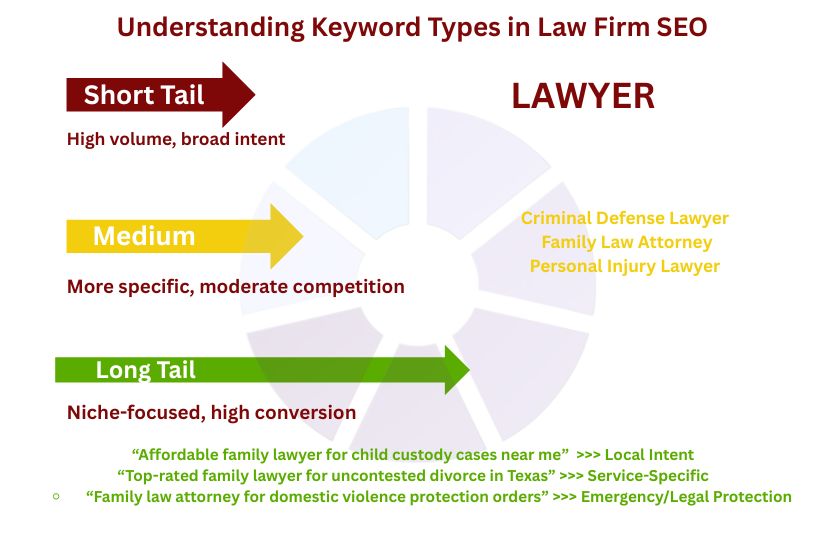
Long-tail keywords are essential for law firms aiming to attract high-intent clients through organic search. Unlike short, generic keywords like “lawyer” or “attorney,” long-tail keywords are more specific and targeted, making them easier to rank for and more likely to drive conversions.
These keywords often include geographic locations, legal specialties, or specific client needs. For example, instead of trying to rank for “lawyer,” a long-tail keyword like “affordable child custody lawyer in Austin” will attract users who are actively searching for that exact service—reducing bounce rates and increasing the likelihood of inquiries.
Here’s why long-tail keywords should be a core part of your law firm’s SEO strategy:
Higher Conversion Rates: They target users who are further along the buyer’s journey and more likely to hire a lawyer.
Lower Competition: These keywords are less saturated, giving smaller or newer law firms a chance to compete in search results.
Better Relevance: Long-tail keywords align closely with user intent, improving content relevance and user experience.
Local Targeting: They help law firms dominate local search results by including city, neighborhood, or region names.
Content Optimization: Using specific queries makes it easier to create blog posts, FAQs, and landing pages that answer client questions.
By integrating long-tail keywords into your content strategy, your law firm can reach qualified leads, boost your online visibility, and ultimately convert more visitors into clients.
Step 1: Understand the Importance of Long-Tail Keywords
Long-tail keywords play a critical role in improving the visibility of your law firm’s website. Unlike broad, high-competition keywords such as “lawyer” or “attorney,” long-tail keywords are longer and more specific, targeting users with precise intent. These keywords typically contain three or more words and directly address what potential clients are searching for.
For example, a broad keyword like “lawyer” may have a high search volume, but it is difficult to rank for and doesn’t indicate what the user specifically needs. On the other hand, a long-tail keyword such as “best personal injury lawyer in Los Angeles” provides more context, making it easier to attract relevant traffic. Users searching for this phrase likely need a lawyer in Los Angeles and are closer to hiring legal representation.
Long-tail keywords also lead to better conversion rates. Since they target users further along the buying journey, visitors who land on your site through these searches are more likely to take action, such as booking a consultation. By focusing on long-tail keywords, your law firm can reach highly qualified leads who are actively looking for legal services.
Step 2: Identify Your Law Firm’s Niche
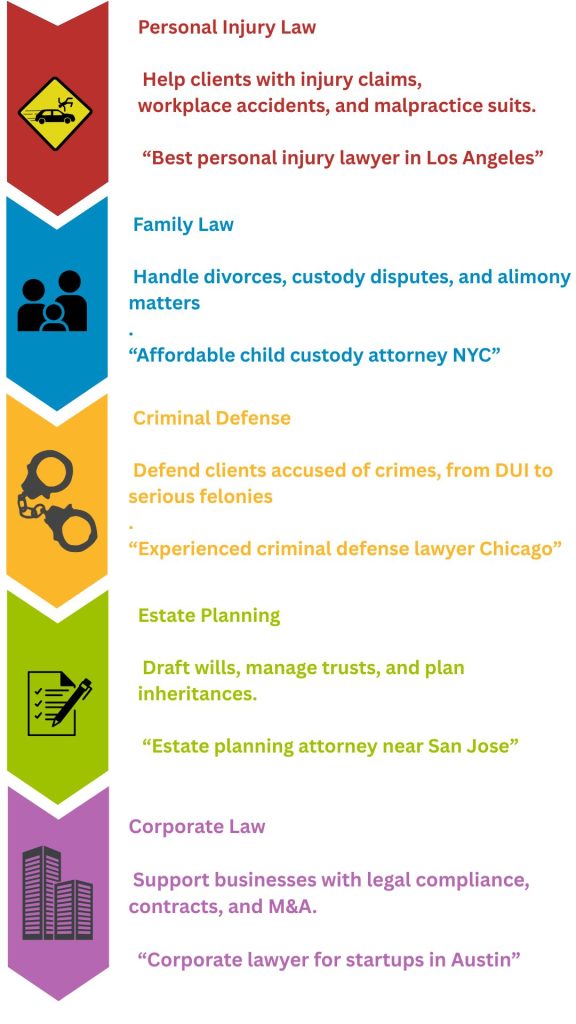
Before selecting long-tail keywords, it is crucial to define your law firm’s niche. Legal services vary widely, and identifying your firm’s specialization will help you choose the right keywords to attract the appropriate audience. Some common legal niches include:
Personal Injury Law – Assisting clients with accident claims, workplace injuries, and medical malpractice cases.
Family Law – Handling matters such as divorce, child custody, and spousal support.
Criminal Defense – Defending individuals accused of crimes, ranging from misdemeanors to felonies.
Estate Planning – Assisting clients in drafting wills, trusts, and managing inheritance-related legal issues.
Corporate Law – Providing legal services for businesses, including contracts, mergers, and compliance.
Immigration Law – Helping individuals navigate visa applications, citizenship, and deportation cases.
Once you have defined your niche, focus on keywords that align with your area of expertise. For example, if you specialize in family law, targeting keywords such as “child custody lawyer in Miami” or “affordable divorce attorney near me” can help attract clients specifically looking for family law services.
Step 3: Use Google’s Autocomplete Feature
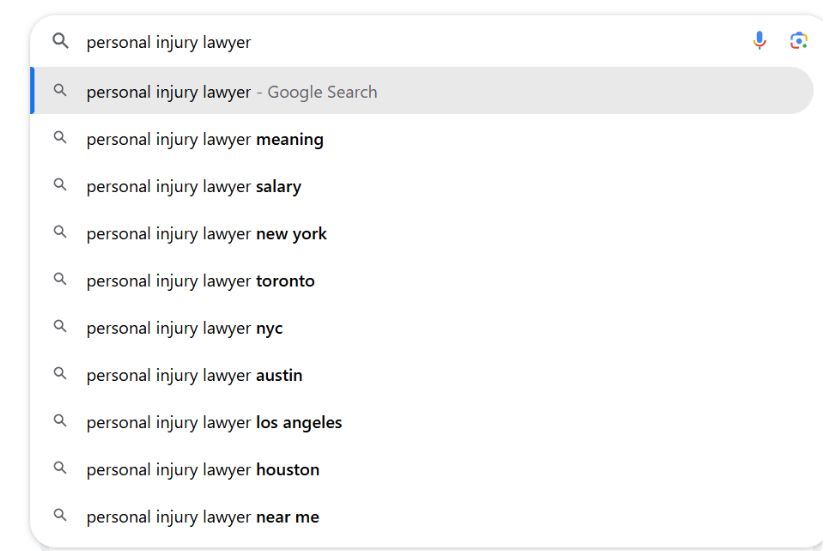
One of the easiest ways to discover long-tail keywords is by leveraging Google’s autocomplete feature. When you start typing a query into Google’s search bar, it automatically suggests relevant searches based on real user behavior. These suggestions are valuable because they indicate commonly searched terms and questions related to your industry.
To use this feature effectively, start typing a generic keyword related to your legal niche, such as “personal injury lawyer.” Google will then display additional phrases, such as “personal injury lawyer free consultation” or “best personal injury lawyer near me.” These long-tail variations give insight into what potential clients are actively searching for.
Additionally, you can try typing in question-based queries like “How to hire a…” or “What to do after…” to uncover legal-related searches. These questions can help you create informative blog posts or FAQs that address client concerns while incorporating SEO-friendly long-tail keywords.
Step 4: Analyze Competitor Keywords
Analyzing your competitors’ keyword strategies is an essential step in selecting effective long-tail keywords for your law firm. By understanding what keywords high-ranking competitors are targeting, you can gain insights into what works well in your niche.
Start by identifying top-performing law firms in your area and analyzing their website content, blog posts, and service pages. Use SEO tools like Ahrefs, SEMrush, or Ubersuggest to extract keyword data from their sites. Look for:
Keywords they are ranking for in organic search results.
High-traffic pages that bring in the most visitors.
Long-tail keyword gaps that they may have overlooked.
By identifying underutilized long-tail keywords, you can create unique content that fills gaps in the market, helping your law firm stand out.
Step 5: Utilize Keyword Research Tools
To identify high-performing long-tail keywords for your law firm’s SEO strategy, it’s essential to rely on specialized keyword research tools. These platforms provide valuable insights such as monthly search volume, keyword difficulty, competition level, and even user intent behind the searches. Instead of guessing, these tools allow you to make data-driven decisions that can enhance your content visibility and improve organic rankings.
Here are some reliable keyword research tools to consider:
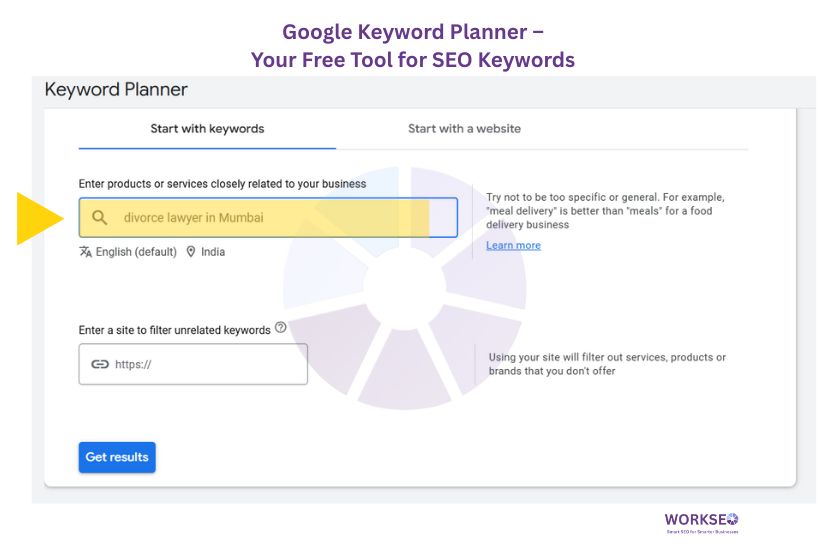
Google Keyword Planner
Free to use with a Google Ads account, this tool helps you find keyword ideas based on your seed keywords. It shows average monthly searches, competition levels (low, medium, high), and suggested bid estimates. While originally intended for PPC, it’s also valuable for SEO.AnswerThePublic
This tool visualizes search questions and autocomplete data in a unique way. By entering a root keyword like “divorce lawyer” or “personal injury law,” you can discover what users are really asking, helping you create content that aligns with searcher intent.KeywordTool.io
It pulls long-tail keyword suggestions from Google Autocomplete, YouTube, Bing, Amazon, and other platforms. Ideal for generating a wide variety of related terms that you may not have thought of.
Pro Tip: Focus on keywords that show moderate search volume but low competition. These provide a better opportunity to rank faster and attract qualified traffic. Always prioritize user intent to ensure your keywords match what your audience is truly searching for.
Step 6: Consider Local SEO Keywords
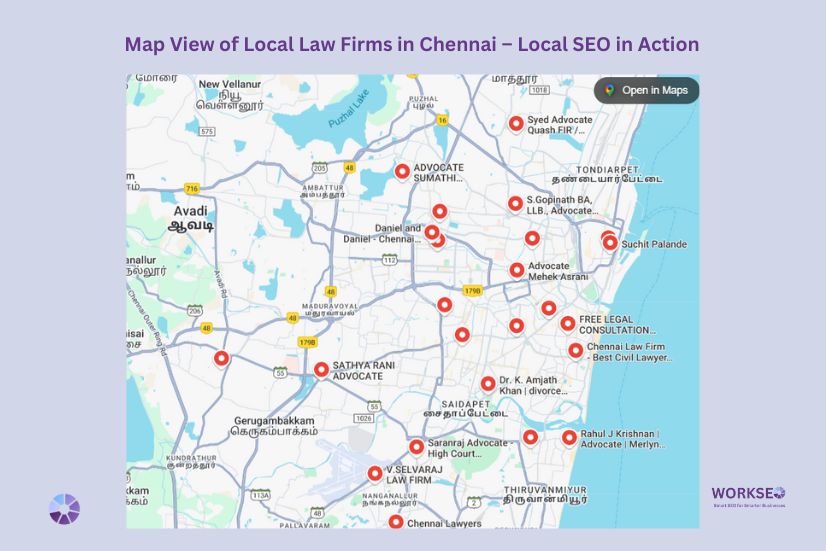
For most law firms, attracting clients within a specific city or region is the primary goal. That’s why local SEO plays a critical role in driving qualified leads. Local SEO keywords are search terms that include geographic identifiers such as city names, neighborhoods, or regions. These help connect your firm to people in your target area who are actively seeking legal services.
When users search for legal help, they often include location in their query to find nearby services. Ranking for these terms increases your chances of appearing in Google’s Local Pack, Maps, and organic search results.
Here’s how to effectively use local SEO keywords:
Incorporate location-based keywords naturally
Add city and neighborhood names into page titles, meta descriptions, headers, and body content without keyword stuffing.Optimize your Google Business Profile (GBP)
Include local keywords in your GBP description and services section. Keep your NAP (Name, Address, Phone number) consistent across all listings.Create location-specific landing pages
Build separate pages for each city or area you serve. These pages can highlight local case results, testimonials, and practice areas.Use local modifiers in your blog posts
Write content that answers legal questions relevant to your city or state laws, improving local relevance.
Examples of effective local keywords:
“Best family lawyer in Chicago”
“Los Angeles criminal defense attorney free consultation”
“Affordable divorce lawyer in New York”
Targeting these keywords positions your firm to capture high-intent traffic from your service area, improving both visibility and conversions.
Step 7: Optimize for Question-Based Keywords
Many potential clients turn to search engines with specific legal questions when they need help. By targeting question-based long-tail keywords, your law firm can establish itself as a trustworthy and authoritative source while improving its visibility in search results — especially in Google’s featured snippets, which often answer direct questions. This strategy not only boosts organic traffic but also attracts more qualified leads actively looking for legal advice.
Why Focus on Question-Based Keywords:
Higher User Intent: Users asking questions are usually further along in the decision-making process. They’re not just browsing; they’re actively seeking solutions or preparing to take legal action.
Less Competition: Compared to short-tail keywords like “lawyer” or “legal services,” long-tail queries face lower competition and offer better chances to rank.
Improved Featured Snippet Visibility: Google often pulls answers from content that directly addresses user queries, especially in FAQ-style formats.
Better User Engagement: Content that answers real questions builds trust and keeps users on your site longer.
Examples of Effective Question-Based Keywords:
“How much does a personal injury lawyer cost?”
“What to do after a car accident in Texas?”
“How long does a divorce take in California?”
“Can I sue for medical malpractice in New York?”
“Do I need a lawyer for a DUI charge in Florida?”
Where to Use These Keywords:
Practice area pages with detailed Q&A sections
Blog posts that answer common legal concerns
Standalone FAQ pages organized by topic
Informative landing pages targeting specific case types or states
Incorporating question-based long-tail keywords into your SEO strategy enhances discoverability, builds credibility, and attracts potential clients at the right moment in their legal journey.
Step 8: Prioritize Keywords with Commercial Intent
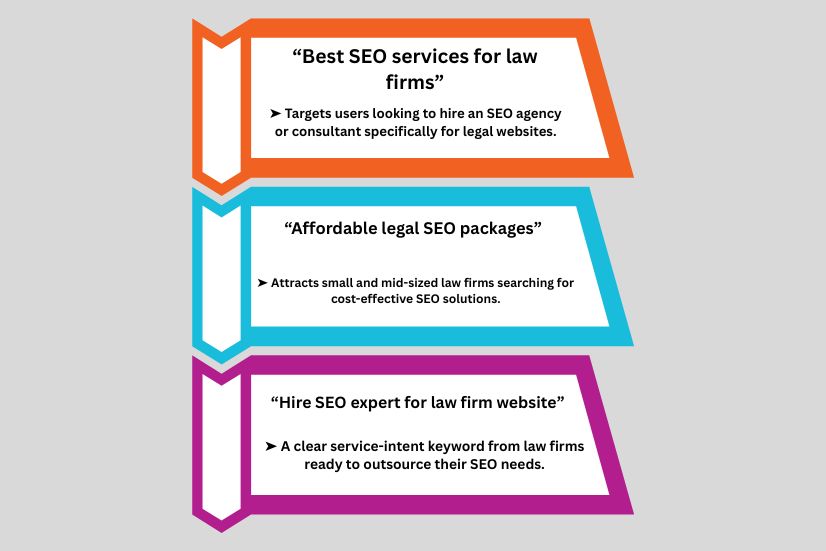
When planning your SEO strategy, it’s important not only to focus on traffic but also on conversions. That’s where commercial intent keywords come in. These are search terms used by individuals who are actively looking for a service and are ready to make a decision—such as contacting or hiring a lawyer.
Unlike informational keywords, which are used for general research, commercial intent keywords reveal a higher likelihood that the searcher will take immediate action. These users are further along in the decision-making process, making them ideal leads for your law firm.
Key strategies for targeting commercial intent keywords:
Focus on high-converting phrases
Look for keywords that include action terms like “hire,” “schedule,” “consultation,” or “top-rated.” These phrases signal readiness to engage with your services.Use them on high-impact pages
Place commercial intent keywords on your homepage, service pages, landing pages, and CTAs. These areas are critical for capturing leads.Incorporate into local variations
Combine commercial intent with location-based terms to attract qualified leads in your area.Monitor and refine
Track keyword performance using tools like Google Search Console or SEMrush. Adjust based on what converts best.
Examples of commercial intent keywords:
“Hire a personal injury lawyer near me”
“Best divorce lawyer with free consultation”
“Top-rated criminal defense attorney in Florida”
Targeting these high-intent terms helps ensure your SEO strategy doesn’t just drive traffic—but drives the right traffic that’s more likely to become clients.
Step 9: Group Keywords into Clusters
Instead of targeting isolated keywords, a more effective SEO strategy is to group related keywords into thematic clusters. Keyword clustering helps search engines understand the depth and relevance of your content, increasing your chances of ranking for multiple search queries related to the same topic. This method not only enhances topical authority but also improves user experience by providing comprehensive information in one place.
How keyword clustering works:
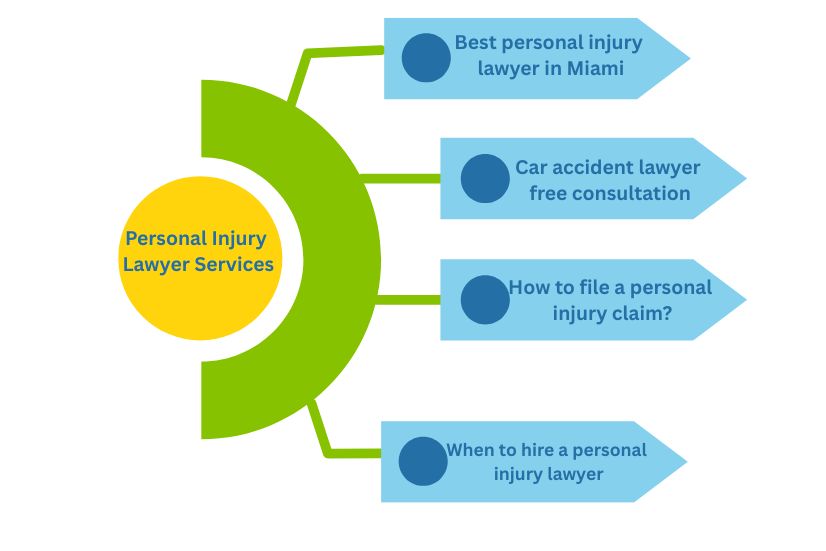
Identify a main topic or core keyword
This is the primary focus of your page, such as “Personal Injury Lawyer Services.” It should represent the core intent of what users are searching for.Add supporting long-tail keywords
These are related questions or subtopics that users may also search for. They enrich the content and help cover various search intents.Create a content structure that flows naturally
Organize the content so that each subtopic builds upon the main topic. This encourages users to stay longer and engage more.Optimize each section for a cluster keyword
Use headings (H2/H3), internal links, and on-page SEO best practices to support each keyword variation.
Example keyword cluster for “Personal Injury Lawyer Services”:
Main topic: Personal Injury Lawyer Services
Supporting keywords:
“Best personal injury lawyer in Miami”
“Car accident lawyer free consultation”
“How to file a personal injury claim?”
By clustering keywords this way, you create robust, search-friendly content that satisfies multiple user queries, helping you rank for more terms and capture broader traffic with stronger conversion potential.
Step 10: Monitor and Update Keywords Regularly
SEO is an ongoing process that requires continuous monitoring and adjustment to remain effective. Search engine algorithms, user behavior, and competition are always evolving, which means your strategy should evolve too. One of the most effective ways to stay ahead is by consistently analyzing data from tools like Google Search Console and Google Analytics to track keyword performance and make informed decisions.
Here’s what to look for when monitoring keyword performance:
New Keyword Opportunities
Identify emerging search queries that are driving impressions but haven’t been fully targeted in your content. These could be long-tail keywords or trending topics that present new ranking potential.Declining Rankings
Monitor keywords that are dropping in position. A decline may signal that your content is outdated, competitors have published stronger material, or user search intent has shifted.Changes in Search Trends
User behavior changes over time. Some keywords become less relevant while others gain traction. Use tools to detect seasonal trends, shifts in terminology, or growing demand for related topics.Page-Specific Performance
Analyze which pages are losing traffic or seeing improved performance. This helps you identify what’s working and where updates are needed.
Action Steps:
Update existing pages with refreshed content and newly discovered keywords.
Optimize underperforming pages with internal links, improved headings, and clearer user intent alignment.
Create new content targeting untapped or trending search terms.
By continually refining your keyword strategy, you can maintain and improve your visibility in search results, ensuring your website remains competitive and discoverable.
Conclusion
Choosing the right long-tail keywords can make a significant difference in your law firm’s online visibility. By following these 10 steps, you can refine your SEO strategy, target high-intent clients, and grow your legal practice through organic search traffic.
🚀 Need expert SEO services for your law firm? Contact WorkSEO.in today and let’s take your firm’s digital presence to the next level!
FAQs
1. What are long-tail keywords, and why are they important for law firm SEO?
2. How do I identify my law firm’s niche for keyword targeting?
3. What is keyword clustering, and how does it benefit legal websites?
4. Can I use free tools to research long-tail keywords for my law firm?
5. How often should I update my keyword strategy for a legal website?
Latest Insights from Our SEO Experts
Stay updated with actionable SEO tips, strategies, and trends from the WorkSEO editorial team—designed to help your business grow organically and rank higher on search engines.
If you want a career that doesn’t depend on campus placements, coding degrees, or expensive masters programs — learning SEO […]
If you’re planning to build a career in SEO and want real job opportunities (not just a certificate), choosing the […]
Video content marketing is no longer optional. In 2026, brands that combine SEO + video strategy are dominating both Google […]