In today’s digital-first world, potential patients turn to search engines before stepping into a clinic. This means that clinics in London must prioritize healthcare SEO to stay visible, relevant, and competitive. Search engine optimization helps medical professionals attract local patients, increase website traffic, and build authority in a highly competitive space.
If you’re running a healthcare clinic in the capital, these 10 powerful healthcare SEO strategies will help you rank higher on search engines and draw more patients to your doors.

Why Healthcare SEO is Crucial for Clinics in London
Healthcare SEO is no longer optional—it’s essential for clinics in London that want to remain competitive, visible, and trustworthy in the eyes of potential patients. With more people turning to Google to find doctors, dentists, physiotherapists, and specialists near them, a strong online presence can determine whether a patient books an appointment with your clinic—or a competitor’s.
Unlike general SEO, healthcare SEO focuses on building trust, authority, and visibility in a highly regulated and sensitive industry. For clinics in a large metropolitan city like London, where the competition is intense and patient expectations are high, SEO becomes even more important.
Here’s why:
Local Search Dominance: Most patients search for clinics near their home, work, or neighbourhood. If your clinic doesn’t show up for terms like “GP clinic in East London” or “London physiotherapy,” you’re missing critical traffic.
Reputation and Trust Building: People are more cautious when choosing a healthcare provider. Showing up at the top of Google with positive reviews and useful content builds immediate trust.
Patient Education: SEO allows your clinic to share valuable content such as symptoms, treatments, or FAQs that help educate patients and establish you as a reliable healthcare source.
Mobile and Voice Search Growth: With more people using mobile devices and voice assistants, it’s important to optimize your site for questions like “Where’s the nearest walk-in clinic in South London?” or “Best pediatrician near me.”
Cost-Effective Patient Acquisition: Compared to paid ads, SEO delivers long-term results without ongoing ad spend. It helps you get consistent traffic and leads with a better ROI.
Implementing effective London SEO strategies for healthcare ensures that your clinic doesn’t just exist online—it thrives. The right SEO approach brings more qualified traffic, converts website visits into appointments, and solidifies your clinic’s place as a top choice in your local community.
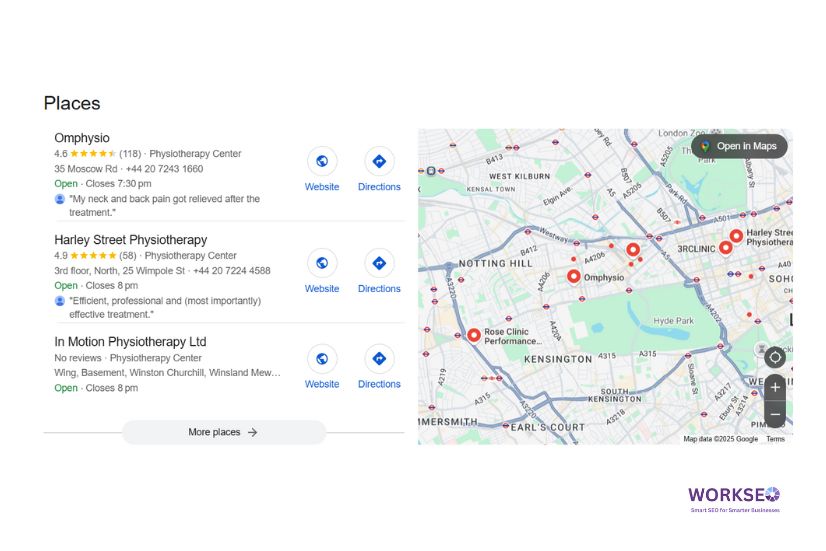
1. Optimize for Local SEO with Google Business Profile
Google Business Profile (GBP) is essential for increasing visibility in local searches and attracting patients in your area. Optimizing your GBP listing ensures that your clinic appears in the local map pack and relevant local queries.
Ensure that your clinic’s Name, Address, and Phone Number (NAP) are accurate and consistent across your website and all online directories.
Add a complete business description that includes target keywords like “healthcare SEO in London” or “private clinic in Westminster.”
Upload high-quality images of your clinic, staff, and facilities to help patients feel familiar and confident.
Choose the most relevant primary and secondary categories, such as General Practitioner, Physiotherapist, or Dentist.
Regularly update clinic hours, especially during holidays or seasonal closures.
Actively collect patient reviews and respond to them professionally. This shows engagement and builds trust with potential patients.
Use GBP posts to promote health tips, special services, or clinic announcements.
Add relevant FAQs within the profile to answer common patient questions.
Monitor insights and analytics within GBP to track how patients find your clinic and what actions they take.
A well-optimized GBP not only improves your clinic’s credibility but also directly contributes to both healthcare SEO and London SEO success.
2. Target Geo-Specific Long-Tail Keywords
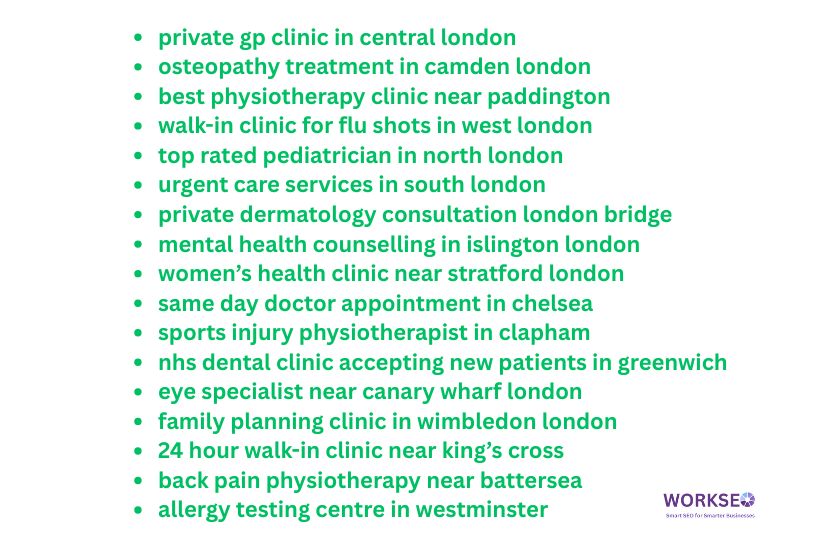
Generic keywords may drive traffic, but geo-specific long-tail keywords drive conversions. These are more specific, intent-driven, and aligned with local patient searches.
Use keyword tools like Google Keyword Planner, Ubersuggest, or SEMrush to find localized search terms.
Focus on combining your services with London areas, such as “osteopathy clinic in Camden” or “South London dental implant expert.”
Incorporate long-tail keywords naturally in page titles, meta descriptions, and H1/H2 tags for each service or blog.
Use long-tail phrases in FAQ sections, where natural questions can be framed as keywords.
Write blogs or service pages that answer specific local queries, such as “Is private physiotherapy available in East London?”
Optimize image alt texts using geo-specific terms like “East London dental treatment room.”
Include these long-tail terms in internal linking strategies to help Google understand content clusters.
Monitor performance via Google Search Console to track which geo keywords are driving traffic and adjust accordingly.
Long-tail keywords reduce competition, enhance user intent matching, and are vital to effective healthcare SEO for clinics in London.
3. Create Location-Focused Landing Pages
Clinics serving multiple London areas should avoid a one-size-fits-all page strategy. Creating dedicated location pages helps target specific boroughs and neighborhoods, increasing relevance and rankings.
Build unique landing pages such as “/kensington-eye-specialist” or “/hackney-dermatology-clinic” tailored to each service area.
Include neighborhood-specific information like nearby landmarks, public transport routes, or patient success stories from that area.
Add local reviews or testimonials specific to each location to improve local trust and search engine relevance.
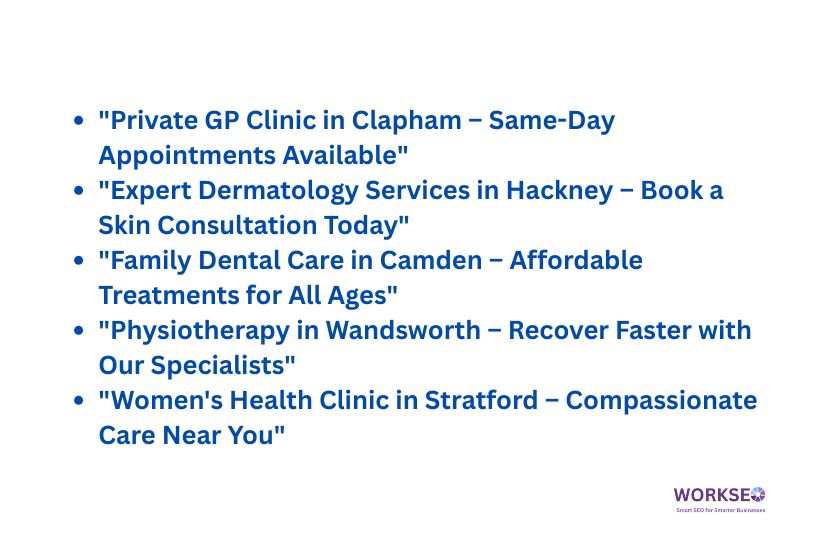
Customize meta titles and descriptions to reflect the location, such as “Private GP in Clapham – Book a Consultation.”
Add Google Maps embeds and local contact information to improve accessibility and trust.
Ensure schema markup (LocalBusiness) reflects each location’s unique details.
Mention local events, health issues, or patient concerns that are common in that borough.
Use localized calls-to-action, like “Visit our Wandsworth Clinic Today.”
Avoid duplicating content across pages. Each location page should have unique text that speaks to the area’s needs.
By targeting patients at a hyper-local level, location landing pages boost your clinic’s visibility in local search results and help improve your overall London SEO performance.
4. Build High-Quality Local Backlinks
Local backlinks from trusted sources in London signal relevance and authority to search engines. For healthcare SEO, it’s important to focus on quality over quantity.
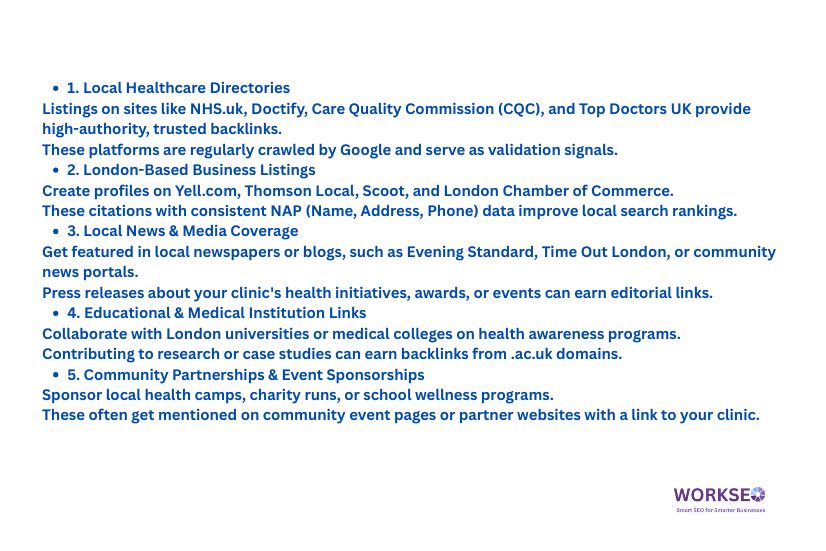
Reach out to local medical directories, healthcare blogs, and chamber of commerce websites for backlink opportunities.
Partner with nearby pharmacies, wellness centers, or fitness clinics and exchange resource links or guest content.
Sponsor community events or local health workshops and request backlinks from their event pages.
List your clinic on reputable UK health directories like NHS Choices, Doctify, or Care Quality Commission.
Publish guest posts on local blogs or newspapers related to healthcare or community health.
Share research collaborations or news articles from universities or healthcare institutions.
Local backlinks boost your authority in the eyes of Google and help patients find you when searching for trusted clinics in London.
5. Create Helpful, Trust-Building Blog Content
Creating high-quality blog content is one of the most effective ways for a healthcare clinic to build trust, demonstrate expertise, and improve visibility in local search results. Patients today are proactive and often research symptoms, treatments, and providers online before making an appointment. A helpful, informative blog can guide them from curiosity to conversion.
Focus on educational and patient-centered topics that address common concerns and local needs. Articles like “Managing Back Pain in Winter” or “Flu Prevention Tips for Londoners” not only provide value but also improve your relevance in search engines for seasonal and location-specific queries.
Include location-based content to attract nearby patients. Titles such as “Choosing a Private Clinic in Central London” or “Top Physiotherapy Services in West London” help target users searching for healthcare options near them.
To build authority and credibility:
Answer frequently searched questions such as “What is the difference between a GP and a private clinic?” or “When should I see a physiotherapist for neck pain?”
Add medical commentary, facts, or articles written or reviewed by licensed professionals to establish trust
Reference reputable external sources (e.g., NHS, WHO) and link internally to relevant service pages on your site
Optimize each blog post with long-tail and geo-targeted keywords, such as “private flu shots in London” or “best skin clinic for acne treatment in South London.” These keyword choices not only improve rankings but also attract high-intent traffic.
Publishing helpful, reliable content regularly positions your clinic as a trusted authority, boosts your SEO rankings, increases time on site, and ultimately drives more appointment bookings from local audiences.


Tired of Low Traffic and Zero Conversions?
WorkSEO helps businesses dominate search rankings with smart, scalable SEO.
From technical audits to high-converting content — we handle it all.
6. Improve Website Speed and Mobile Responsiveness
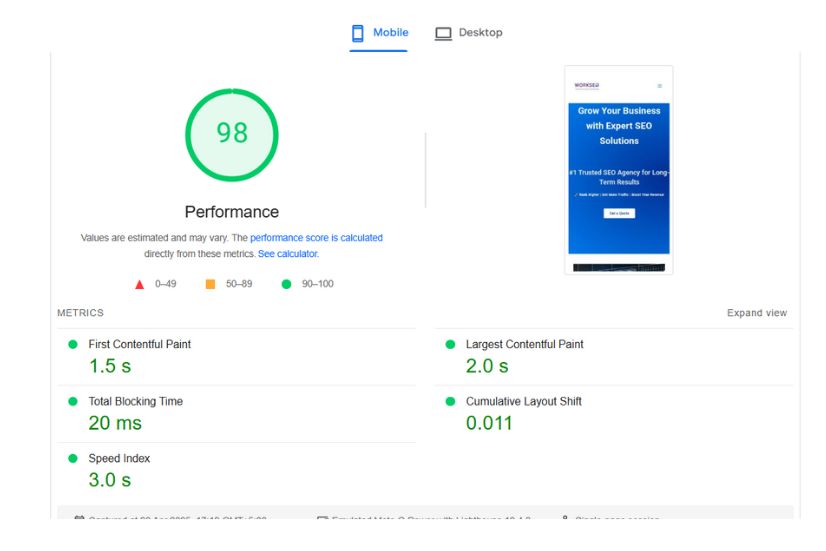
Website speed and mobile responsiveness are essential for both user experience and healthcare SEO. With the majority of users now accessing clinic websites via mobile devices, even a few seconds of delay can lead to frustration, lost trust, and higher bounce rates. Google also considers page speed and mobile usability as ranking factors, making it critical for your clinic’s online visibility.
To improve site speed and performance:
Compress large images and use efficient formats like WebP to reduce file sizes without sacrificing quality.
Use caching plugins to store frequently accessed elements so they load faster on repeat visits.
Implement a Content Delivery Network (CDN) to distribute content across multiple servers, speeding up delivery regardless of the user’s location.
Mobile optimization is equally important. Your website should be fully responsive, adapting to all screen sizes:
Use mobile-friendly design with scalable fonts, adequate spacing, and touch-friendly buttons.
Ensure calls-to-action like “Book Appointment” or “Call Now” are clearly visible and easy to tap.
Avoid intrusive pop-ups or auto-play videos that slow down load time or disrupt the user experience.
Testing is key to continuous improvement:
Use tools like Google PageSpeed Insights, GTmetrix, or Lighthouse to audit your site speed and identify technical issues.
Focus on optimizing critical pages, including your homepage, service pages, contact page, and booking form. These pages should load within 2–3 seconds for optimal performance.
Ensure that booking forms and other patient interaction elements load quickly and function smoothly on all devices. If users struggle to find or complete a booking on mobile, they’re likely to abandon the site altogether.
A fast, mobile-responsive website builds trust, reduces bounce rates, and contributes significantly to improved healthcare SEO—helping you attract and retain more patients online.
7. Use Structured Data (Schema Markup)
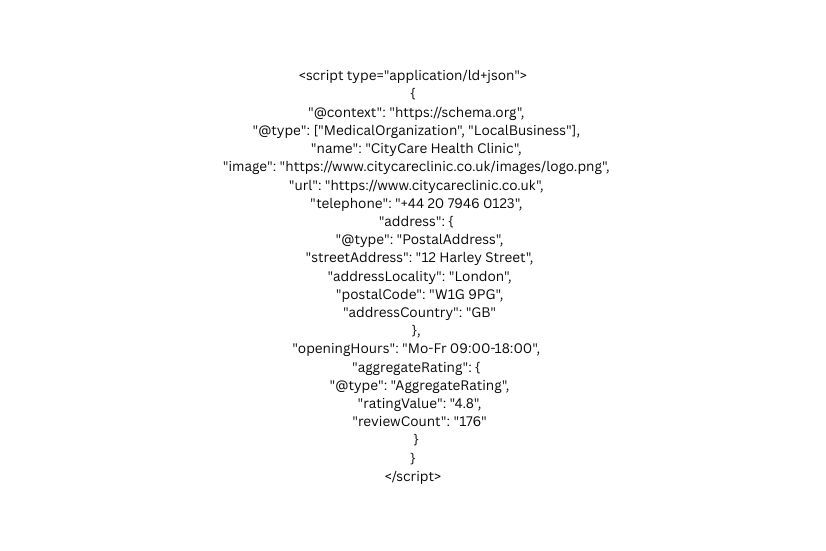
Structured data, also known as schema markup, is essential for improving how your healthcare clinic’s content is understood and displayed by search engines. While schema doesn’t directly increase rankings, it significantly enhances your search appearance with rich results—making your listings more attractive, informative, and clickable.
Key types of schema to implement for healthcare websites:
LocalBusiness schema
Include critical business details such as clinic name, address, phone number, opening hours, website URL, and geo-coordinates. This helps search engines associate your site with local intent, improving local SEO visibility.MedicalOrganization schema
Use this when applicable to specify the type of medical service you offer—such as a general clinic, physiotherapy center, dermatology clinic, or diagnostic lab. It reinforces trust and helps Google categorize your content appropriately.Review schema
Add star ratings and patient feedback if you publish verified testimonials. When implemented correctly, these reviews can appear in search results, enhancing credibility and increasing click-through rates.FAQ schema
Apply this to service or blog pages that answer common patient questions. This markup allows your content to display as expandable FAQs in search results, improving visibility and relevance.Breadcrumb schema
Help users and search engines understand your website structure. This improves both navigation and how your URLs are displayed in search results.
Important best practices:
Use Google’s Rich Results Test or the Schema Markup Validator to check for errors or warnings.
Keep your schema updated regularly if clinic hours, services, or contact details change.
Ensure the structured data accurately reflects the content on the page, or it may be ignored or penalized.
By applying the right schema types, your clinic can stand out in search results with enhanced listings, draw more qualified traffic, and improve the overall user journey—key factors in growing trust and visibility in healthcare SEO.
8. Encourage and Manage Online Reviews
Online reviews play a vital role in the success of healthcare clinics, influencing both patient decisions and local search rankings. A consistent stream of authentic, positive reviews enhances trust, supports SEO, and helps your clinic stand out in competitive local markets.
Encourage satisfied patients to share their experiences on trusted platforms such as:
Google Business Profile – the most important for local SEO visibility
Trustpilot – widely used across industries for building general credibility
Doctify or Healthgrades – industry-specific platforms that patients trust for healthcare reviews
Make the process easy by automating review requests:
Send a follow-up email or SMS after appointments, politely asking for feedback
Include direct links to your review profiles to reduce friction and increase response rates
Respond to all reviews in a professional tone:
Thank patients for positive feedback and reinforce appreciation
For negative reviews, respond constructively, acknowledge the issue, and explain how you’ll address it
Avoid defensive language—transparency and courtesy reflect well on your clinic
Do not post fake reviews or offer incentives in exchange for ratings. Google and other platforms can detect suspicious activity and may remove reviews or penalize your listing, which can harm your credibility and SEO.
Use strong reviews as social proof:
Highlight top reviews on your homepage, service pages, or testimonial sections
Use quotes in visuals or videos to build emotional trust with prospective patients
Monitor your review profiles regularly to understand patient sentiment, identify recurring concerns, and spot opportunities for service improvements.
A well-managed review strategy enhances your clinic’s online reputation, boosts local search rankings, and increases conversion rates by showing prospective patients they can trust your care.
9. Optimize for Voice Search
With the widespread use of voice assistants like Google Assistant, Siri, and Alexa, optimizing your clinic’s website for voice search is essential. Voice search users tend to seek immediate, local, and conversational answers—making healthcare one of the top categories where voice SEO can drive real impact.
Start by incorporating natural, conversational language into your content. Voice queries are typically longer and phrased as questions. Instead of targeting just “COVID test London,” use phrases like:
“Where can I get a COVID test in London?”
“What’s the nearest private clinic open now?”
“How much does a flu shot cost in Central London?”
To meet this need, structure your content to directly answer these questions:
Create and optimize a comprehensive FAQ section targeting health-related voice queries
Use long-tail, question-based keywords in your service pages and blog posts
Include headings like “How do I book an appointment with a private GP?” or “When should I see a physiotherapist?”
Voice search also has strong local intent. Focus on queries like:
“Walk-in clinic in East London”
“Private GP near me”
“Best dermatologist in South London”
Implement schema markup, especially FAQ, LocalBusiness, and MedicalOrganization schemas, to help Google understand your content structure and extract voice-ready snippets.
Additionally, since most voice searches happen on mobile devices, ensure your site is:
Fully mobile responsive, with clear calls-to-action
Fast-loading, particularly on mobile networks, as users expect immediate results
Voice SEO expands your clinic’s reach, making it easier for patients to find and engage with you in moments of urgency or convenience—whether they’re at home, in transit, or searching hands-free.
10. Track Performance and Adjust Your Strategy
Effective healthcare SEO is not a one-time setup—it’s an ongoing process that requires continuous monitoring and refinement. By consistently tracking your performance, you can identify what’s working, address what’s not, and stay competitive in your local market.
Start by setting up Google Analytics and Google Search Console:
Monitor website traffic, top-performing pages, user demographics, and traffic sources
Track organic keyword impressions, clicks, and technical issues such as indexing errors or mobile usability problems
Use SEO tools like Ahrefs, SEMrush, or Ubersuggest to:
Monitor your keyword rankings across service areas like “private GP in Central London” or “dermatology clinic East London”
Analyze competitors’ keyword strategies and backlink profiles
Identify new keyword opportunities and gaps in your content strategy
Track conversion metrics to measure real business impact:
Monitor form submissions, appointment bookings, or phone calls generated through the website
Use event tracking in Google Analytics or integrate with CRM tools to attribute leads to specific traffic sources or campaigns
Evaluate user behavior on-site:
Check bounce rates and average session durations to understand how users engage with your content
Identify pages with high exit rates and optimize them with better content, layout, or internal linking
Track backlink growth and local citation consistency across platforms like Google Business Profile, directories, and healthcare-specific listings. Clean, accurate, and consistent NAP (Name, Address, Phone) data helps maintain local SEO strength.
Use your findings to:
Refresh outdated content, add new insights, or improve targeting
Expand on top-performing pages with FAQs, testimonials, or related services
Prioritize SEO tasks in your monthly strategy reviews
Schedule a monthly SEO performance audit to align your strategy with algorithm updates, seasonal trends, and shifts in patient behavior.
Consistent tracking and strategic adjustments ensure your healthcare clinic remains visible, competitive, and effective in attracting patients across London.

Why Healthcare SEO Matters More in London
London’s healthcare landscape is diverse and highly competitive. Whether you’re a private dental practice in Kensington or a physiotherapy clinic in Croydon, SEO is no longer optional — it’s essential for visibility and patient acquisition.
Here’s why healthcare SEO plays a vital role in London:
High population density means patients have more choices — SEO helps you stand out when they search.
Local intent is strong, with searches like “walk-in GP in Islington” or “pediatrician near Soho” occurring daily.
Patients rely on Google for credibility — strong rankings signal trust and professionalism.
Online reviews on Google and NHS listings are often the first impression.
Mobile usage is dominant — your clinic must be optimized for fast, mobile-friendly experiences.
Both private and NHS clinics compete for attention, so ranking well in organic and map results is crucial.
Localized content and GBP optimization can make or break patient acquisition strategies.
A strong healthcare SEO strategy ensures your clinic is not just seen — it’s chosen.
Final Thoughts
Whether you run a dental clinic in Wimbledon, a physiotherapy center in Camden, or a dermatology practice in Mayfair, implementing a strong healthcare SEO strategy is vital for visibility and growth.
By applying these 10 proven SEO strategies, your clinic in London can rank higher, attract local patients, and gain a competitive edge in an increasingly digital healthcare landscape.
If you’re looking for expert help to implement these strategies, WorkSEO.in is here to support your growth journey. Our London-based SEO experts specialize in healthcare marketing—get in touch to start optimizing today.
Latest Insights from Our SEO Experts
Stay updated with actionable SEO tips, strategies, and trends from the WorkSEO editorial team—designed to help your business grow organically and rank higher on search engines.
Tired of Bangalore Traffic and EMI Pressure? Learn SEO and Digital Marketing to Build Passive Income
Bangalore is known as India’s technology capital. Thousands of IT professionals work in top companies and earn respectable salaries. On […]
Search Engine Optimization (SEO) is one of the few digital skills that can be applied to almost any academic background. […]
In today’s competitive online world, small businesses can no longer rely only on word-of-mouth or traditional marketing. Customers now search […]