Instagram has evolved beyond just a social media platform; it’s now a powerful search engine for brands, businesses, and creators. If you want to increase visibility and engagement, SEO keywords on Instagram play a crucial role. But what are SEO keywords on Instagram? How do they help boost your reach, especially for Instagram Reels?
In this guide, we’ll break down Instagram SEO, how to find the best SEO keywords for Instagram Reels, and how to use them effectively to rank higher in search results.
If you want to turn these SEO skills into a career, follow this
👉 SEO Career Roadmap
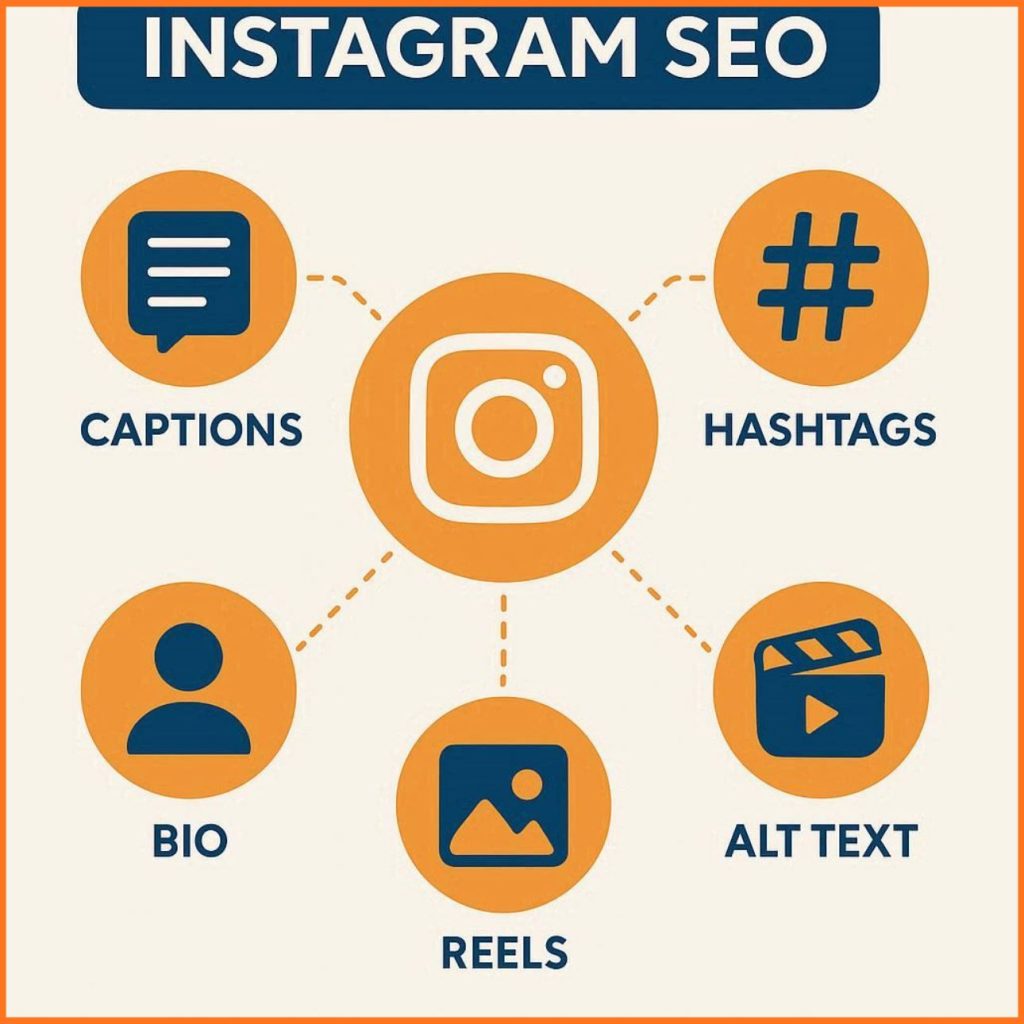
Understanding Instagram SEO in 2026
To succeed on Instagram in 2026, it’s essential to understand how the platform’s SEO works. Instagram has shifted from being purely visual to becoming a search-friendly ecosystem. Users no longer rely solely on hashtags or usernames to find content—they now use Instagram like a mini search engine. Whether it’s looking for “vegan recipes,” “fitness tips,” or “digital marketing experts,” Instagram delivers content based on keyword relevance, engagement patterns, and user behavior.
At the heart of Instagram SEO is keyword optimization. These keywords help Instagram’s algorithm categorize and surface your content to the right people. But it’s not just about using random trendy words—keywords need to reflect your content accurately and align with what your target audience is searching for.
Key elements that influence Instagram SEO in 2025 include:
Searchable Captions and Bios: Instagram scans captions and bios for keywords to serve content in search.
Hashtag Relevance: Instead of quantity, Instagram now favors hashtag context and accuracy.
Content Type: Reels, carousels, and alt text all contribute to visibility, especially when keyword-optimized.
User Intent: Instagram favors content that aligns with what a user is actively engaging with or searching for.
Understanding how Instagram reads and ranks your content is the first step to improving reach and discoverability. The following sections will break down where and how to use SEO keywords effectively on the platform.
1. What Are SEO Keywords on Instagram?
SEO (Search Engine Optimization) keywords on Instagram are specific words and phrases that improve the visibility of your content on the platform. These keywords signal to Instagram’s algorithm what your post is about, making it more likely to appear in the right search results and reach a broader audience. Effectively using SEO techniques on Instagram can increase engagement and drive more traffic to your account. Here’s how you can use SEO keywords on Instagram:
1. Captions
Optimized Descriptions: Using relevant keywords in your captions helps Instagram’s algorithm understand the context of your post.
Boosts Discoverability: Thoughtful captions with keywords improve the chances of your posts appearing in search results or recommendations.
Call to Action: Including SEO keywords with calls to action (e.g., “shop now” or “explore more”) enhances interaction and engagement.
2. Hashtags
Searchability: Using keywords as hashtags (e.g., #HealthyEats or #TravelGoals) allows your content to be discovered by users who search for those terms.
Trending Hashtags: Utilize trending hashtags with relevant keywords to increase post visibility.
Brand-Specific Hashtags: Create and promote branded hashtags that align with your niche.
3. Profile & Bio
Profile Discoverability: Including SEO keywords in your bio makes your account easier to find when users search for terms relevant to your niche.
Clear Branding: Ensure your bio clearly explains what your account offers, using keywords that define your niche (e.g., “fitness expert,” “fashion influencer,” etc.).
4. Alt Text
Hidden Keywords: Alt text allows you to add hidden descriptions of your images, which Instagram can index for SEO purposes.
Accessibility: It also improves accessibility for users with visual impairments while optimizing content for SEO.
5. Username & Handle
Keyword-Rich Username: Including keywords in your username or handle improves the likelihood of showing up in relevant searches.
Consistency: Ensure your username aligns with your brand or niche to make it easier for people to find you.
6. Instagram Stories & Highlights
Story Descriptions: Keywords in story captions or descriptions can help with discoverability.
Hashtags in Highlights: Save key story highlights with keywords, improving their discoverability on your profile.
By strategically integrating SEO keywords throughout your Instagram account, you improve the chances of ranking in Instagram search results and the Explore page, ultimately boosting your reach and engagement.

2. Why Are Instagram SEO Keywords Important in 2026?
With over 2 billion active users, Instagram continues to evolve into a powerful search and discovery platform. In 2025, the rise of AI-powered content recommendation systems and semantic search means that Instagram SEO is no longer optional—it’s essential. Keywords now function like digital signposts, guiding the algorithm to your content and helping users discover it organically.
Here’s why Instagram SEO keywords matter more than ever in 2026:
Increased Searchability
Instagram’s search bar now recognizes phrases and context, not just hashtags. Users are searching for content like they do on Google (e.g., “easy dinner recipes” or “home workout tips”), making keyword-optimized content more findable.Higher Engagement
Content that matches user search intent tends to get more likes, saves, shares, and comments. The right keywords help Instagram match your content to the right people—those most likely to engage.Better Visibility on Explore Page
When Instagram understands what your content is about, it’s more likely to push it to the Explore page or suggested reels, increasing organic reach.Boosts Sales for Businesses
For brands and creators, SEO-optimized posts attract users actively searching for products or services. This results in higher conversions and a stronger ROI on content marketing efforts.AI-Driven Discovery
Instagram now uses machine learning to understand visuals and text. Descriptive captions, optimized alt text, and relevant keywords help the AI categorize your content effectively.
By using the right keywords consistently across your content, you enhance discoverability, drive growth, and stay competitive on Instagram in 2025.
3. How to Find the Best SEO Keywords for Instagram?
A. Use Instagram’s Search Bar
Instagram’s search bar is an underrated tool for keyword discovery. When you begin typing a word or phrase related to your niche, Instagram auto-suggests a list of terms people commonly search for.
For example, typing “fitness” may show variations like “fitnessmotivation”, “fitnessgirl”, or “fitnessjourney”, which are actively searched and used.
These suggestions reflect current trends and user intent, giving you real-time insights into what audiences want.
You can also explore these suggested terms to view top posts and reels, helping you craft content around what’s already performing well in your niche.
B. Analyze Competitor Profiles
Researching successful competitors can reveal valuable keyword strategies. Look at the top profiles in your niche and examine the words they use in:
Their bio: Are they targeting “Digital Creator”, “Fitness Coach”, “Skin Care Expert”, etc.?
Captions: Identify frequently used keywords or niche-specific jargon.
Hashtags: Spot commonly used tags that drive engagement and visibility.
Tools like Ninjalitics or IGBlade can help analyze competitors’ performance metrics.
Adopting and adapting effective keywords from your competitors can position your content in front of a highly targeted audience, boosting discovery and engagement.
C. Use SEO Keyword Research Tools
Traditional SEO tools can provide valuable data for Instagram as well:
Google Keyword Planner gives monthly search volume and keyword trends you can use in captions and hashtags.
Ubersuggest and Ahrefs help discover long-tail keywords and competition levels, useful for niche targeting.
Instagram Insights shows which search terms or hashtags bring users to your content, especially for business accounts.
These tools ensure you’re not guessing—you’re basing your Instagram content strategy on actual search data, helping improve organic visibility and attract the right followers.
D. Check Instagram Hashtags
Hashtags on Instagram are essentially the platform’s version of SEO keywords. They categorize content, improve discoverability, and boost engagement.
Use a blend of:
High-competition hashtags (e.g., #fitness) for broader reach.
Low-competition hashtags (e.g., #morningyogaflow2025) for targeted visibility.
Tools like Hashtagify, RiteTag, and All Hashtag can analyze the popularity and effectiveness of your tags.
You can also browse influencer posts in your niche to identify new and trending hashtags. Including the right set of hashtags increases the chance of appearing in Explore pages or search results.
4. Where to Use SEO Keywords on Instagram?
A. Instagram Bio
Your Instagram bio is the first place to insert SEO keywords because it’s indexed by Instagram’s search engine. Including relevant keywords helps your profile appear when users search for those terms.
Use your primary niche keywords to describe who you are and what you offer in a concise, appealing way. Think of it like your brand’s elevator pitch.
For example, if you run a handmade jewelry brand, your bio could include phrases like “Luxury Jewelry”, “Handmade Rings”, or “Ethical Gold Designs”.
Also include a location keyword if you serve a local area, such as “Chennai-based Jewelry Designer”.
Instagram bio only allows 150 characters, so use strategic line breaks or separators (like “|”) to make it scannable.
You can also add one clickable link (use a link aggregator like Linktree or Tap.bio if needed) and a business category (visible in professional accounts), both of which support keyword optimization.
Don’t forget your name field (above the bio) – it’s searchable and should include a keyword, such as “Samantha | Jewelry Designer”.
B. Captions
Captions provide a valuable opportunity to integrate SEO keywords naturally. Instagram now uses keywords in captions to help content appear in search and Explore feeds.
Instead of stuffing, write meaningful, story-driven captions where keywords flow organically. Think about how your audience searches: questions, solutions, or specific terms.
For example: “Looking for handmade engagement rings? Our ethically sourced gold rings are crafted by skilled artisans and customized for every love story.”
Use long-tail keywords like “handmade jewelry for weddings” or “custom gold ring designs” that target more specific search intent.
Structure your captions to include:
A hook at the beginning to grab attention
Keywords throughout the body of the text
A call-to-action like “Shop now” or “Link in bio”
Instagram also supports up to 2,200 characters per caption, but it’s ideal to keep it concise for engagement while making your keywords count.
Always proofread for clarity, and avoid keyword stuffing, which can hurt readability and authenticity.
C. Hashtags
Hashtags are one of the most effective tools for Instagram SEO. They act as categorized keywords, making your content discoverable to people interested in similar topics.
Use a mix of broad, niche, and branded hashtags to maximize reach. Broad ones give exposure, niche ones target specific audiences, and branded ones help build brand identity.
Example structure:
3–5 broad hashtags: #Jewelry, #GoldRings
5–10 niche hashtags: #EthicalJewelry, #HandmadeGoldRings
1–3 branded hashtags: #YourBrandName, #YourCollectionName
Instagram allows up to 30 hashtags per post, but studies suggest 9 to 15 well-targeted hashtags yield the best engagement.
Place hashtags either within the caption or in the first comment – both options are searchable.
Use hashtag research tools like Hashtagify, Display Purposes, or Instagram’s own search to find trending and effective tags.
Track performance over time to refine your strategy based on which hashtags drive the most impressions and engagement.
D. Instagram Reels SEO
Reels are one of Instagram’s top-performing content formats, and now Instagram indexes Reels based on SEO keywords embedded across multiple elements.
To optimize your Reels for search visibility, use relevant keywords in:
Reel captions: Include both broad and niche keywords naturally.
Hashtags: Use 5–10 focused hashtags that are relevant to the Reel content.
On-screen text: Overlay the keywords on your video (especially in the first 3 seconds). This improves retention and helps the algorithm understand context.
Audio title: Either select a trending audio with relevant keywords or rename your original audio with keyword phrases.
Example caption: “Minimalist gold jewelry is in trend for 2025. Check out these elegant handmade designs.”
Reels are pushed to the Explore and Reels tabs, so optimizing for the right keywords increases discoverability far beyond your followers.
Aim to provide value – educational, entertaining, or inspirational – and always align keywords with the Reel’s visual message for consistency.
E. Alt Text (Image Descriptions)
Alt text, originally designed for screen readers, also plays a role in Instagram SEO by helping the algorithm understand the content of your image.
Instagram auto-generates alt text, but you can manually edit it before posting (under Advanced Settings). Doing so gives you greater control over keyword inclusion.
Write a clear, concise description of the image using 1–2 target keywords. Keep it descriptive, not promotional.
Example: Instead of “Nice ring”, write “Handcrafted gold engagement ring with minimalist design on a white velvet box”.
Alt text helps with:
Improving accessibility for visually impaired users
Boosting visibility in Instagram search
Reinforcing the relevance of your post when paired with optimized captions and hashtags
Use keyword variations across different posts to cover more search terms and avoid repetition.
Adding alt text is especially important for product photos, tutorials, and portfolio-style content where the visual matters most.
Revisit older posts and edit the alt text to enhance past content’s search potential.
5. SEO Keyword Strategy for Instagram Reels in 2026
Reels are Instagram’s most powerful engagement tool, and using the best SEO keywords for Instagram Reels ensures your videos reach a wider audience.
A. Use Keywords in Video Titles
Instagram Reels titles play a vital role in discoverability, especially now that Instagram increasingly incorporates keyword relevance into its algorithm.
When naming your Reels (especially for original audio or in captions), include clear, searchable phrases that reflect what users may type in the search bar.
Focus on popular search patterns, such as “Top X,” “Best of 2025,” “How to,” or “Trends in [industry].”
For example, instead of titling a Reel “Jewelry Vibes,” use “10 Best Jewelry Trends for 2025 | Handmade Designs.”
This title format helps in two ways:
It provides context for Instagram’s AI to categorize your content.
It attracts viewers instantly by clearly stating what value they’ll get.
Use tools like Google Trends, Ubersuggest, or Instagram search autocomplete to find what people are actually searching.
Reels with keyword-rich titles are more likely to be recommended in Explore and Reels tabs, helping you expand beyond followers and gain targeted reach.
B. Add Keywords in Subtitles & Text Overlay
Instagram’s AI can read and index on-screen text in Reels, which means your subtitles and overlays contribute to your SEO visibility.
Add search-relevant keywords in the first few seconds of your Reel, using bold and readable fonts.
Examples:
“Top Minimalist Jewelry Trends 2025”
“How to Style Gold Rings for Everyday Look”
Text overlay helps reinforce your Reel’s message and adds accessibility for users watching without sound.
If you’re speaking in your video, include matching subtitles (either manually added or using Instagram’s auto-caption feature), but optimize them by editing and inserting strategic keywords.
Placing keywords in on-screen text boosts:
Contextual relevance for Instagram’s algorithm
User retention, as viewers instantly know what your content is about
Keep it concise and visually engaging, and avoid cluttering the video with too much text.
Combining strong visuals with keyword-focused overlays can drastically improve your Reel’s chances of ranking in search and trending content feeds.
C. Optimize Reel Descriptions with Keywords
The Reel caption (description) is one of the most powerful places to insert SEO keywords, especially long-tail ones.
Instagram now indexes keywords from captions, so your description should align with what users are likely searching for.
For example:
“Discover the best handmade jewelry trends for 2025. From elegant gold rings to minimalist bracelets, here’s what’s trending.”
Include long-tail keywords like:
“minimalist gold rings”
“handcrafted statement earrings”
Spread your keywords naturally in a way that tells a story or introduces the content of your Reel. Avoid keyword stuffing—clarity and authenticity win.
Don’t forget to add niche-specific hashtags at the end of your description for additional discoverability. Use a mix of trending and targeted tags.
A well-optimized description helps the algorithm understand your content and connect it with users interested in similar topics, increasing your chances of appearing in:
Explore Page
Search results
Suggested Reels
Keep descriptions concise but keyword-rich, with clear messaging that encourages engagement (e.g., likes, shares, or saves).
6. Common Mistakes to Avoid in Instagram SEO
Instagram is a highly competitive platform where visibility matters. Optimizing your content for search engines within Instagram can help you reach a wider audience and boost engagement. However, many users make mistakes that hinder their discoverability. Here are six common mistakes to avoid in Instagram SEO and how to fix them.
1. Keyword Stuffing
Keyword stuffing refers to the excessive use of keywords in captions, bios, or hashtags in an attempt to manipulate search rankings. While keywords are essential, overloading your content with them makes it look unnatural and can negatively impact engagement.
How to Fix It:
Use keywords naturally in your captions and bio.
Focus on readability rather than just SEO.
Mix up keyword variations instead of repeating the same ones.
For example, instead of writing “Best travel photography | Travel photography tips | Photography travel ideas”, you can write “Check out these amazing travel photography tips to capture breathtaking moments on your next trip!”
2. Ignoring Alt Text
Instagram allows users to add alt text to images, which helps visually impaired users and improves SEO. Many people overlook this feature, missing an opportunity to enhance their post’s discoverability.
How to Fix It:
Write descriptive alt text for every image you upload.
Include relevant keywords naturally in the description.
Keep it concise but informative.
For instance, if you post a picture of a sunset on the beach, instead of just saying “Beautiful sunset”, you can write “Golden sunset over the beach with palm trees swaying in the wind”.
3. Using Only High-Competition Hashtags
Many Instagram users rely on popular, high-competition hashtags like #love, #instagood, or #fashion. While these tags have millions of posts, they can bury your content quickly, reducing visibility.
How to Fix It:
Use a mix of high, medium, and low-competition hashtags.
Incorporate niche-specific hashtags to target the right audience.
Research hashtag trends in your industry and update your list frequently.
For example, instead of only using #fitness, you can add niche hashtags like #homeworkout, #fitover40, or #strengthtraining.
4. Not Updating Keywords Regularly
Trends change frequently on Instagram, and failing to update your keywords can cause you to miss out on new search trends.
How to Fix It:
Research trending keywords in your niche every few months.
Analyze competitor accounts to see what keywords they are using.
Experiment with different variations of keywords to find what works best.
For example, if you are in the beauty industry, instead of sticking with outdated keywords like #makeuptrends2020, update your tags with #glowylook or #naturalmakeup, which are currently trending.
5. Not Optimizing Your Profile
Your Instagram bio is a prime space for SEO, but many users fail to optimize it with relevant keywords. A poorly written bio can limit your profile’s discoverability.
How to Fix It:
Include primary keywords in your name or bio.
Use a clear, concise description of what you offer.
Add a call-to-action (CTA) to drive traffic.
For example, instead of “Love fashion! DM for collabs”, you can write “Fashion Blogger | Style Tips & Trends | DM for Collaborations”.
6. Not Using Location Tags
Instagram’s algorithm prioritizes location-based searches, yet many users forget to tag their location in posts and stories. This can limit your reach, especially if your content is location-specific.
How to Fix It:
Always add a location tag when posting.
Use location-specific hashtags for better discoverability.
Engage with local users and businesses by tagging their locations.
For example, instead of just posting a coffee shop picture, tag the coffee shop’s location and use hashtags like #NYCcoffee or #LosAngelesEats.
7. Future Trends in Instagram SEO for 2026
Instagram SEO is evolving rapidly, and businesses and content creators must stay ahead of the curve to maintain visibility. As Instagram continues to refine its search algorithms, new trends are emerging that will shape how content is discovered. Here are four major trends to watch in 2025.
1. AI-Powered Content Discovery
Instagram is increasingly leveraging artificial intelligence (AI) to personalize content discovery. The platform will analyze user interactions, search behavior, and preferences to recommend posts that align with individual interests. This means businesses and influencers must create high-quality, engaging content that resonates with their target audience to increase visibility.
How to Prepare:
Use AI-driven insights to understand audience behavior.
Focus on engagement metrics like saves and shares.
Optimize captions with natural language and relevant keywords.
2. Voice & Image Search
With advancements in AI, Instagram is likely to introduce voice-based and image search functionalities. Users may be able to search for content using voice commands or by uploading images to find similar visuals.
How to Prepare:
Optimize captions and alt text with conversational keywords.
Use high-quality, descriptive images that match search intent.
Incorporate voice-friendly phrases in video and audio content.
3. Localized SEO for Instagram
Local businesses will benefit from geo-targeted SEO as Instagram refines its location-based search results. Posts and profiles optimized for local searches will have higher visibility.
How to Prepare:
Use location-based hashtags and keywords.
Tag your location in posts and stories.
Engage with local followers and businesses.
4. More Focus on Video SEO
Reels and Stories will continue to dominate search rankings, as Instagram prioritizes short-form videos. Video optimization will be crucial for discoverability.
How to Prepare:
Use trending audio and captions with keywords.
Add subtitles to improve accessibility.
Encourage engagement through interactive elements.
Conclusion
Understanding what are SEO keywords on Instagram is key to growing your reach and engagement in 2025. By optimizing your bio, captions, hashtags, and Reels, you can enhance your visibility on the platform.
Want to stay ahead in Instagram SEO? Keep experimenting with new keywords, track trends, and adapt your strategy regularly!
Stay tuned to WorkSEO.in for the latest Instagram SEO updates and strategies!
Latest Insights from Our SEO Experts
Stay updated with actionable SEO tips, strategies, and trends from the WorkSEO editorial team—designed to help your business grow organically and rank higher on search engines.
Introduction If you are planning to learn SEO and build a career in digital marketing, you are on the right […]
After completing a BSc degree, many students face one big question: “What should I do next?” Traditional career paths like […]
In today’s digital world, many women are looking for ways to restart their careers, earn from home, and become financially […]