In today’s competitive online world, small businesses can no longer rely only on word-of-mouth or traditional marketing. Customers now search online before choosing a product, service, or local provider. If your business does not appear in search results, potential customers may never find you.
This is where Search Engine Optimization (SEO) becomes essential. SEO helps your website appear in search engines when people are actively looking for your products or services. Unlike paid ads that stop when the budget ends, SEO builds long-term visibility and sustainable website traffic.
In this complete guide, we explain what SEO for small businesses is, why it matters, how it works, and practical strategies you can implement to improve your online presence in 2026.
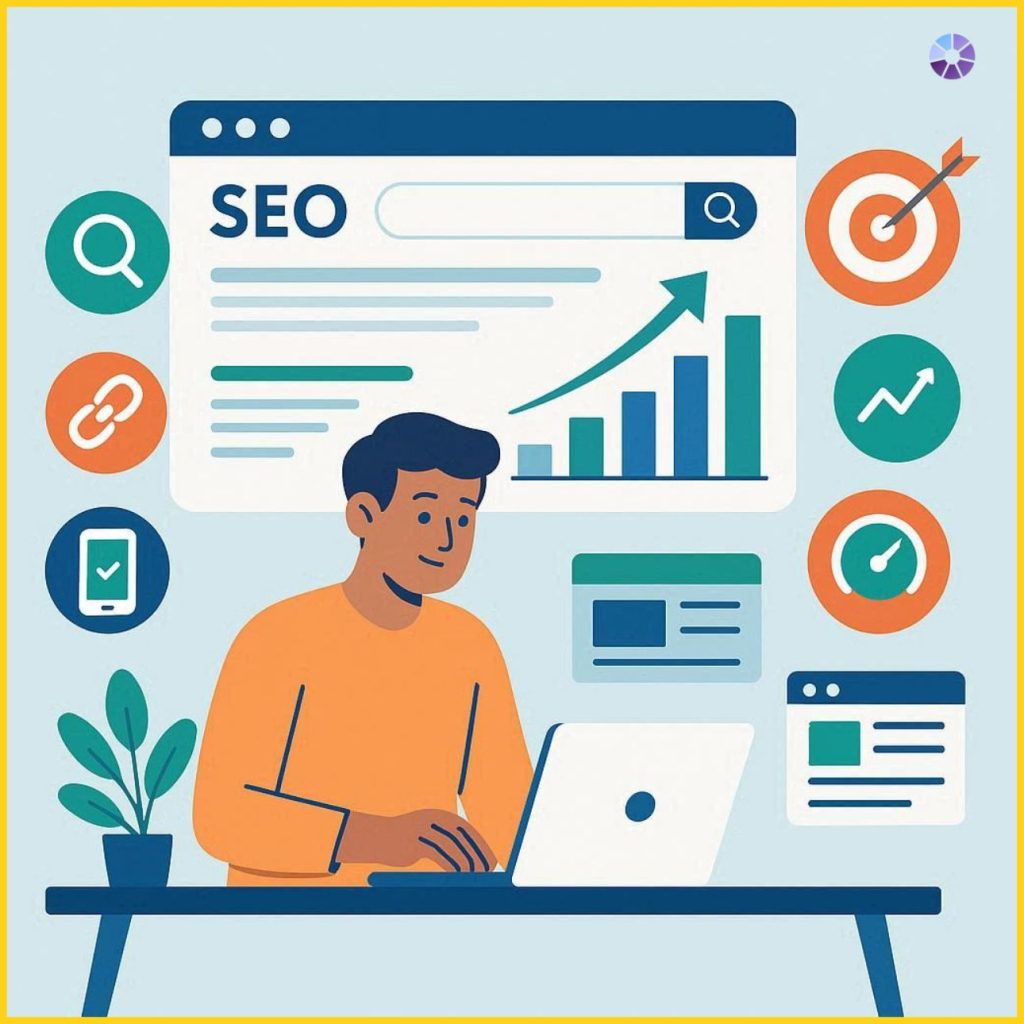
What Is SEO for Small Businesses?
SEO for small businesses refers to optimizing a website so it ranks higher in search engines when potential customers search for related products or services.
For example:
A bakery owner may want their website to appear when someone searches “best bakery near me.”
A local lawyer may want to rank for “family lawyer in Chennai.”
SEO helps businesses achieve this visibility by improving website content, structure, speed, and authority.
Unlike large companies with massive advertising budgets, small businesses can compete effectively through SEO because search engines prioritize relevance and helpful content rather than just brand size.
When implemented correctly, SEO helps small businesses attract targeted traffic, generate leads, and grow sustainably online.
Why SEO Is Important for Small Businesses
SEO provides several powerful benefits for businesses that want long-term growth online. In today’s digital environment, customers rely heavily on search engines to find products, services, and solutions to their problems. Businesses that invest in SEO can improve their online presence, reach the right audience, and create a steady flow of potential customers over time. Below are some of the most important advantages SEO offers to small and growing businesses.
Increased Online Visibility
Most online experiences begin with a search engine. When your website appears on the first page of search results, it becomes much easier for potential customers to discover your services. Higher visibility means more opportunities for users to click on your website and learn about what you offer.
SEO improves visibility by helping your website:
Rank for relevant keywords your customers search for
Appear in local search results and map listings
Show up in informational searches related to your industry
As your rankings improve, more people can find your business online without needing expensive advertising campaigns.
More Targeted Customers
One of the biggest advantages of SEO is that it attracts visitors who are already searching for solutions. These users have clear intent and are actively looking for products or services similar to what your business offers.
SEO helps bring targeted customers by:
Matching your website content with user search intent
Targeting specific keywords related to your services
Attracting visitors who are ready to learn, inquire, or purchase
Because these users are already interested, they are more likely to become leads or paying customers.
Cost-Effective Marketing
Compared to traditional advertising methods, SEO is considered one of the most cost-effective marketing strategies. Paid ads require continuous spending, while SEO focuses on building long-term organic visibility.
Businesses benefit from SEO because it:
Reduces dependency on paid advertising
Continues generating traffic after rankings improve
Provides long-term value for marketing investment
Over time, strong SEO can produce consistent results without increasing marketing costs.
Builds Trust and Credibility
Websites that appear at the top of search results are often perceived as more trustworthy by users. Search engines rank websites based on relevance, authority, and user experience, which helps build credibility for businesses that follow SEO best practices.
SEO builds trust by improving:
Website quality and content relevance
User experience and page performance
Authority through backlinks and mentions
When users consistently see your website in search results, it strengthens brand recognition and confidence in your services.
Long-Term Business Growth
SEO is not a short-term marketing tactic but a long-term investment in online visibility. Businesses that consistently improve their website, publish helpful content, and maintain technical optimization can enjoy steady traffic growth over time.
Long-term SEO benefits include:
Continuous organic website traffic
Increased brand awareness and recognition
More opportunities to generate leads and sales
By focusing on SEO as an ongoing strategy, businesses can build a sustainable online presence that supports growth for years to come.
How SEO Works for Small Businesses
SEO involves multiple components working together to improve a website’s search visibility.
Keyword Research
Keywords are the words and phrases people type into search engines. Identifying the right keywords helps businesses create content that matches user search intent.
For example:
“SEO services for small business”
“digital marketing agency near me”
“local SEO services in Chennai”
Targeting relevant keywords ensures your website appears when potential customers search for solutions you provide.
Content Optimization
Content is one of the most important factors in SEO. Creating helpful blog posts, service pages, and guides allows your website to answer customer questions and rank in search results.
Quality content also increases engagement and encourages visitors to spend more time on your website.
Technical SEO
Technical SEO ensures that search engines can easily crawl and understand your website.
Important technical factors include:
Website loading speed
Mobile-friendly design
Secure HTTPS connection
Proper site structure
These improvements help both users and search engines navigate your website efficiently.
Backlinks
Backlinks are links from other websites pointing to your site. Search engines treat these links as signals of trust and authority.
High-quality backlinks can significantly improve your search rankings and website credibility.
10 SEO Tips for Small Businesses
Small businesses can significantly improve their online visibility by implementing practical and consistent SEO strategies. Unlike large companies with big marketing budgets, small businesses can compete effectively by focusing on targeted optimization and high-quality content. The following SEO tips help businesses attract more customers, increase website traffic, and build long-term authority in search engines.
1. Target Local Keywords
Local keywords are essential for businesses that serve customers in specific geographic locations. These keywords include city names, neighborhoods, or phrases like “near me.” For example, a company offering SEO services might target keywords such as “SEO agency in Chennai” or “SEO services near me.” By incorporating these terms naturally into website pages, service descriptions, and blog posts, businesses can increase their chances of appearing in local search results. Local keyword optimization also helps attract visitors who are actively looking for nearby services, which often leads to higher conversion rates.
2. Optimize Your Google Business Profile
A properly optimized Google Business Profile is one of the most powerful tools for local SEO. This profile helps your business appear in Google Maps and local search results when users search for services in their area. Businesses should ensure their profile includes accurate contact details, business hours, location, and high-quality photos. Regularly updating posts, responding to customer reviews, and selecting the correct business categories can further improve visibility and credibility.
3. Create Helpful Blog Content
Publishing valuable blog content helps businesses attract organic traffic and demonstrate expertise in their industry. Blog articles can answer common customer questions, explain services, or provide useful tips related to your field. For example, a digital marketing agency may publish guides about SEO strategies or social media marketing tips. Consistent blogging increases keyword coverage and gives search engines more opportunities to index your website pages.
4. Improve Website Speed
Website speed plays a critical role in both user experience and search rankings. Visitors tend to leave websites that load slowly, which increases bounce rates and reduces conversions. Businesses can improve page speed by optimizing images, minimizing unnecessary code, enabling browser caching, and choosing reliable hosting services. Faster websites create a better experience for users and are more likely to rank higher in search results.
5. Build Quality Backlinks
Backlinks are links from other websites pointing to your site, and they are considered an important ranking factor in search engines. High-quality backlinks signal credibility and authority, helping search engines trust your website. Small businesses can build backlinks by publishing useful content, collaborating with industry partners, writing guest articles, or being featured in local directories. The focus should always be on quality rather than quantity.
6. Use Internal Linking
Internal linking connects different pages within your website and helps both users and search engines navigate your content more easily. By linking related articles, service pages, and blog posts together, businesses can guide visitors toward more information and increase the time they spend on the website. Internal links also help search engines understand the structure and importance of different pages on your site.
7. Optimize Images
Images can enhance the visual appeal of a website, but they should also be optimized for SEO. This includes using descriptive file names, compressing images to reduce file size, and adding relevant alt text. Alt text helps search engines understand what the image represents and improves accessibility for users who rely on screen readers. Proper image optimization can also improve page loading speed.
8. Focus on Mobile Users
With the majority of internet searches now happening on mobile devices, having a mobile-friendly website is essential. A responsive design ensures that pages display correctly on different screen sizes, providing a smooth experience for mobile users. Mobile optimization also influences search rankings, as search engines prioritize websites that perform well on smartphones and tablets.
9. Encourage Customer Reviews
Customer reviews play an important role in building trust and improving local search visibility. Positive reviews on platforms such as Google can influence potential customers and strengthen your business reputation. Encouraging satisfied customers to leave reviews and responding professionally to feedback helps demonstrate credibility and engagement with your audience.
10. Track SEO Performance
Tracking SEO performance allows businesses to measure the effectiveness of their optimization efforts. Tools such as analytics platforms and search performance reports help monitor website traffic, keyword rankings, user behavior, and conversions. By analyzing this data regularly, businesses can identify what strategies are working and adjust their SEO approach for better results
Local SEO for Small Businesses
Local SEO is especially important for businesses that serve customers within a specific geographic area. Unlike traditional SEO, which focuses on broader search visibility, local SEO helps businesses appear when people search for services in their city, neighborhood, or nearby location. When potential customers type phrases like “near me” or include a city name in their search, search engines prioritize businesses that are geographically relevant to the user.
Local SEO is especially valuable for service-based and location-based businesses such as:
Restaurants and cafés
Law firms and legal consultants
Medical clinics and healthcare providers
Home repair and maintenance services
Digital consultants and marketing agencies
For these businesses, appearing in local search results can directly influence how many customers contact or visit them.
To improve local search visibility, businesses should focus on several key optimization strategies:
Optimizing Google Business Profile
Ensure your profile contains accurate business information, including address, phone number, website link, and operating hours. Adding photos, services, and regular updates can also improve visibility in local search results and Google Maps.Targeting location-specific keywords
Using keywords that include city names or service locations helps search engines understand where your business operates. Examples include phrases like “SEO agency in Chennai” or “best dentist in Trichy.”Encouraging customer reviews
Positive reviews build trust with potential customers and send strong credibility signals to search engines. Responding to reviews also shows engagement and professionalism.Creating location-focused content
Publishing blog posts or service pages that mention specific cities or neighborhoods can help capture additional local search traffic.Ensuring consistent business information online
Your business name, address, and phone number should remain consistent across your website, directories, and social platforms.
By implementing these strategies consistently, small businesses can significantly improve their chances of appearing in local search results and attracting customers who are actively looking for nearby services.
Common SEO Mistakes Small Businesses Make
Many small businesses struggle with SEO not because it is impossible, but because they make common mistakes that limit their results. SEO requires strategy, consistency, and patience. When businesses ignore best practices or try shortcuts, their websites may fail to gain visibility in search engines. Understanding these common mistakes can help businesses avoid unnecessary setbacks and build a more effective SEO strategy.
Below are some of the most frequent SEO mistakes small businesses should avoid.
Ignoring Keyword Research
Keyword research is the foundation of successful SEO. Without identifying what people are actually searching for, businesses may create content that never reaches the right audience. Publishing articles or service pages without proper keyword targeting often leads to low traffic and poor search rankings.
Effective keyword research helps businesses:
Understand what their customers are searching for
Discover high-value search terms related to their services
Create content that matches real user intent
When businesses invest time in keyword research, their content becomes more relevant and discoverable.
Buying Low-Quality Backlinks
Backlinks can improve search rankings, but only when they come from trustworthy and relevant websites. Some businesses attempt to boost rankings quickly by purchasing cheap backlink packages. These low-quality links often come from spammy websites and may harm your website’s credibility.
Instead of buying backlinks, businesses should focus on:
Creating useful content that naturally attracts links
Building relationships with industry websites
Listing their business in reputable directories
Quality backlinks help build authority and long-term search visibility.
Neglecting Mobile Optimization
Today, a large percentage of searches happen on mobile devices. If a website is not optimized for smartphones and tablets, visitors may leave quickly, leading to higher bounce rates and lower rankings.
A mobile-friendly website should:
Load quickly on mobile devices
Display content clearly on smaller screens
Provide easy navigation for users
Mobile optimization improves both user experience and search performance.
Publishing Thin Content
Thin content refers to pages that provide very little useful information. Search engines prioritize content that offers real value to users. Short articles or poorly written pages often struggle to rank because they do not fully answer user questions.
High-quality content typically includes:
Detailed explanations and useful insights
Clear headings and structured sections
Relevant examples and practical advice
Publishing comprehensive content improves engagement and increases the chances of ranking higher.
Expecting Instant Results
SEO is a long-term strategy, not an overnight solution. Some businesses expect immediate results and become discouraged when rankings do not improve quickly. In reality, search engines take time to evaluate content, authority, and website performance.
Successful SEO requires:
Consistent content updates
Ongoing technical improvements
Regular performance monitoring
Businesses that stay patient and committed to SEO strategies often achieve stronger and more sustainable results over time.
Avoiding these common mistakes allows small businesses to build a solid SEO foundation and gradually improve their search visibility, website traffic, and customer engagement.
How Long Does SEO Take for Small Businesses?
SEO results typically take three to six months to become noticeable. The exact timeline depends on several factors such as industry competition, website quality, and the consistency of SEO efforts.
New websites often take longer to build authority, while established websites may see improvements faster.
Although SEO requires time, the long-term benefits make it one of the most effective digital marketing strategies available.
SEO vs Paid Advertising for Small Businesses
Many businesses compare SEO with paid advertising.
Paid ads can generate traffic quickly but require continuous investment. Once the advertising budget stops, the traffic usually disappears.
SEO, on the other hand, focuses on building long-term organic visibility. While it takes longer to produce results, it can continue delivering traffic without paying for each click.
For most businesses, the best strategy is combining both approaches: using paid advertising for quick results while building long-term organic traffic through SEO.
How WorkSEO Helps Small Businesses Grow
At WorkSEO, we specialize in helping businesses improve their online visibility through strategic SEO solutions.
Our services include:
Complete SEO audits
Keyword research and strategy
Technical SEO optimization
Content creation and blog strategy
Local SEO optimization
Performance tracking and reporting
Our goal is simple: help businesses attract targeted traffic, generate more leads, and achieve sustainable growth through SEO.
Conclusion
SEO has become one of the most powerful tools available for small businesses looking to compete online. By optimizing your website, creating valuable content, and targeting the right keywords, you can attract customers who are actively searching for your services.
Although SEO requires patience and consistent effort, the long-term rewards make it one of the most cost-effective marketing strategies available today.
Businesses that invest in SEO build stronger online visibility, greater brand trust, and a steady stream of potential customers.
If your business wants to grow online in 2026 and beyond, SEO should be a core part of your digital marketing strategy.
Ready to Grow Your Business with SEO?
WorkSEO helps businesses build sustainable search engine visibility through proven SEO strategies.
From keyword research to technical optimization and high-quality content, we handle every aspect of SEO so you can focus on growing your business.
📩 Email: admin@workseo.in
📞 Call / WhatsApp: +9442611433
Contact WorkSEO today and start building your long-term online growth.
Frequently Asked Questions About SEO for Small Businesses
What is SEO for small businesses?
SEO for small businesses refers to optimizing a website so it appears in search engines when potential customers search for related products or services. It involves improving website content, targeting relevant keywords, optimizing technical elements, and building authority through backlinks. The goal is to attract organic traffic and generate leads without relying entirely on paid advertising.
Is SEO worth it for small businesses?
Yes, SEO is one of the most cost-effective marketing strategies for small businesses. Unlike paid ads that stop generating traffic when the budget ends, SEO can continue bringing visitors for months or even years. Businesses that invest in SEO often experience increased website traffic, stronger brand credibility, and more customer inquiries.
How long does SEO take for small businesses?
SEO typically takes three to six months to produce noticeable improvements. The exact timeline depends on factors such as website quality, competition level, and the consistency of optimization efforts. While SEO requires patience, it delivers long-term benefits once rankings begin to improve.
Can small businesses do SEO themselves?
Yes, small businesses can perform basic SEO tasks themselves, such as creating blog content, optimizing page titles, improving website speed, and updating their Google Business Profile. However, more advanced SEO strategies—like technical optimization, backlink building, and keyword research—often require professional expertise.
What is the difference between local SEO and regular SEO?
Local SEO focuses on helping businesses appear in location-based searches, such as “restaurants near me” or “SEO services in Chennai.” Regular SEO focuses on ranking websites for broader search queries that may not be tied to a specific location. Local SEO is especially important for businesses that serve customers within a particular city or region.